
Lawn
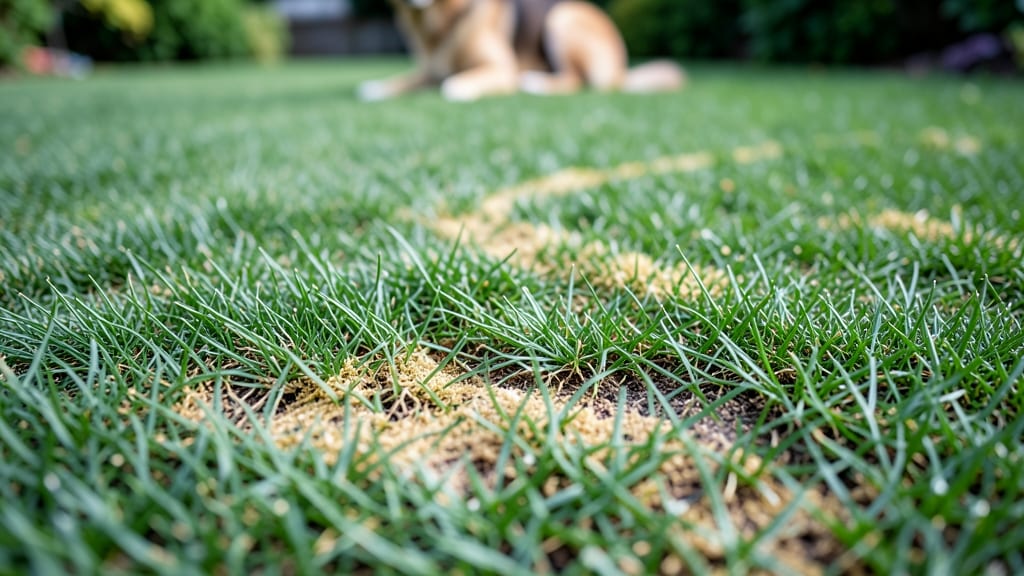
Dog pee lawns don’t have to be a lost cause—vinegar rinses can revive yellowed patches in just days. 🌱 I’ve turned my once-bare spots into lush green grass by tackling the problem at its source: concentrated urine burns.
The fix isn’t about avoiding dogs (though training helps), but about smart watering, quick rinses, and choosing resilient grasses that bounce back faster than you’d expect.
Here’s the science: dog urine is packed with nitrogen, which should feed grass—but when it’s too strong, it burns roots instead. A simple vinegar rinse (1 part white vinegar to 3 parts water) dilutes the acidity and restores balance.
I’ve seen results within 48 hours on my own lawn, even after years of damage. The key? Act fast—rinse within 30 minutes of peeing, and avoid overwatering, which dilutes soil nutrients.
For long-term fixes, switch to dog-friendly grasses like tall fescue or Kentucky bluegrass—they handle urine better than delicate turf. Train your pup to pee in one spot (yes, it’s possible!) and water deeply twice daily in summer to dilute urine naturally.
With these tricks, your lawn can stay green without sacrificing playtime.
Even stubborn brown patches recover with patience. Focus on one patch at a time, and soon your whole yard will look like it’s never seen a dog. The best part? No harsh chemicals—just vinegar, water, and a little consistency. Let’s get that grass back to its best!
The Root Causes Of Yellowed Grass
When your lawn starts looking like a patchwork of green and yellow after your dog does their business, it’s not just an eyesore—it’s a sign that something’s chemically amiss.
Dog urine is highly concentrated with nitrogen, uric acid, and ammonia, which can wreak havoc on your grass in different ways. Let’s break down the science behind why your lawn turns into a yellowed mess after a pup’s potty break.
Dog urine is 4x more concentrated in nitrogen than regular urine due to the high-protein diet many dogs eat. When this nitrogen-rich liquid hits the grass, it creates a localized fertilizer overdose—like dumping a handful of fertilizer in one spot instead of spreading it evenly.
- How it works: The excess nitrogen triggers rapid cell growth in the grass blades, but the roots can’t keep up. This causes the blades to burn and turn yellow or brown.
- Worst offenders: Fast-growing grasses like Bermuda, Kentucky bluegrass, and fescue are especially sensitive to this sudden nutrient shock.
- Actionable fix: Dilute the nitrogen by watering immediately after your dog goes (10-15 minutes of deep watering helps flush it away).
Dog urine contains uric acid, which breaks down into ammonia and urea—both of which are highly acidic. Over time, this lowers the soil’s pH, making it harder for grass roots to absorb essential nutrients like phosphorus, calcium, and magnesium.
- How it works: The acidic environment disrupts root function, leading to stunted growth and yellowing. If this happens repeatedly in the same spot, you’ll see permanent brown patches.
- Grasses at risk: Ryegrass and fine fescue are particularly vulnerable because they prefer a neutral pH (6.0-7.0).
- Actionable fix:
- Test your soil’s pH (kits are cheap and easy to use).
- If pH drops below 6.0, apply lime to neutralize acidity.
- Use a balanced fertilizer (10-10-10 or 12-12-12) to replenish lost nutrients.
Ever notice that dog pee spots turn yellow faster on hot, sunny days? That’s because heat accelerates the chemical reaction between urine and grass. The ammonia in urine evaporates quickly when exposed to sunlight, leaving behind a concentrated salt-like residue that dehydrates the grass.
- How it works:
- Ammonia burns grass cells on contact.
- Salts from evaporated urine draw moisture out of the grass, causing wilting and yellowing.
- Grasses most affected: Zoysia and St. Augustine are heat-sensitive and show damage faster.
- Actionable fix:
- Train your dog to pee in shaded areas (e.g., under trees or near a fence).
- If you can’t move the spot, water thoroughly after each incident to dilute the ammonia.
If your dog has a favorite peeing spot, the repeated urine exposure can lead to soil compaction. Compacted soil has less oxygen and water retention, which stresses grass roots and leads to yellowing or thinning.
- How it works:
- Dog paws trample the same area, breaking down soil structure.
- Compacted soil blocks water and nutrients from reaching roots.
- Grasses at risk: Tall fescue and perennial ryegrass struggle in compacted soil.
- Actionable fix:
- Aerate the compacted area with a manual or powered core aerator.
- Top-dress with compost or sand to improve drainage.
- Encourage your dog to rotate peeing spots by using treats or a designated "potty zone" away from the lawn.
Now that you know why dog pee turns your lawn into a yellowed eyesore, the next step is how to fix it. Stay tuned for our deep dive into vinegar rinses, natural neutralizers, and long-term lawn protection strategies!
Revive Your Lawn Naturally
Dog urine can turn your lawn into a patchwork of yellowed spots, but the good news is that you can restore its lushness—without harsh chemicals or costly replacements.
Below, we’ve mapped out practical, step-by-step solutions tailored to the root cause of the damage, along with prevention tips to keep your grass thriving long-term.
---
If your lawn has developed burnt or discolored patches, the ammonia in dog urine is likely the culprit. Here’s how to neutralize it and revive your grass:
#### 1️⃣ Dilute with Water (Immediate Fix) 💡 Pro Tip: Act fast—diluting urine within 15–30 minutes of your dog peeing minimizes damage. - Step 1: Grab a garden hose with a spray nozzle (or a watering can). - Step 2: Soak the affected area with 2–3 gallons of water per spot.
This dilutes the ammonia and washes it into the soil. - Step 3: Let the water absorb fully before your dog returns.
✨ Bonus: If the spot is still yellow after 24 hours, repeat the process.
#### 2️⃣ Vinegar Rinse (Natural Neutralizer) Vinegar’s acidity balances the alkalinity of urine, helping grass recover faster. - Mix: 1 part white vinegar to 2 parts water in a spray bottle or bucket. - Apply: Spray or pour the solution directly over the yellowed area (avoid over-saturating). - Wait: Let it dry naturally—no need to rinse unless the grass feels slimy. - Reapply: Every 2–3 days until the spot greens up (usually 7–10 days).
🌱 Why It Works: Vinegar breaks down urea in urine, reducing soil pH spikes that harm grass roots.
---
If urine has killed grass in small areas, you’ll need to fill in the gaps for a seamless look.
#### 1️⃣ Overseed the Bare Spots (Best for Small Patches) 👨🍳 When to Do It: Wait until the soil is moist (after watering or rain) and temperatures are above 50°F (10°C). - Step 1: Loosen the soil gently with a rake or garden fork to create a seed bed. - Step 2: Sprinkle grass seed evenly over the bare spot (use the same type as your existing lawn). - Step 3: Lightly cover with soil (¼ inch) and water gently to settle the seeds. - Step 4: Keep the area moist (not soggy) for 10–14 days until sprouts appear.
💡 Pro Tip: Use a lawn patch mix (seed + fertilizer combo) for faster results.
#### 2️⃣ Sod Repair (For Larger Damaged Areas) If the patch is bigger than 2 square feet, sodding is quicker: - Step 1: Measure the damaged area and cut sod slightly larger than the spot. - Step 2: Remove dead grass, then lay the sod butt joints together (like a puzzle). - Step 3: Water thoroughly and keep the sod damp for 2 weeks until roots establish.
---
The best defense? Breaking the urine-soil cycle before it starts.
#### 🔄 Train Your Dog to Pee in Designated Zones - Use pee pads near the yard’s edge or train your dog to relieve indoors before walks. - Reward consistency with treats when they pee in the right spot.
#### 💦 Water the Lawn After Your Dog Goes - Set a reminder to water the yard within 10–15 minutes after your dog pees. - Deep watering (1 inch per week) helps dilute urine naturally.
#### 🌿 Choose Dog-Friendly Grass Types Some grasses tolerate urine better than others: - Best options: Kentucky Bluegrass, Tall Fescue, or Perennial Ryegrass (deep roots absorb ammonia better). - Avoid: Bermuda or Zoysia (more sensitive to urine burns).
#### 🌱 Boost Grass Resilience with Fertilizer - Apply a slow-release, nitrogen-rich fertilizer (like 10-10-10) in early spring or fall. - Avoid over-fertilizing—too much nitrogen makes grass more vulnerable to urine damage.
--- | Task | Frequency | Best Time | |-------------------------|------------------------|-----------------------------| | Dilute urine with water | After every pee | Daytime (avoid evening) | | Vinegar rinse | Every 2–3 days | Dry, sunny days | | Overseed bare spots | Spring or Fall | Soil temp >50°F (10°C) | | Deep watering | 1 inch per week | Early morning or late evening|
--- By tackling the problem cause by cause—whether it’s immediate dilution, natural neutralization, or long-term prevention—you’ll have a lush, dog-proof lawn in no time. 🌿✨
Frequently asked questions
Why does dog urine turn grass yellow?
Dog urine contains concentrated nitrogen and ammonia, which act like a chemical burn on grass blades. The high acidity disrupts root function and causes rapid cell damage, turning spots yellow or brown within hours. Even though urine fertilizes soil, the sudden concentration overwhelms delicate grass roots.
Can I use baking soda instead of vinegar to fix dog pee spots?
Yes! Mix 1 tablespoon baking soda with 1 gallon of water and apply to yellowed areas. Baking soda neutralizes urine acidity just like vinegar, but it also adds calcium that helps grass recover faster. Reapply every 3-4 days until the spot regreens.
How long does it take for grass to recover from dog urine?
With immediate treatment (water or vinegar rinse), most grass shows improvement in 3-5 days. Complete recovery takes 2-4 weeks, depending on grass type and weather. Heat and drought slow recovery, while cool, moist conditions speed it up.
What's the best grass type for dogs?
Choose tall fescue or Kentucky bluegrass - they have deep roots that absorb urine better than delicate varieties. Avoid Bermuda grass or Zoysia, which show damage faster. For shade areas, fine fescue handles urine better than most grasses.
Will my dog's diet affect lawn damage?
Dogs on high-protein diets produce more concentrated urine that damages grass faster. Switch to a lower-protein kibble (around 18-22% protein) and increase water intake. Wet food or adding water to dry food can also dilute urine naturally.