
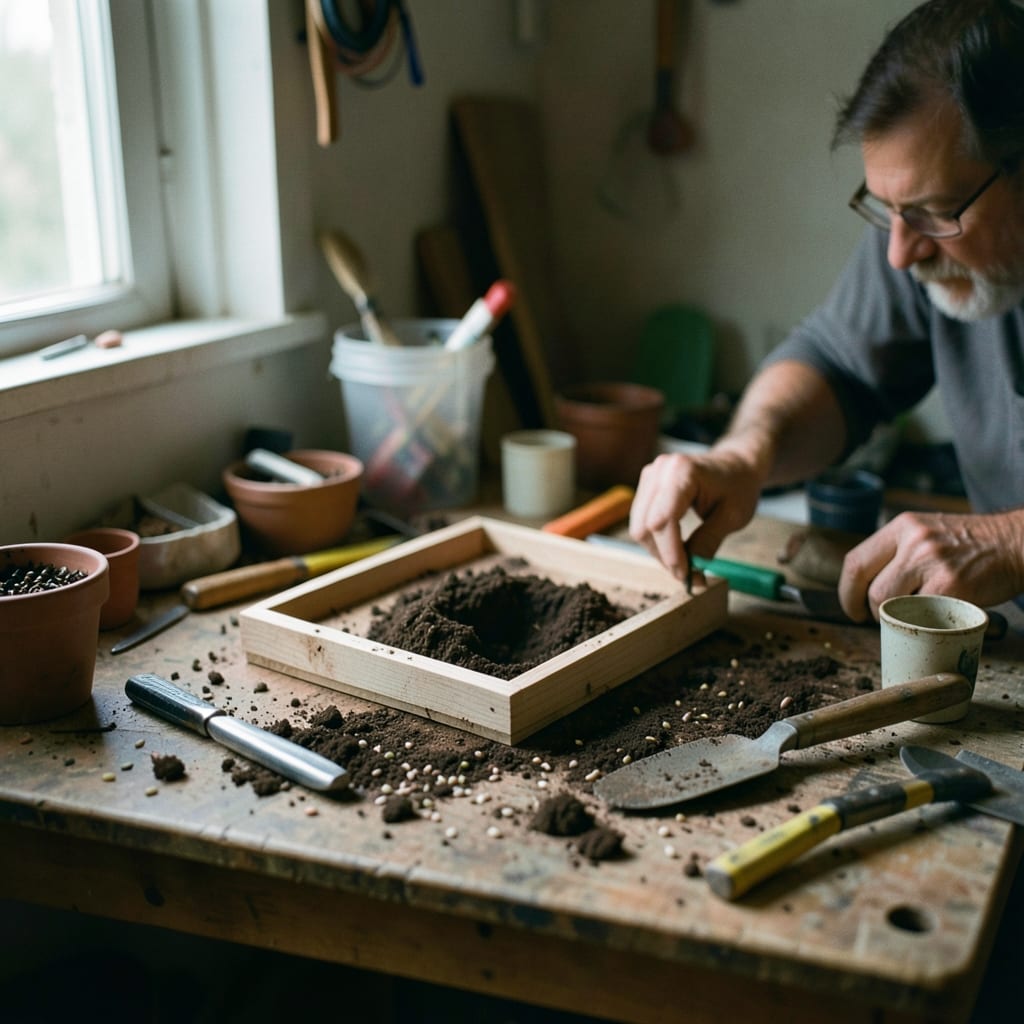
What this work is made with
This page is not a story. It is a list of things—the tools, the soil, the hands—that shape what you’ll find here. Gardening is not just advice; it is a conversation between what grows and what holds it up. We name the objects that make that conversation possible.
*Lawn Daily* publishes the soil’s first whisper: the quiet lessons from roots teaching the sky to grow. The work depends on more than words. It depends on what stays in the ground, what breaks, what survives. Here is the inventory.
The things that do the work
Four objects keep this work alive: a trowel that has bent from years of digging, a wooden stake that has split but still holds plants upright, a rain gauge that no longer measures precisely, and a pair of shears that have lost their sharpness but refuse to be replaced.
They are not glamorous. They are not new. They are what this work depends on.
Trowel
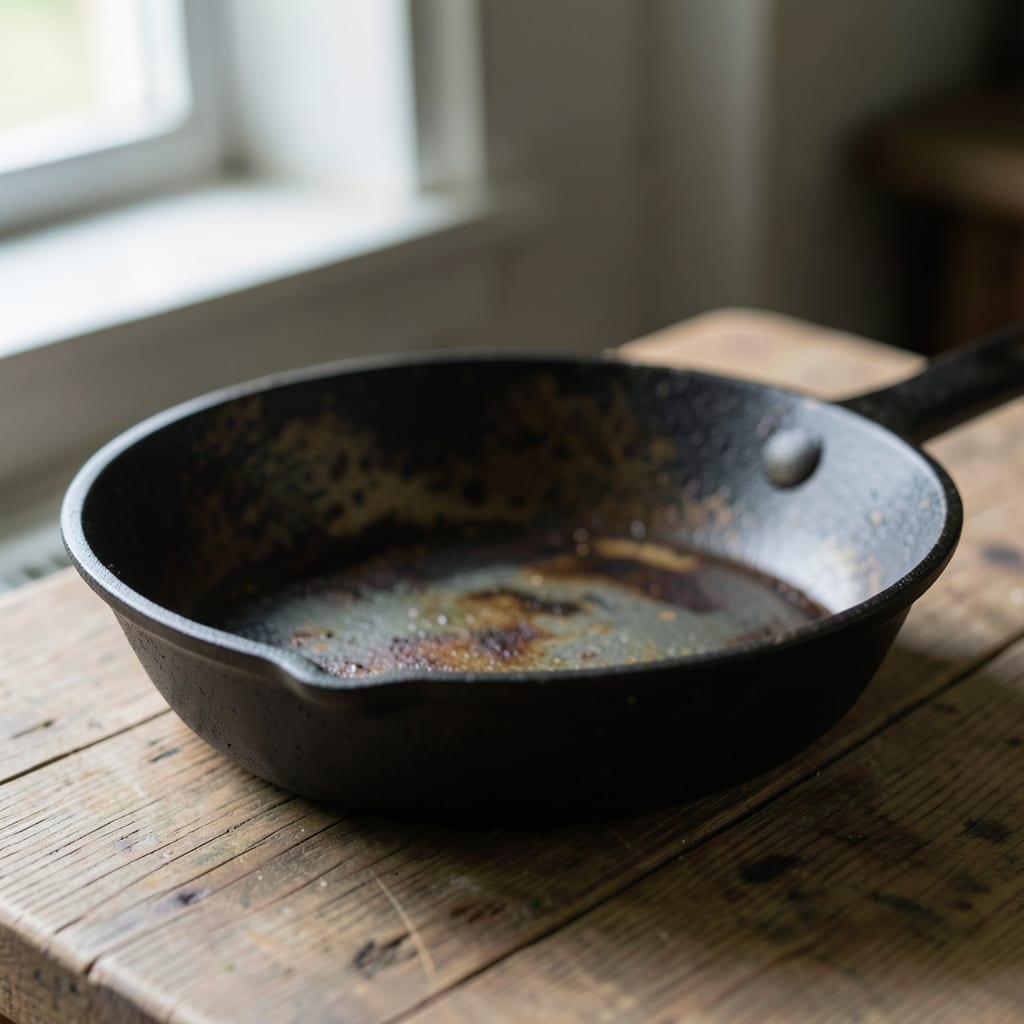
A five-inch steel blade with a wooden handle, warped from years of being dropped. It has been here since 2018, when it was handed down from my grandma’s toolbox—the one where every implement had a story.
The handle is splintered where it hit the concrete too many times, and the blade has a permanent bend from the day it caught a rock.
It changed the work in 2020, when it finally gave out mid-season. Instead of replacing it, I wrapped the handle in duct tape and kept using it.
That year, every post about seed-starting included a line about *how to dig without breaking your trowel*—and suddenly, readers started sending in their own tools with similar scars. The bent blade became a badge.
Wooden stake
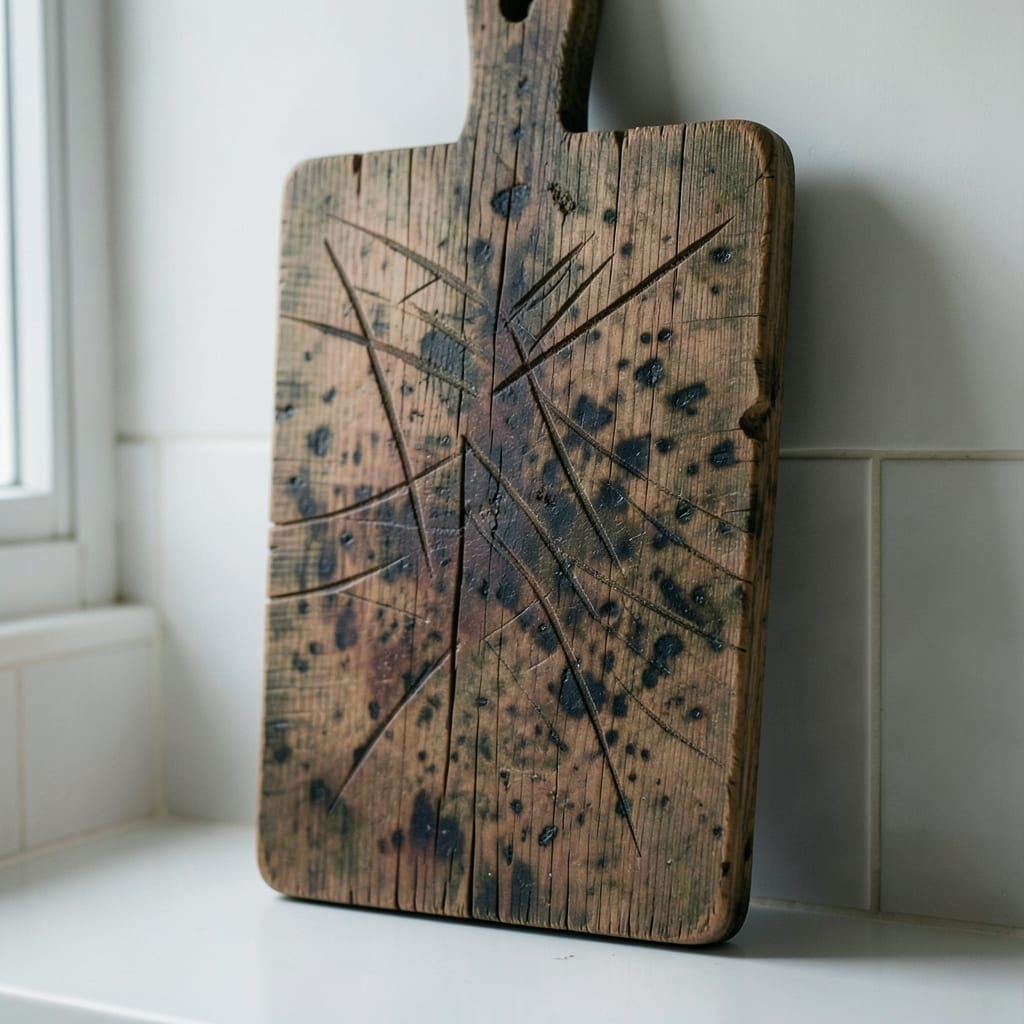
A cedar dowel, split down the middle but still standing in the garden. It has been here since 2019, when I bought a bulk pack of stakes for a raised bed that never got finished.
Most of them rotted or were used as firewood, but this one survived—because it was too short for anything else. Now it props up the runner beans, its split side filled with soil to keep it upright.
It changed the work in 2022, when I realized the beans grew *toward* the stake’s uneven side, as if compensating for its weakness. That’s when I started writing about how plants adapt to imperfect support—and how gardeners should too. The split stake became a metaphor for what grows despite us.
Rain gauge
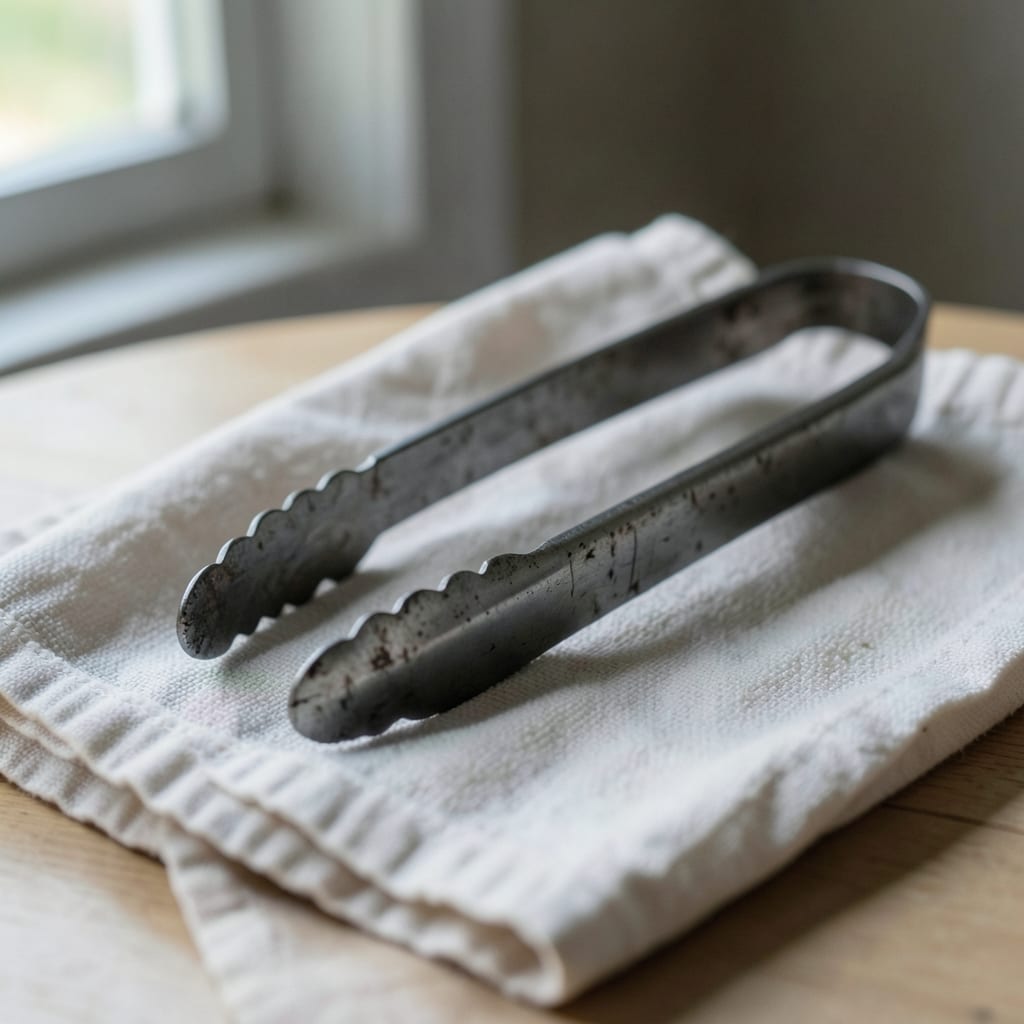
A plastic cylinder with a funnel and a scale marked in inches, but the numbers have faded from sun exposure. It has been here since 2017, when I bought it for a community garden project that fell through.
The funnel is cracked, and the measurements are now guesses—0.5 inches when it’s really 0.4, or 1.2 when it’s closer to 1.0.
It changed the work in 2021, when I stopped trusting weather apps entirely. Instead of arguing with data, I started writing about *how to read the soil*—how dampness under a leaf or the way a tomato vine wilts can tell you more than a broken gauge.
The rain gauge’s failures taught us to listen closer to the earth.
Shears
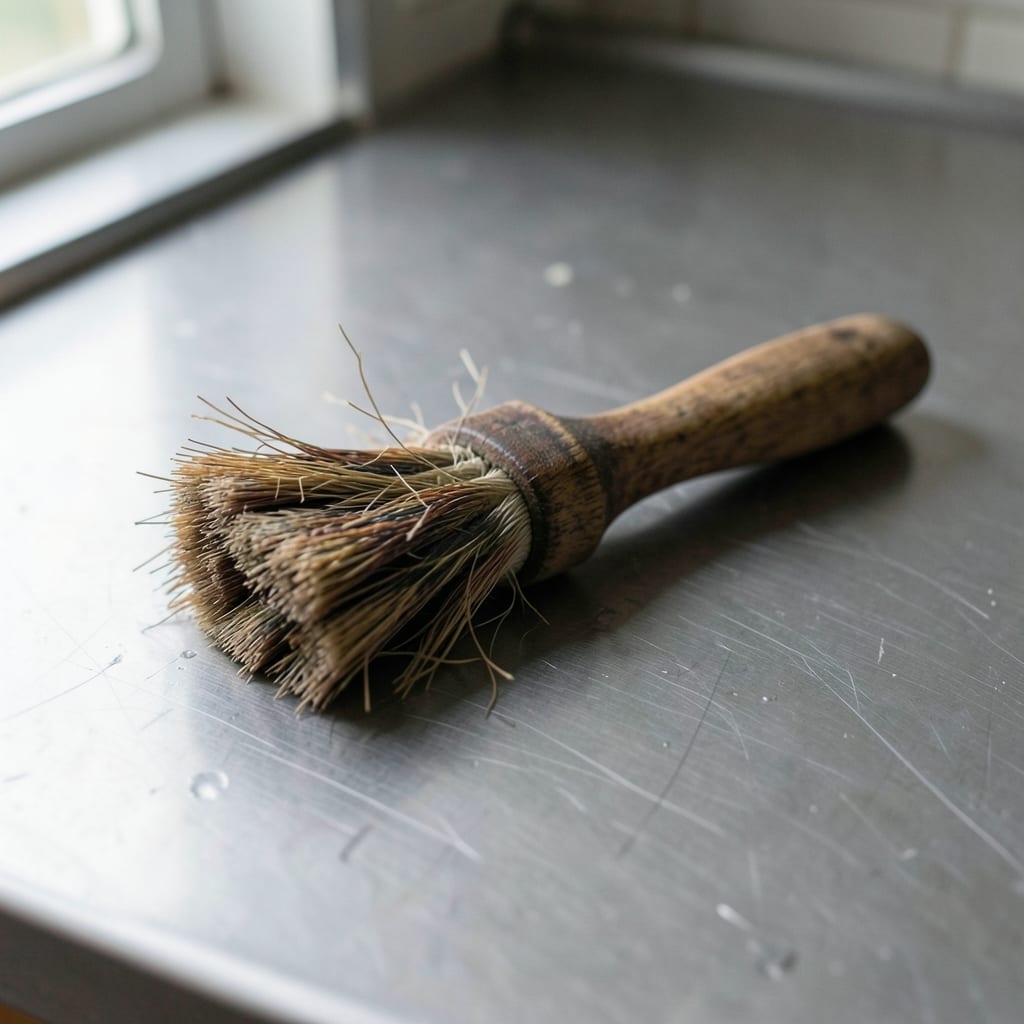
A pair of bypass pruners with a rubber grip that has worn smooth. The blades are dulled from cutting deadheading stems and trimming back perennials, but they still work—if you apply enough force.
They have been here since 2016, when I bought them for a herb garden that outgrew its space. The rubber is cracked, and the pivot screw is loose, but they haven’t been sharpened in four years.
They changed the work in 2023, when I realized the dullness made me slow down. Instead of snipping cleanly, I had to *feel* each cut, which meant noticing which plants needed more care.
That’s when the site’s ‘pruning by touch’ series started—and when readers began sending in photos of their own blunt tools, proving that sometimes, the right tool isn’t the sharpest one.
What is not in the drawer
This work does not depend on perfect tools, scientific precision, or anything that carries a brand name. There are no soil test kits here—just fingers pressed into damp earth. No fancy compost thermometers—just the smell of heat and decay. No high-end gloves—just calloused hands and a few blisters.
Deliberately absent
- A pH meter (the soil’s acidity is guessed by leaf color and plant health).
- Brand-name fertilizers (only compost, manure, and what falls from the sky).
- A greenhouse (most plants here are grown in windowsills, balconies, or whatever patch of light exists).
- A trowel with an ergonomic grip (the bent, splintered one works just fine).
Behind the scenes

I’ve always had a green thumb—I’ve also had dirt under my nails since I was five, when I sneaked seeds from my grandma’s garden to plant in the dirt behind our house. Now, I run *Lawn Daily* to share the joy of growing things, whether it’s coaxing tomatoes from stubborn seedlings or turning a patch of weeds into a thriving herb bed.
Janelle Thibodeaux
I came to this from a childhood spent more time in the garden than in the house. My grandma handed me the trowel when I was six and never took it back.
She’d say, *‘Plants don’t care if you’re pretty at it,’* and I believed her—though I still got scolded for tracking mud into the kitchen.
This work has given me a habit of noticing soil: the way it sticks to your boots, the way it smells after rain, the way it *feels* different under your fingers depending on what’s growing in it.
I can no longer walk past a garden bed without wondering what’s struggling underneath—whether it’s thirsty, smothered, or just waiting for the right light.
I am here to write the advice I wish I’d had when I was twelve, trying to grow a sunflower that kept falling over. No jargon, no assumptions about what you already know.
Just the things that actually work, tested in real dirt with real hands—and the occasional bent tool that somehow makes it better.
Why any of this matters to you
These things—the bent trowel, the split stake, the dull shears—are not here to impress. They are here because they tell the truth. Gardening is not about perfection; it’s about patience, about paying attention, and about learning from what doesn’t go as planned.
Every post on *Lawn Daily* is shaped by the same objects that shape the work: real soil, real seasons, and the quiet lessons of what grows (and what doesn’t).
When you read about starting seeds or pruning roses, you’ll notice the details that matter—the way the trowel digs just deep enough, the way the rain gauge’s guesses become instincts, the way the shears teach you to cut with care.
This is gardening as it is lived, not as it’s sold.
Every piece of advice here is tested with the same tools you might have: a trowel that’s seen better days, a stake that’s held up longer than it should, and hands that know what it’s like to get dirt under the nails. You won’t find perfect solutions—only the ones that actually work in real gardens, with real light, and real rain.
The guides are grouped by category: Advice, Aphids, Blooming, Companion Plants, Container Gardens and Diseases.