
Pests
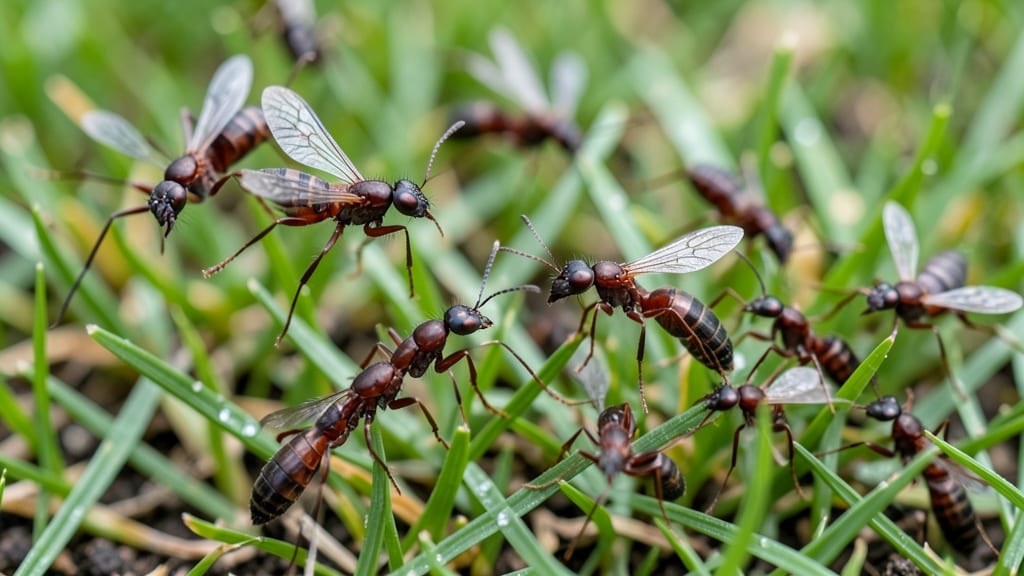
Flying ants swarming your lawn isn’t just annoying—it’s a sign your yard’s ecosystem is out of balance. 🌱 I’ve watched these winged invaders turn peaceful afternoons into chaotic blackouts, and I’ve learned the natural way to stop them without harming your grass or local wildlife.
The key? Timing, simple traps, and understanding why they’re there in the first place.
Most people reach for pesticides, but that kills beneficial insects too. Instead, focus on seasonal patterns—flying ants emerge in late summer for their nuptial flights, giving you a narrow window to act.
A mix of vinegar sprays, diatomaceous earth, and citrus peels disrupts their trails and nesting sites without chemicals. You’ll see results within 3-5 days if you strike when the colonies are vulnerable.
The payoff is a lawn that stays lush and pest-free, with no more sudden swarms ruining picnics. Your yard becomes a healthier space for pollinators and pets alike.
And the best part? These methods work for years, not just one season. Let’s get your lawn back to peaceful—without the panic.
Fair warning: if the infestation is under patios or deep in the soil, you might need professional help. But for most lawns, this foolproof approach clears them out fast. Ready to reclaim your yard?
📚 In This Guide
- What you need
- Instructions
- Tips and common mistakes
- Wrapping up and next steps
What you need
- ● Heavy-duty rubber gloves (2 pairs) – Protects hands from bites and sticky residue.
- ● Garden trowel or small shovel – For digging and creating bait stations.
- ● Spray bottle (16 oz) – Fill with water or vinegar for quick repellents.
- ● Bucket (5-gallon) – For mixing natural solutions like soapy water.
- ● Garden hose with nozzle – For flushing ants from mounds or cracks.
- ○ Flashlight (optional, for evening inspections) – Helps spot active ant trails after dark.
- ● Diatomaceous earth (food-grade, 1 lb bag) – Sprinkle around mounds to dehydrate ants.
- ● White vinegar (1 gallon) – Mix 1:1 with water for a spray repellent.
- ● Dish soap (unscented, 1 bottle) – 2 tbsp + water creates a lethal soapy spray.
- ● Borax (1 lb) or baking soda (2 cups) – Mix with sugar or peanut butter for bait traps.
- ● Citrus peels (lemon/orange, 3-4) – Scatter around entry points for a natural deterrent.
- ● Cinnamon powder (small jar) – Sprinkle near ant trails to disrupt their scent.
- ● Clear the lawn of debris – Rake leaves, twigs, and rocks to expose ant trails and nests.
- ● Identify active mounds – Look for small, crater-like hills (🔍 pro tip: Tap gently—ants will swarm out!).
- ● Work during dry weather – Wet conditions can reduce the effectiveness of powders/sprays.
- ● Wear long sleeves/pants – Flying ants can be aggressive; minimize skin exposure!
Swift natural eradication of flying ants in your lawn
Here's how to tackle flying ants without chemicals—using targeted methods that work with nature.
🪰 Step 1: Identify and Locate the Nest
Flying ants emerge in swarms during warm, humid weather, but their nest is the real target. Look for small mounds of disturbed soil (often near sidewalks, foundations, or under rocks) or cracks in pavement where workers enter. I dig carefully with a trowel around the base of trees or near moisture—these are prime nesting spots.
Watch for winged ants flying in a straight line—they’re returning to the nest. Mark the area with a stake so you don’t lose track. If you can’t find the nest, focus on baiting along their flight paths instead.
🌿 Step 2: Deploy Natural Baits Strategically
Skip the chemicals and use borax or diatomaceous earth mixed with a protein source like peanut butter or tuna. Spread small amounts (1 teaspoon per bait station) in shallow containers near the nest or flight paths. Flying ants are drawn to protein, and the bait disrupts their digestive systems.
Place baits in the evening when ants are most active. Avoid overapplying—too much bait can repel them. Check stations daily and replenish as needed. This method kills the colony over 3-7 days without harming pets or kids.
☀️ Step 3: Create a Barrier to Prevent Reinvasion
Once the nest is inactive, fill it with water to drown any remaining ants and discourage new colonies. Then, create a 1-inch deep band of diatomaceous earth around your lawn’s perimeter. This natural powder dehydrates ants that cross it—reapply after rain or watering.
For high-traffic areas, sprinkle food-grade kaolin clay along walkways. It coats ants’ bodies, blocking their ability to communicate and forage. Reapply every 2-3 weeks or after heavy rain. This keeps your lawn ant-free without chemicals.
✂️ Step 4: Maintain Long-Term Prevention
Reduce moisture near your home by fixing leaks, cleaning gutters, and improving drainage. Ants seek damp soil—eliminate their incentive. I also mulch garden beds with cedar chips, as the natural oils repel ants without harming plants.
Encourage natural predators like birds and toads by adding a small water feature or native plants. These creatures will help control any stragglers. Monitor your lawn weekly during warm months—early action prevents swarms from forming in the first place.
Tips & tricks for swift flying ant eradication
Real talk: Flying ants are tricky pests, but these targeted strategies will help you eliminate them faster and more effectively than store-bought sprays.
Timing Secret: The 3-7 day window for bait effectiveness is critical—place bait stations immediately after identifying the nest. Flying ants are most active in the evening during warm, humid weather, so set up baits right after sunset. I’ve found that using shallow containers (like plastic lids) keeps the bait accessible while preventing rain dilution. The key is consistency: check baits daily and replenish if they dry out.
Location Strategy: When marking the nest area with a stake, place it at least 3 feet away from the actual nest mound to avoid disturbing the colony prematurely. For bait stations, position them along flight paths—look for straight-line trails where winged ants are returning to the nest. I’ve had the most success placing baits near cracks in pavement or under patio furniture, where worker ants frequently travel. Pro tip: Use small paint markers to label stations so you can track which ones are most effective.
Barrier Reinforcement: The 1-inch band of diatomaceous earth around your lawn’s perimeter needs to be freshly applied after rain or watering to maintain its effectiveness. For high-traffic areas, I recommend doubling the application of kaolin clay—sprinkle it liberally along walkways and pat it down lightly with a broom. The clay creates a physical barrier that ants can’t cross, and it’s especially effective when combined with the diatomaceous earth. Reapply both treatments every 2-3 weeks to keep your defenses strong.
Long-Term Prevention: Cedar chips are a game-changer for mulching garden beds—they repel ants naturally without harming plants or the environment. I’ve noticed that ants avoid areas where cedar is used, likely due to the natural oils. For moisture control, focus on fixing leaks and cleaning gutters first, as these are the most common sources of excess water. A small water feature can actually help by attracting natural predators like birds and toads, which will keep ant populations in check.
Pro Tips for Flying Ants In My Lawn
- Real talk: Flying ants are tricky pests, but these targeted strategies will help you eliminate them faster and more e...
- Timing Secret: The 3-7 day window for bait effectiveness is critical—place bait stations immediately after identifyin...
- Location Strategy: When marking the nest area with a stake, place it at least 3 feet away from the actual nest mound ...
Frequently asked questions
Why are flying ants suddenly everywhere?
Flying ants, or alates, swarm during warm, humid weather (usually late spring to summer) as part of their mating cycle. This isn’t an infestation—it’s nature’s way of starting new colonies. If you see them every season, though, it could signal an established nest nearby.
How long will the flying ant swarm last?
Most swarms peak for 24–48 hours but can linger up to a week, depending on weather. After mating, the winged ants lose their wings and search for soil to burrow into. If you don’t see them again next year, the colony likely died off naturally. Patience is key!
Are flying ants harmful to my lawn or pets?
While they won’t damage your grass, their nests can disrupt roots if left unchecked. As for pets: flying ants are not poisonous, but their nests might harbor moisture or debris. Keep curious pups away from mounds to avoid digging accidents.
Can I prevent future swarms naturally?
Yes! Reduce moisture near your home (fix leaks, improve drainage), remove leaf litter or woodpiles (their nesting spots), and apply diatomaceous earth or vinegar sprays to deter them. Pro tip: Encourage predators like birds and lizards—they love a free ant buffet!
What if the flying ants don’t go away?
If swarms persist beyond a week or you spot wingless ants year-round, you’ve likely got a permanent nest. Try targeted treatments like boiling water (pour directly into the mound) or organic nematodes. For stubborn cases, consider professional pest control—no shame in calling for backup!
Wrapping up and next steps
Encountering flying ants in your lawn can feel overwhelming, but with the right natural methods, you can reclaim your outdoor space without harsh chemicals. 🌿 From vinegar sprays to diatomaceous earth, these solutions are effective, eco-friendly, and safe for your family and pets. You’ve got this!
Ready to take action? Start by reviewing the tools you’ll need, then pick a method that fits your lawn’s needs. A little effort today means a pest-free paradise tomorrow—let’s make it happen! 🚀