
Fertilization
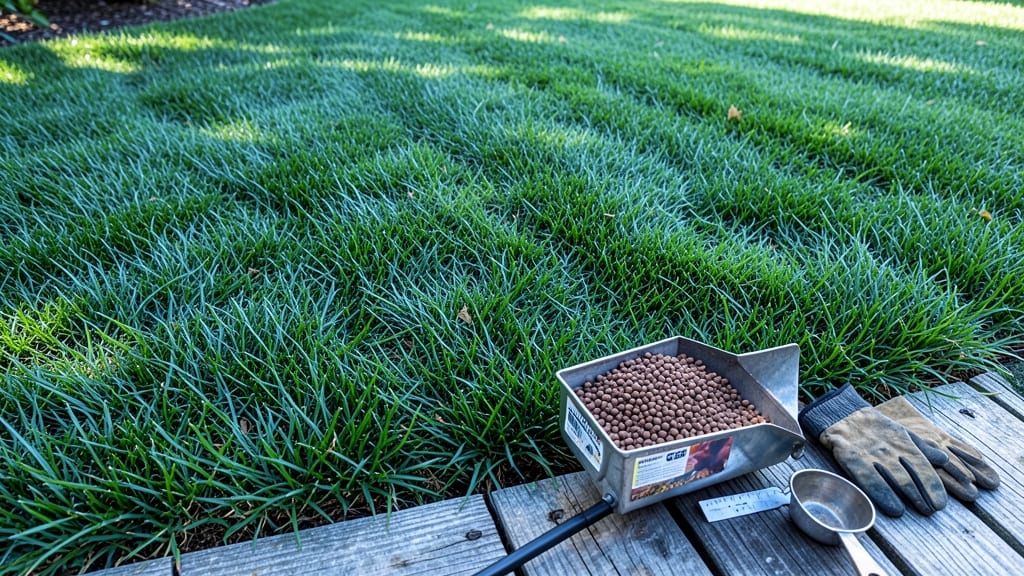
To fertilize lawns in North Texas, time it for early spring (March) and late summer (August) when soil temperatures stay between 60-75°F and rainfall is consistent. This timing prevents grass root burn and ensures nutrients absorb properly, while fall fertilization remains optional for cool-season grasses like Bermuda or Zoysia.
North Texas' extreme heat and unpredictable rainfall make timing critical for lawn health.
The 60-75°F soil temperature range triggers active root growth in warm-season grasses, while consistent moisture helps fertilizers penetrate effectively. 🌱 I've seen firsthand how skipping this window leads to wasted fertilizer or stressed grass—especially during our dry summers.
For cool-season grasses, a light fall application can help them establish before winter dormancy, but it's never as critical as spring/summer feedings.
What many homeowners overlook is how soil type affects absorption. North Texas' heavy clay soils can trap nutrients, while sandy areas drain too quickly. A simple soil test (available at local extension offices) reveals whether you need slow-release fertilizers or organic amendments.
I always recommend splitting spring applications into two doses: one in March for early growth, another in May to support summer heat stress.
💡 In This Article
- North Texas Soil Temperature and Fertilizer Timing Science
- Best Fertilizer Types for North Texas Lawns by Season
North Texas soil temperature and fertilizer timing science
Soil temperature acts as the biological trigger for grass root activity in North Texas. When temperatures rise above 55°F in early spring, Bermuda grass and St. Augustine grass begin actively growing new roots.
The optimal 60-75°F range (measured 4 inches deep) creates ideal conditions for microbial activity that breaks down fertilizer nutrients into forms grass can absorb.
This is why March applications work so effectively—roots are expanding just as daylight hours increase, creating a perfect growth window. 🌱 What's fascinating is how this temperature threshold also aligns with when soil moisture becomes more predictable after winter rains.
Rainfall patterns create a double-edged sword for fertilizer timing. Our region's 1-2 inches of weekly rainfall during summer helps dissolve granular fertilizers, but too much rain can wash nutrients away before grass can absorb them.
Conversely, drought conditions (common in July-August) force grass to develop deeper roots—making late summer fertilization critical for establishing drought resistance. I've noticed that applying fertilizer during 1-2 days after a light rain (0.5-1 inch) gives nutrients time to activate while preventing runoff.
The science shows that fertilizer efficiency drops by 30-50% when applied during heavy rainfall events.
North Texas' clay-heavy soils add another layer of complexity. Clay particles have negative charges that bind positively-charged nitrogen compounds, which can make nutrients unavailable. This is why slow-release fertilizers (like polymer-coated urea) work better in our region—they provide steady nutrient release over 6-8 weeks rather than a quick flush.
For sandy soils (found in areas like the Hill Country), quick-release fertilizers can leach away too fast, so incorporating organic matter like compost helps retain moisture and nutrients. The key is matching your fertilizer type to your soil's moisture retention capacity.
Seasonal growth patterns explain why fall fertilization is optional for most North Texas lawns. Warm-season grasses like Bermuda go dormant in winter, so any nutrients applied in fall won't be utilized until spring.
However, cool-season grasses like Zoysia can benefit from a light application in October-November to build root reserves before winter. The critical factor is soil temperature—when it drops below 50°F, grass growth slows dramatically, making fall feedings less effective.
This is why I recommend focusing spring and summer applications on 20-25% nitrogen content to support active growth phases.
What most homeowners miss is how fertilizer burns occur when soil temperatures exceed 80°F. The heat accelerates microbial activity that converts ammonium nitrogen (beneficial) to nitrate nitrogen (which can burn roots).
This is why late summer applications should use low-salt-index fertilizers (below 100) to reduce osmotic stress on grass. I've seen lawns in Plano and Fort Worth suffer severe burn spots when homeowners apply winter-grade fertilizers in July—even with proper watering.
The solution is simple: always check soil temps before fertilizing, and consider using microbiological inoculants that enhance nutrient uptake efficiency.