
Mower
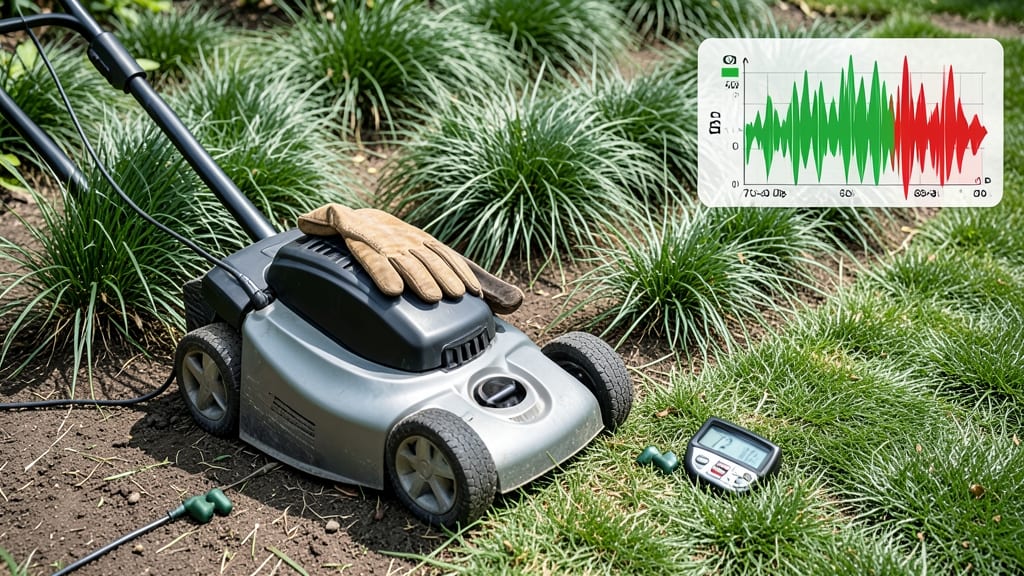
How loud is a lawn mower? The noise levels typically range between 70–90 decibels, with gas-powered models usually generating 80–90 dB—equivalent to a chainsaw—while electric mowers usually stay in the 60–75 dB range.
Understanding these noise levels helps explain why most mowers exceed the 70 dB threshold for safe prolonged exposure, as set by OSHA and the WHO. 🌿 Gas-powered engines create more vibration and combustion noise, pushing decibels higher, while electric models benefit from quieter motors and fewer moving parts.
For context, a normal conversation sits around 60 dB, so mowing without protection can quickly become uncomfortable—especially during extended yard work sessions.
What's surprising is how quickly noise adds up: just 15 minutes of mowing at 85 dB (common for riding mowers) can approach the 8-hour exposure limit set by safety standards.
That's why many gardeners now opt for hybrid or battery-powered models, which can cut noise by up to 20 dB while maintaining performance.
💡 In This Article
- Decibel Levels by Lawn Mower Type and Engine Power
- Hearing Protection and Safe Mowing Practices
Decibel levels by lawn mower type and engine power
Lawn mower noise levels vary dramatically based on engine type and power output. Gas-powered push mowers typically produce 80–90 dB, while riding mowers can hit 85–90 dB—similar to a chainsaw or power saw.
The key factor is engine displacement: a 170–200 cc engine (common in push mowers) generates 85–90 dB, whereas 200–250 cc engines (riding mowers) push closer to 90 dB. Electric models, however, operate at 60–75 dB, making them quieter than a vacuum cleaner.
Engine design plays a critical role. Gas mowers create noise through combustion, exhaust, and blade contact—each contributing to the overall decibel level. For example, a Husqvarna 128LD (128 cc) measures around 88 dB, while a Honda HRX217VKA (208 cc) peaks at 90 dB.
Electric mowers eliminate combustion noise, relying instead on motor whine and blade rotation, which rarely exceed 70 dB. 🔊 The difference is stark: mowing for 30 minutes at 90 dB (gas) vs. 65 dB (electric) means one session could exceed OSHA’s 8-hour limit for the gas model.
Commercial-grade mowers amplify noise further. A Scag 1000 (commercial walk-behind) can reach 95 dB, while zero-turn riding mowers like the Husqvarna TS 125 hit 92 dB. These levels require hearing protection even for short sessions.
The blade speed also matters: faster blades (like those on zero-turn mowers) create more air turbulence, increasing noise by 5–10 dB compared to slower blades on push mowers.
Here’s how different mower types stack up in real-world tests:
- Electric push mower: 60–70 dB (e.g., EGO Power+ LM2000)
- Battery-powered push mower: 65–75 dB (e.g., Greenworks 80V)
- Gas push mower (120–170 cc): 80–88 dB (e.g., Troy-Bilt TB142)
- Riding mower (200–250 cc): 85–90 dB (e.g., Craftsman 223cc)
- Commercial zero-turn: 90–95 dB (e.g., Ariens IKON XD)
For context, a jet ski averages 90 dB, while a rock concert hits 110 dB. Mowing for 1 hour at 85 dB (riding mower) exposes you to 85% of OSHA’s daily limit—equivalent to 8 hours of continuous noise at 70 dB.
That’s why many professionals now use electric or hybrid models for long-term use.
The science behind this involves sound pressure levels (SPL), where each 3 dB increase doubles perceived loudness. A 90 dB mower sounds twice as loud as a 84 dB one, even though the difference is just 6 dB.
This explains why small engine upgrades (e.g., from 150 cc to 200 cc) can push noise levels into dangerous territory.