
Lawn
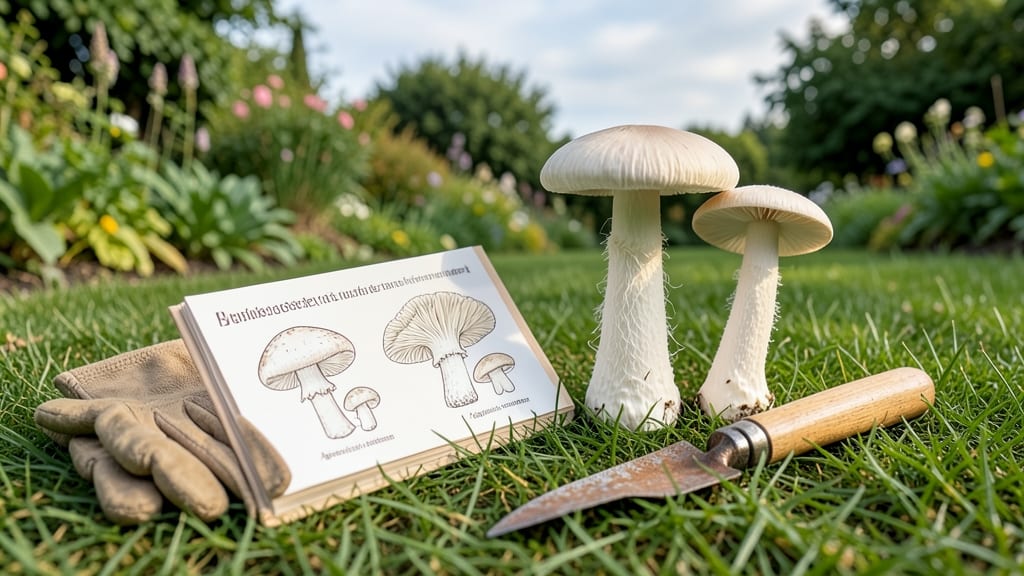
Lawn mushroom types range from edible varieties like meadow mushrooms and shaggy ink caps to highly toxic species such as death caps and destroying angels. Positive identification is essential before attempting to harvest or remove them.
Lawn mushrooms appear in two distinct categories: those safe for consumption and those that pose serious health risks. 🍄 Edible species like meadow mushrooms (Agaricus campestris) typically feature white gills and a smooth cap, while their deadly counterparts—such as the death cap (Amanita phalloides)—often display a bulbous base and ring on the stem.
Seasonal growth patterns also differ, with most edible varieties thriving in late summer and fall, while toxic mushrooms may appear year-round in damp conditions.
For gardeners, distinguishing between these types is crucial.
Many edible mushrooms contribute to soil health by breaking down organic matter, while toxic varieties can harm pets or children. Always use a field guide or consult a mycologist if you're unsure—some species, like the shaggy ink cap, change appearance as they age, making visual identification tricky.
💡 In This Article
- Identifying Edible vs Poisonous Lawn Mushrooms
- Safe Handling and Removal of Lawn Mushrooms
Identifying edible vs poisonous lawn mushrooms
The most reliable way to distinguish between safe and dangerous lawn mushrooms starts with their physical characteristics. Edible varieties like meadow mushrooms (Agaricus campestris) typically have a smooth, convex cap ranging from 2-4 inches in diameter, with white gills that turn pinkish-brown as they mature.
Their stems are slender and lack a ring or sac-like base—key features that immediately set them apart from deadly lookalikes. 🍄 The death cap (Amanita phalloides), for example, boasts a pale yellow cap, white gills, and a distinctive bulbous base with a ring near the top, resembling a tiny parasol.
Gill color is another critical identifier. Most edible lawn mushrooms start with white gills that darken with age, while toxic species often maintain a uniform color or exhibit unusual patterns.
For instance, the shaggy ink cap (Coprinus comatus) has long, white gills that dissolve into an inky liquid when mature—a trait that makes it edible when young but unrecognizable later.
The spore print test (placing the cap gill-side down on paper and covering it for 12-24 hours) reveals these differences: edible species often produce brown spores, while deadly varieties like the destroying angel (Amanita bisporigera) leave white spores.
Habitat and growth patterns provide additional clues. Edible lawn mushrooms thrive in well-drained grassy areas after heavy rain, often appearing in clusters during late summer to fall. Toxic species, however, may grow year-round in damp, shaded spots or near tree roots.
The meadow mushroom, for example, prefers open lawns, while the death cap favors wooded edges or garden beds with decaying organic matter. Pay attention to these environmental cues—they can be your first line of defense against misidentification.
Seasonal timing also plays a role. Most edible species emerge after warm, wet periods, while some toxic varieties may appear unexpectedly. The shaggy ink cap, for instance, often pops up in spring after the first heavy rains, while the death cap can persist in cooler months.
If you're foraging, note the date and weather conditions—unusual growth patterns might signal a dangerous species. Always cross-reference with a trusted field guide or mycological resource before consuming any wild mushroom.
Texture and aroma offer subtle but important distinctions. Edible lawn mushrooms typically have a firm yet tender cap with a mild, earthy smell—similar to almonds in some cases. Toxic varieties often emit a foul odor, like rotten eggs or chemicals, and may feel slimy or sticky to the touch.
The destroying angel, for example, has a distinctly unpleasant scent that's a red flag. When in doubt, trust your senses—if something feels "off," it's safer to assume it's poisonous.
For the most accurate identification, combine visual inspection with a spore print test and habitat analysis. Never rely on a single characteristic, as some mushrooms change appearance with age or environmental conditions.
If you're still unsure, consider sending a photo to a local mycological society or using a reliable app like iNaturalist, where experts can provide second opinions. Your safety—and that of your family or pets—depends on getting this right.