
Lawn
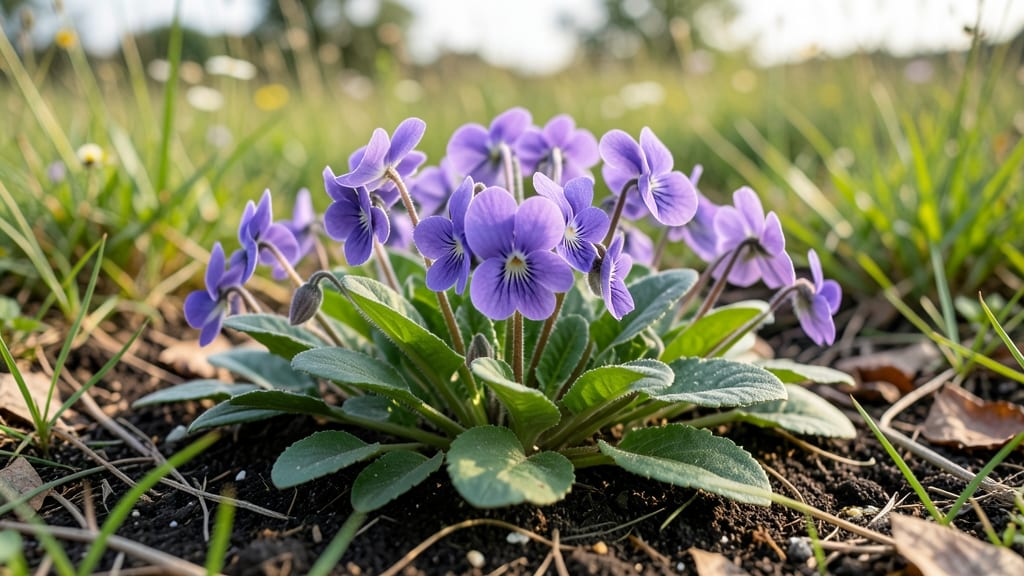
Those small purple flowers growing in your lawn aren’t weeds—they’re wild violets, nature’s secret pollinator magnets. 💜 I’ve spent years watching these delicate flowers transform barren patches into bee-friendly havens, but I know some gardeners want a cleaner look.
The good news? You can manage them without harsh chemicals while keeping your lawn healthy.
Wild violets thrive in cool, moist soil and partial shade—exactly where lawns struggle. They’re not invasive, but their spreading habit can frustrate perfectionists. The key is working with their growth patterns rather than against them.
A sharp lawnmower blade set high can weaken them over time, while overseeding with clover or creeping red fescue crowds them out naturally.
If you choose to remove them, hand-pulling after rain (when soil is soft) is most effective—just grab the entire root to prevent regrowth. For larger areas, a vinegar-based spray (3% acetic acid) works as a natural herbicide, though it kills surrounding grass too, so spot-treat carefully.
Either way, you’ll end up with a lawn that’s both tidy and wildlife-friendly.
Here’s the twist: many gardeners who “eradicate” violets later regret it—they’re edible, medicinal, and support bees when other flowers are dormant. Consider leaving a small patch as a natural lawn feature. Either way, your grass will thank you for the balance.
📚 In This Guide
- What you need
- Instructions
- Tips and common mistakes
- Wrapping up and next steps
What you need
- ● Garden gloves (1 pair) – Heavy-duty, nitrile-coated for protection against thorns and soil.
- ● Hand trowel or small garden fork – A 4- to 6-inch trowel works best for precision digging.
- ● Pruners or sharp scissors – For snipping stems close to the ground (clean, bypass-style pruners are ideal).
- ● Garden hose or watering can – To wet the soil before digging for easier extraction.
- ○ Organic mulch (optional but helpful) – Straw, wood chips, or shredded leaves (2–3 inches thick) to smother regrowth.
- ● Vinegar (white, 5% acetic acid) – 1 gallon for DIY herbicide spray (mix with water—see tips for ratios).
- ○ Corn gluten meal (optional) – 10–20 lbs for pre-emergent weed control (apply in early spring).
- ● Label or plant ID guidebook – For positive identification (e.g., Wildflower Guide or smartphone app like iNaturalist).
- ● Sunny or partially sunny day – Avoid soggy soil; work when the ground is dry but workable.
- ● Patience and time – Wild violets spread via rhizomes; expect multiple sessions for full removal.
- ● Knowledge of local regulations – Check if your area prohibits chemical herbicides (vinegar is usually safe but test on a small patch first!).
How to identify and remove wild violets from your lawn
Wild violets are stubborn but manageable—here's how to spot them and eliminate them naturally.
🌿 Step 1: Confirm Identification Before Treatment
Wild violets have distinctive features: heart-shaped leaves with scalloped edges and clusters of small purple flowers on short stems. The leaves grow in a low rosette pattern close to the ground, often in shady or partially shaded areas. I always check for these three key traits before treating: purple flowers in spring, smooth, waxy leaves, and a creeping root system.
Run your fingers over the leaves—wild violets feel slightly waxy to the touch. If you see clusters of flowers emerging directly from the leaf rosette (not on a separate stem), that's your confirmation. This plant thrives in lawns because it tolerates foot traffic better than most weeds.
💧 Step 2: Apply Targeted Spot Treatment
For small patches, I use a vinegar-based herbicide (a 1:1 ratio of white vinegar and water with a few drops of dish soap). Spray directly on the leaves and stems, avoiding surrounding grass. The soap helps the solution cling to the foliage. Apply this on a dry, sunny day—the heat helps break down the plant's cell structure while the vinegar dehydrates it.
Reapply every 3-5 days until the leaves turn brown and crispy. This method works best when the violets are actively growing, typically in early spring when they're most vulnerable. I always test a small area first to ensure the grass recovers—some lawns are more sensitive than others.
✂️ Step 3: Hand-Pull or Dig Out Established Patches
For larger infestations, I switch to manual removal. Grab the violets at the base of the rosette and pull upward with steady pressure. The roots are shallow but fibrous—you'll need to dig carefully to avoid breaking them off. I use a hand trowel to loosen stubborn roots, especially in compacted soil.
Here's the thing—wild violets spread through underground runners, so dig 2-3 inches deep around the plant to remove as much of the root system as possible. Fill the holes with fresh topsoil to prevent regrowth. I always pull weeds when the soil is moist but not soggy—this makes the roots easier to extract without tearing.
☀️ Step 4: Prevent Regrowth With Cultural Controls
After removal, improve lawn health to discourage violets from returning. Overseed bare spots with shade-tolerant grass seed and apply a thin layer of compost to enrich the soil. Wild violets struggle to compete with dense, healthy turf, so I focus on thickening the grass canopy—this blocks sunlight that violets need to germinate.
Mow your lawn regularly at 3 inches to shade the soil and prevent violet seeds from reaching sunlight. I also water deeply once a week to encourage deep grass roots, which outcompete weeds naturally. If violets persist, a corn gluten meal pre-emergent applied in early spring can help—it prevents seed germination without harming established plants.
🌱 Step 5: Monitor and Retreat as Needed
Check the treated areas weekly for new growth—violets can regenerate from even small root fragments. If you spot new rosettes, repeat the vinegar treatment or pull them immediately. I keep a small spray bottle of the vinegar solution handy for spot treatments during the growing season.
For persistent patches, I rotate methods—sometimes a combination of hand-pulling, vinegar treatment, and overseeding works best. The key is consistency. Violets are annuals that reseed aggressively, so early intervention in spring is critical. With patience, you can reduce their presence significantly within a season.
Tips & tricks for eradicating wild violets naturally
These targeted strategies will help you tackle violet infestations with precision and protect your lawn's health.
Timing is Everything: Wild violets are most vulnerable during their active growth phase in early spring. This is when they're putting energy into flowering rather than root development. I've found that treating them right after they bloom but before seed pods form gives the best results. The 3-5 day reapplication schedule in Step 2 works because it prevents the plants from recovering between treatments.
Equipment Upgrade: While a basic hand trowel works for small patches, investing in a dandelion digger (a specialized weeding tool) makes removing those stubborn underground runners much easier. The long, narrow tines let you extract entire root systems without tearing. I keep one handy for larger infestations—it saves time and reduces regrowth. The key is to work when the soil is moist but not soggy, as mentioned in Step 3.
Lawn Health Strategy: The cultural controls in Step 4 aren't just about preventing regrowth—they're about creating an environment where violets can't thrive. I've seen dramatic improvements by focusing on three key factors: proper mowing height (3 inches), consistent watering (deep once weekly), and overseeding with shade-tolerant grass. This creates a dense turf canopy that blocks sunlight violets need to germinate. The corn gluten meal pre-emergent is particularly effective when applied in early spring before violets start flowering.
Monitoring System: Implement a simple weekly inspection routine after treatment. I mark treated areas with small flags or spray paint dots on the grass to track progress. This helps me spot new growth immediately and prevents violets from establishing new root systems. The weekly check mentioned in Step 5 is crucial because violets can regenerate from even small root fragments left in the soil.
Pro Tips for Small Purple Flowers Growing In Lawn
- These targeted strategies will help you tackle violet infestations with precision and protect your lawn's health.
- Timing is Everything: Wild violets are most vulnerable during their active growth phase in early spring. This is when...
- Equipment Upgrade: While a basic hand trowel works for small patches, investing in a dandelion digger (a specialized ...
Frequently asked questions
Got questions about those tiny purple blooms popping up in your lawn? You’re not alone! Here are some of the most common concerns—and practical answers—to help you tackle them like a pro.
Are small purple flowers in my lawn wild violets?
Most likely! Wild violets (Viola sororia) are the usual suspects, with heart-shaped leaves and delicate purple (or white/yellow) blooms. If they’re low-growing, spreading, and appear in early spring, it’s a strong match. Pro tip: Check for tiny white roots when pulling—violets have a fibrous system, not a taproot.
How do I get rid of wild violets naturally?
Start with manual removal: Pull them before they seed (late spring/early summer). Use a weeding tool or gloved hands to avoid spreading seeds. For stubborn patches, try vinegar spray (1 gallon white vinegar + 1 oz dish soap) on sunny days—avoid grassy areas to prevent damage. Warning: Reapply every 3–5 days until gone.
When is the best time to remove wild violets?
The ideal window is spring, right after blooming (March–May in most regions). Violets spread via seeds and underground runners, so early action stops their takeover. If you wait until summer, you’ll battle seedlings for months. Bonus: Mow high (3–4 inches) to shade out new growth while you work.
Will wild violets kill my grass?
Not directly, but they compete aggressively for nutrients, water, and sunlight. A thick violet patch can smother grass, leaving thin or bare spots. Over time, this creates weak turf vulnerable to weeds and pests. Solution: Overseed bare areas with clover or creeping red fescue for a tougher lawn.
What if I don’t want to remove them?
Wild violets are edible and pollinator-friendly! If you’re okay with their presence, leave them for bees and butterflies. Just spot-treat dense clusters to maintain lawn aesthetics. Fun fact: Violets are a foraged food—young leaves are mild and tasty in salads!
Why do violets keep coming back after I pull them?
Violets spread via seeds and runners. Even a tiny root fragment can regrow! To break the cycle:
Persistence pays off! It may take 1–2 seasons to fully eradicate them.
Wrapping up and next steps
Discovering those charming small purple flowers in your lawn might feel like a surprise at first, but with the right knowledge, you can turn it into an opportunity!
Whether they’re wild violets or another type of blooming weed, understanding their nature and how to manage them ensures your lawn stays healthy and vibrant. 🌱
Ready to take action? Start by identifying the plants in your yard, then choose the best removal method—whether it’s manual pulling, natural suppression, or targeted herbicides. With patience and consistency, you’ll reclaim your lawn while keeping the ecosystem in balance.
Pro tip: 💡 Keep an eye out for new sprouts and tackle them early to prevent regrowth!