
Lawn
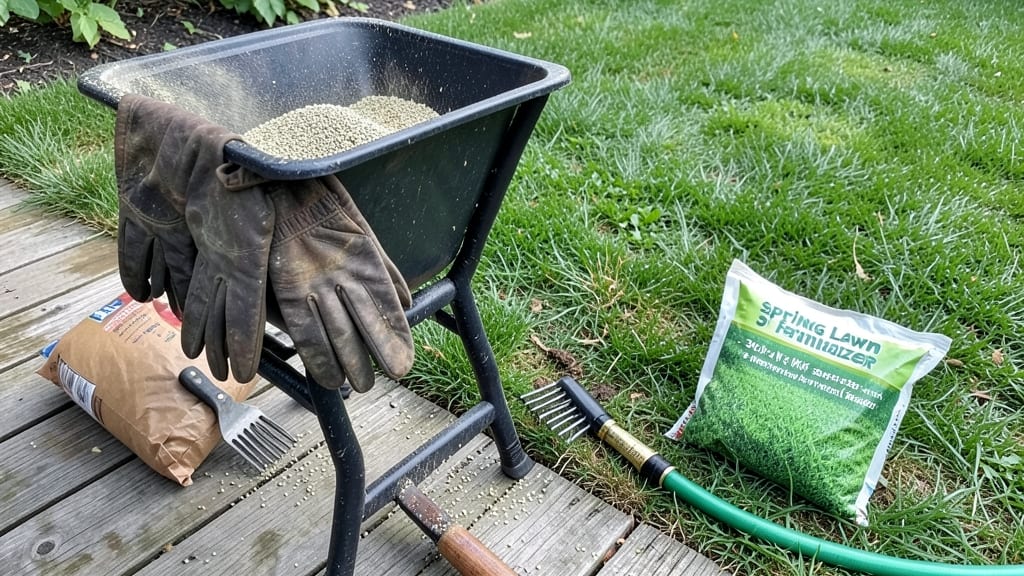
Fertilizing your lawn in spring is the key to a vibrant, healthy 🌱 lawn—timing it right means the difference between a thick, green carpet and a patchy mess.
Picture this: you’ve just spent the winter dreaming of that perfect spring lawn, only to watch it struggle after you apply fertilizer too early or too late. The good news? There’s a sweet spot—and it all comes down to your climate zone and grass type.
In Zone 6 (like most of the Midwest and Northeast), the ideal window is late March to early April, when soil temperatures hit 50°F and grass starts actively growing. But if you’re in the South, warm-season grasses like Bermuda need a different approach.
Below, I’ll break down the exact timeline, the right fertilizer for your lawn, and how to avoid common mistakes that leave your grass looking sad instead of stunning.

The exact spring fertilization timeline for lawns by climate zone
Getting your lawn fertilization timing right in spring is like hitting a moving target—it shifts based on your USDA hardiness zone, grass type, and local temperature triggers.
Cool-season grasses (like fescue and bluegrass) wake up early, while warm-season varieties (such as Bermuda and Zoysia) need warmer soil to activate. I’ve broken down the exact windows for both types, so you can feed your lawn at the perfect moment for maximum growth without burning it.
For Northern regions (Zones 3-6), where cool-season grasses dominate, your first fertilization should happen as soon as the soil warms to 40°F (4°C)—typically in early March to mid-April. This aligns with when grass breaks dormancy and starts actively growing.
In Southern regions (Zones 7-10), warm-season grasses like St. Augustine or Centipede need to wait until soil temps hit 65°F (18°C), usually in late April to early May. Miss this window, and you risk feeding dormant grass or encouraging fungal growth.
Here’s the game-changer: Temperature-based triggers are more reliable than calendar dates. Use a soil thermometer to check depths of 2-4 inches—this is where grass roots are most active. For cool-season lawns, aim for 50°F (10°C) soil temps for the first application.
Warm-season lawns? Hold off until soil hits 65°F (18°C) consistently for a week. This ensures your fertilizer is working with nature, not against it.
🌱
Let’s talk fertilizer types—because not all products are created equal. For cool-season lawns in spring, I recommend a high-nitrogen fertilizer (look for 30-0-4 or 24-0-10 ratios) to jumpstart growth. Warm-season lawns, however, do better with a balanced or slow-release option (like 16-4-8) to avoid overstimulating them too early.
Pro tip: If your grass is pale or sparse, a quick-release nitrogen boost can help, but switch to slow-release after the first application to prevent burn.
Timing isn’t just about when you fertilize—it’s also about how often. For cool-season lawns, plan for 3-4 applications spaced 4-6 weeks apart through early summer. Warm-season lawns need 2-3 applications, starting in late spring and tapering off by early fall.
The key is to stop fertilizing 6-8 weeks before your first expected frost—this gives grass time to harden off and store nutrients for winter.
Don’t overlook pre-fertilization prep. Before applying anything, mow your lawn to a height of 2.5-3 inches—this ensures even coverage and prevents clumping. If your lawn looks thin or compacted, aerate 1-2 weeks before fertilizing to let nutrients penetrate deeper.
And always water your lawn deeply the day before and after applying fertilizer to activate the granules and wash away excess salts. Skipping this step can leave white crusts on your grass and stress the roots.
One of my biggest mistakes early on? Fertilizing too early in Zone 5 because I followed a calendar instead of soil temps. My Kentucky bluegrass was still dormant, and I ended up with brown patches instead of lush growth.
Now, I always check soil temps and adjust my schedule. If you’re unsure, err on the side of waiting—dormant grass won’t use fertilizer, but over-fertilizing active grass
Signs your lawn needs spring fertilizer (and when to skip it)
Spring is the perfect time to give your lawn the nutrients it needs to bounce back from winter dormancy. But how do you know if your grass actually needs fertilizer? Look for dull, patchy areas that refuse to green up after mowing, or grass that grows slowly despite regular watering.
These are classic signs your lawn is nutrient-deficient and ready for a spring feeding.
Before reaching for the fertilizer, though, check for other issues like soil compaction or pH imbalances, which can mimic nutrient deficiencies. A simple soil test (available at garden centers) will tell you if your lawn needs nitrogen, phosphorus, or just better aeration.
Skipping this step often leads to over-fertilizing, which can burn grass and waste money.
Applying fertilizer too early (before soil temps reach 50°F) can lead to nutrient runoff and grass burn. Wait until your lawn has broken winter dormancy (when grass grows 1 inch in 7-10 days) before feeding. Cool-season grasses (like fescue or bluegrass) need fertilizer in early spring, while warm-season grasses (like Bermuda) should wait until late spring when soil warms.
One of the most reliable signs your lawn needs spring fertilizer is uneven color. Healthy grass should be a deep, vibrant green throughout. If you notice yellow patches that don’t improve after mowing or watering, your lawn is likely starving for nitrogen.
Another red flag? Slow recovery after winter—if your grass takes longer than 2-3 weeks to green up, it’s time to feed.
Don’t confuse thin spots with nutrient needs, though. If your lawn has bare patches from disease, pets, or foot traffic, focus on reseeding or soil repair first. Fertilizer won’t help grass grow where there’s no seed to sprout.
Test for soil compaction (stick a screwdriver in—if it won’t go past 3 inches, your soil is too dense) and aerate before fertilizing.
Timing matters just as much as the fertilizer itself. For cool-season grasses, apply your first feeding when daytime temps consistently stay above 50°F and your lawn shows active growth. Use a slow-release fertilizer (like 30-0-4) to avoid burning and feed again in 6-8 weeks.
Warm-season grasses, on the other hand, should wait until late spring (after last frost) when soil temps hit 65°F.
Finally, skip fertilization if your lawn is already lush and green with no signs of stress. Over-fertilizing can lead to excessive growth that requires more mowing, weed competition, and even environmental harm from runoff.
When in doubt, test your soil and adjust your plan based on the results—your lawn will thank you with stronger roots and longer-lasting color all season. 🌱