
Lawn
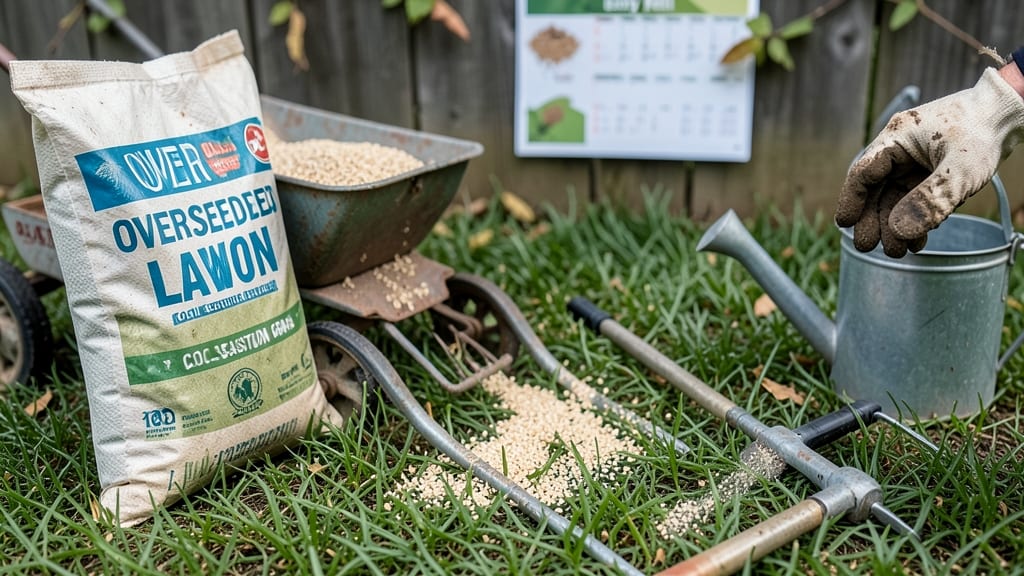
To fertilize an overseeded lawn, wait 6-8 weeks after seeding when new grass shows active growth. Cool-season grasses thrive with fall applications, while warm-season grasses need spring or early summer feeding. Your local climate and grass variety determine the perfect timing for strong root development and nutrient absorption.
Timing matters because young grass needs time to establish roots before handling heavy fertilization. 🌱 If you apply fertilizer too soon, you risk burning tender seedlings or encouraging weak growth. I've seen many gardeners make this mistake—especially in cooler climates where fall overseeding is common.
The key is watching for 2-3 inches of new growth before applying any fertilizer, which usually happens within that 6-8 week window. For northern regions, aim for late September to early October, while southern areas should fertilize in late spring when warm-season grasses begin their growth spurt.
Another pro tip: always use a low-nitrogen starter fertilizer (around 10-20-10 ratio) for overseeded lawns. This gentle formulation helps new grass establish without overwhelming it. After the initial fertilization, you can switch to a more balanced formula to support ongoing growth.
Remember to water thoroughly before and after applying fertilizer to help nutrients penetrate the soil and reach those developing roots.
💡 In This Article
- How Climate Zones Affect Overseeding Fertilization Timing
- Step-by-Step Guide to Fertilizing Overseeded Grass
How climate Zones affect overseeding fertilization timing
Your local climate zone determines when to fertilize overseeded lawns because temperature and frost cycles directly impact grass growth patterns. Cool-season grasses like Kentucky bluegrass and fescue thrive in USDA Zones 3-7, where they grow actively in spring and fall but go dormant in summer heat.
In these regions, fall fertilization (late September to early October) gives grasses a nutrient boost before winter dormancy, while spring applications in Zones 8-10 support warm-season grasses like Bermuda and Zoysia as they emerge from summer dormancy.
The key difference lies in frost timing: in northern climates (Zones 3-5), you'll want to fertilize after the first frost when soil temperatures drop below 50°F but before hard freezes. Southern regions (Zones 8-10) can fertilize as early as February when daytime temperatures consistently reach 65°F.
What most people don't realize is that warm-season grasses actually need soil temperatures above 60°F for just 3-4 weeks before fertilization becomes effective—applying too early in cooler zones can waste nutrients.
Here's how to adjust timing by region: Northern gardeners should aim for 6-8 weeks after overseeding in September, while southerners should wait until late spring (April-May) when new growth appears.
The visual cue is crucial—look for 2-3 inches of new grass blades before fertilizing, which indicates the roots have developed enough to handle nutrients without stress.
In transition zones (Zones 6-7), you might need two applications: one in early fall and another in late spring to accommodate both cool and warm-season growth patterns.
Climate also affects fertilizer type: Northern regions benefit from slow-release fertilizers with higher potassium (K) content (like 10-10-20) to strengthen cold resistance, while southern climates need more phosphorus (P) (like 12-24-12) to support rapid spring growth.
The soil's natural microbial activity—especially in warmer zones—means nutrients break down faster, requiring more frequent but lighter applications. For example, a Zones 8-10 lawn might need fertilization every 6-8 weeks during growing season, compared to every 10-12 weeks in cooler zones.
What makes this tricky is that overseeding often happens during transition periods—like late summer in northern climates or early fall in southern areas. The rule of thumb is to wait until 50% of the new grass shows active growth (not just sprouting) before applying any fertilizer.
This typically occurs when average daily temperatures stay above 55°F for at least 2 weeks. In my experience, rushing this process leads to yellowing patches where tender seedlings can't process the nutrients, while waiting too long means missing the optimal growth window when grass can utilize fertilizer most efficiently.
For precise timing, check your local USDA Plant Hardiness Zone map and note when your area experiences 3 consecutive days below 40°F—this signals it's time to shift to fall fertilization for cool-season grasses.
Warm-season grasses, meanwhile, respond best to fertilization when soil temperatures reach 65°F for 5 consecutive days, which usually aligns with the last frost date in your area. These temperature thresholds create natural biological triggers for grass growth that no calendar can perfectly predict.
One final pro tip: In transition zones (Zones 6-7), where both cool and warm-season grasses grow, consider a two-phase fertilization approach. Apply a light fall fertilizer (like 12-0-12) after overseeding in September, then switch to a spring warm-season blend (like 16-4-8) when temperatures rise.
This hybrid approach accounts for both grass types' needs without overwhelming either system. 🌿