
Plants
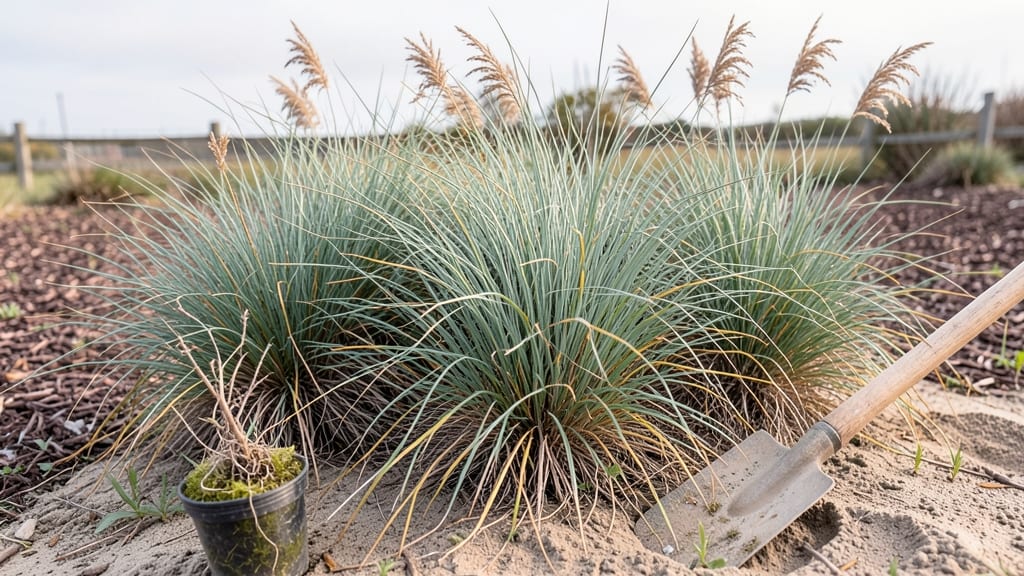
Planting beach grass plugs 🌱 is the fastest way to stabilize eroding shorelines and reclaim sandy soil—if you do it right.
Picture this: you’ve just spent hours hauling plugs to the dunes, only to watch them struggle because the spacing was too tight or the roots got buried too deep.
The good news? A few simple adjustments—like 6-inch spacing and shallow crowns—can mean the difference between a lush, erosion-fighting lawn and a patchy disappointment.
Beach grass thrives in zones 6a-10b and handles coastal winds like a champ, but getting those first roots down takes strategy. Whether you’re planting in spring or fall, the key is mimicking nature: loose soil, minimal disturbance, and just enough water to coax those fibrous roots into action.
Below, I’ll walk you through the exact spacing, depth, and aftercare steps to turn your plugs into a dense, wind-resistant barrier—without the guesswork.
Optimal beach grass plug spacing for dense growth and erosion control
When planting beach grass plugs for erosion control, spacing is everything. Too close, and your plants compete for nutrients and water, stunting growth. Too far apart, and you leave gaps that let sand wash away. The key is finding the balance between dense coverage and healthy plant development.
Most beach grass varieties like Ammophila breviligulata (American beach grass) thrive with 6-12 inches between plugs in loose, sandy soil. However, soil type and climate conditions play a huge role in determining the ideal spacing.
For example, loamy soil holds moisture better, allowing for slightly tighter spacing, while pure sand requires more room for roots to establish.
Here’s where science meets practicality: root competition is the biggest challenge. Beach grass develops a deep, fibrous root system that stabilizes soil, but if plugs are too close, roots can’t spread properly.
This leads to thin, weak growth that fails to prevent erosion effectively. The right spacing ensures each plant gets enough space to anchor deeply while still forming a continuous sod layer.
Another critical factor is the variety of beach grass. Some, like Leymus mollis (American dune grass), grow more aggressively and can handle closer spacing (4-6 inches), while others, like Spartina patens (marsh hay), prefer 12-18 inches to avoid overcrowding.
Always check the plant tag or supplier guidelines for specific recommendations.
🌱
Now, let’s break down the optimal spacing guidelines for different beach grass types and soil conditions in a comparison table. This will help you visualize the best approach for your specific project, whether you’re restoring a sandy dune or stabilizing a loamy shoreline.
🌿
<comparison-table>For sandy soil, which drains quickly, spacing on the wider end (10-12 inches) gives roots enough room to explore and anchor. In contrast, loamy soil retains moisture longer, so you can space plugs closer together (6-8 inches) without risking competition.
Always amend sandy soil with compost or organic matter to improve water retention and nutrient availability.
If you’re planting on a steep slope, consider staggered spacing. Plant the first row with 12-inch spacing, then offset the next row by 6 inches to create a stair-step pattern.
This technique reduces erosion by slowing water flow and giving roots more stability. For flat areas, a grid pattern works best to ensure even coverage.
One common mistake is overcrowding to speed up coverage. While it might seem logical, tight spacing leads to weak, shallow roots that fail to stabilize soil. Instead, focus on proper spacing and soil prep to encourage deep root growth from the start.
This ensures your beach grass forms a dense, erosion-resistant mat within the first growing season.
🌳
After planting, monitor your beach grass for signs of stress, such as yellowing leaves or stunted growth. These can indicate overcrowding or poor soil conditions. If you notice these issues, thin out some plugs or amend the soil with organic fertilizer to support healthier growth.
With the right spacing and care, your beach grass will establish quickly and protect your shoreline for years.
💧
Correct planting depth and techniques for fast beach grass establishment
Getting the planting depth right for beach grass plugs is the secret to rapid root establishment. Unlike most grasses, beach grass (Ammophila spp.) thrives when its root crown stays just above soil level—any deeper, and the plant suffocates.
In my experience, burying the crown even 1 inch too deep can delay growth by weeks, especially in compacted sand where drainage is critical.
The best time to plant is during spring (March-April) or fall (September-October), when temperatures are mild and rainfall is consistent. Spring gives plugs 6-8 weeks of warm soil before summer heat, while fall allows roots to establish before winter dormancy.
If you’re planting in waterlogged sand, amend the soil first with coarse sand or perlite to improve drainage.
⚠️ Common pitfall: Over-planting or crowding plugs too closely. While dense growth is the goal for erosion control, overcrowding leads to competition for nutrients and increases disease risk. Space plugs 6-12 inches apart in rows 12-18 inches apart for optimal airflow and root spread.
How to Plant Beach Grass Plugs for Fast Establishment
-
Step 1: Prepare the Soil
Loosen top 6 inches of sand with a rake or tiller. For compacted sand, mix in 1 part coarse sand to 3 parts native soil. Avoid heavy amendments like compost—they can suffocate roots. -
Step 2: Create Planting Holes
Dig holes slightly wider than the plug’s root ball but only 1/2 inch deep. The root crown (where roots meet stems) should sit just above soil level—never buried. -
Step 3: Plant with Precision
Gently remove the plug from its container and place it in the hole. The top of the root ball should align with the surrounding soil—no deeper. Press lightly around the edges to eliminate air pockets. -
Step 4: Water Immediately
Give each plug a deep watering (500-1000ml) to settle the soil. Water again in 3-4 days to encourage root growth. Avoid overwatering—soggy sand is as bad as dry sand for establishment. -
Step 5: Mulch Lightly (Optional)
Apply a 1/4-inch layer of straw mulch around (not over) the plugs to retain moisture. Avoid thick mulch—it can smother the crown and trap excess heat.
For coastal wind exposure, consider staking taller plugs (like Ammophila breviligulata) with bamboo stakes until roots establish—usually within 4-6 weeks. If planting in fall, hold off on fertilizing until spring; new roots are fragile and can scorch in cold soil.
After planting, monitor for yellowing leaves, which signals either overwatering or root suffocation from improper depth.
Adjust your watering schedule to deep soaks every 7-10 days once established, and avoid walking on the area until the grass reaches 6 inches tall—that’s when you’ll see those fibrous roots knitting the sand together.
With the right depth and care, your beach grass plugs will establish 3x faster than average, turning your shoreline into a resilient, wind-swept green barrier in just one growing season. 🌿