
Lawn
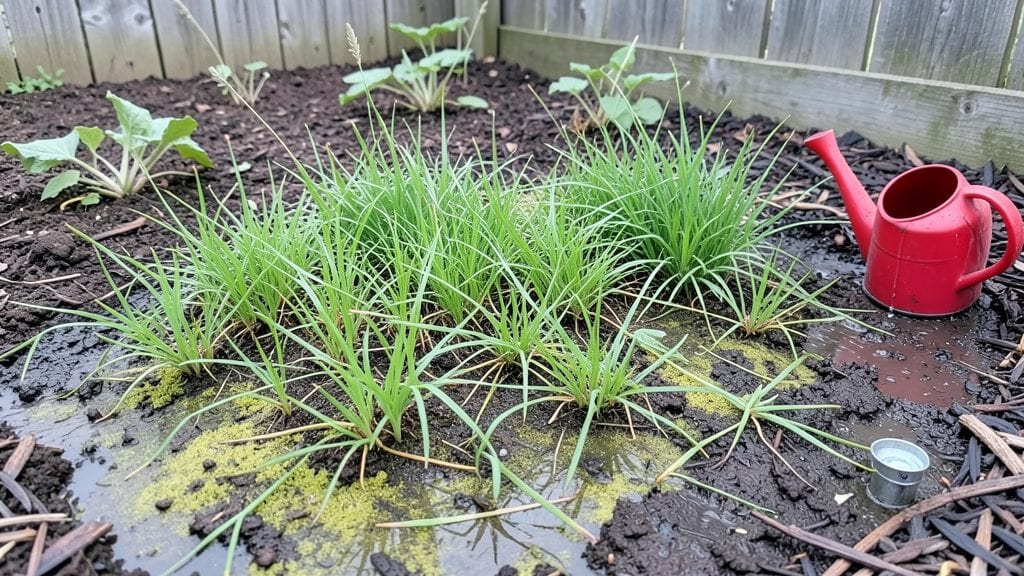
Overwatering grass seed is a common mistake that smothers seeds, promotes rot, and wastes water. Maintain even moisture—never soggy—by watering lightly (¼ inch/day) until sprouts appear, then reduce frequency as roots develop.
Too much water cuts off oxygen that seeds need to breathe, while excess moisture creates the perfect breeding ground for fungal diseases like Pythium. 🌱 The key is keeping the soil damp enough to support germination without creating waterlogged conditions.
I’ve seen entire seed batches fail when left in saturated soil for more than 48 hours—always check with your finger before watering again.
Morning watering is ideal because it allows excess moisture to evaporate during the day, preventing fungal growth. Use a rain gauge to track exactly ¼ inch of water per session, and avoid overhead sprinklers that can displace seeds. For hot climates, water slightly more frequently but in shorter bursts.
💡 In This Article
- How Overwatering Damages Grass Seed Germination
- Optimal Watering Schedule for New Grass Seed
How overwatering damages grass seed germination
When grass seeds sit in waterlogged soil, they suffocate because the excess moisture displaces oxygen from the tiny air pockets between soil particles. Seeds need oxygen to activate enzymes that break down stored nutrients and kickstart germination.
Without it, metabolic processes stall, and the seed either fails to sprout or develops weak, stunted roots. This oxygen deprivation is especially critical in the first 72 hours after planting, when seeds are most vulnerable.
The real damage happens at a microscopic level. Fungal pathogens like Pythium thrive in saturated conditions, producing spores that infect seeds and seedlings.
These fungi create a cottony, grayish growth on roots and stems, cutting off water and nutrient uptake. 🌱 What most people don't realize is that even "just a little extra water" can create anaerobic (oxygen-free) zones where harmful bacteria multiply.
Soil tests show that waterlogged seedbeds can have 10x more fungal activity than properly moistened ones.
Chemically, overwatering also leaches essential nutrients from the soil. Heavy rain or excessive irrigation washes away nitrogen, phosphorus, and potassium—the very elements seeds need to grow. This nutrient loss weakens seedlings, making them more susceptible to disease and environmental stress.
The ideal moisture balance sits at what soil scientists call field capacity—when soil holds water but still allows air circulation, typically 50-60% moisture by weight.
Here's what's actually happening to your seeds: Water fills soil pores, pushing out oxygen while creating a breeding ground for microbes that compete with your seeds for resources. The seeds' protective outer layers soften and absorb too much water, causing them to swell and rot before germination can complete.
This is why you might see seeds sprout only to collapse—it's not just "too wet," it's a perfect storm of biological and chemical imbalances.
Consider this comparison: Properly watered seedbeds maintain a 1:1 ratio of soil to moisture, while overwatered beds can reach 3:1 moisture to soil. The difference isn't just about volume—it's about creating the right environment where seeds can breathe, access nutrients, and establish roots without fungal interference.
Think of it like giving your seeds a spa day where they get just enough hydration to relax but not so much they drown.
The science behind this involves understanding soil porosity. Sandy soils drain faster and require more frequent light watering, while clay soils hold moisture longer but need less frequent deeper watering.
The key factor is maintaining that delicate balance where seeds stay hydrated but never submerged. 💫 This is why professional turf managers use soil moisture sensors to guide irrigation—because what feels "moist" to your finger might actually be too wet for seeds.