
Watering
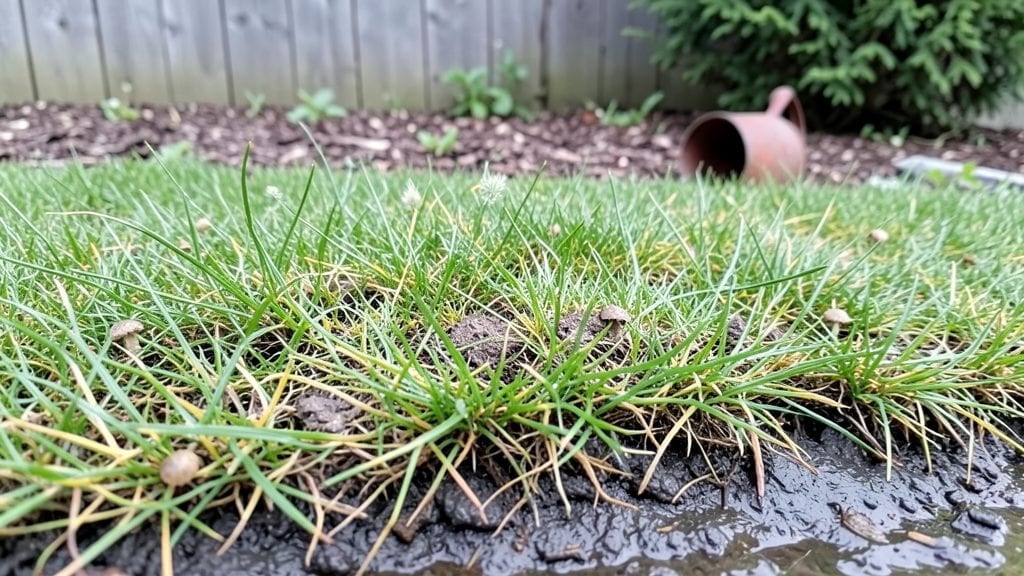
Overwatered sod can recover if you catch the damage early, but severe cases may need aeration, reduced irrigation, and improved drainage to bring it back to life. Watch for yellowing blades, fungal spots, or a mushy feel underfoot—these are clear signs your lawn needs immediate attention.
When sod gets too much water, the roots suffocate from lack of oxygen, creating the perfect breeding ground for harmful fungi and bacteria. 🌱 The grass blades may turn yellow or develop dark spots as the plant struggles to breathe, while the soil becomes compacted and nutrient-poor.
I’ve seen lawns recover completely within weeks when homeowners adjust their watering schedule and improve drainage, but neglected cases often require professional intervention. The key is acting fast—once the roots rot, even the best care can’t bring them back.
To revive your sod, start by reducing watering immediately and letting the soil dry out between sessions. Raising your mower blade to 3-4 inches helps shade the roots while encouraging deeper growth.
For severe cases, aeration with a core aerator every 6-12 months breaks up compacted soil, allowing roots to access air and water more efficiently.
I always recommend testing your soil’s drainage first—if water pools after 24 hours, you’ll need to amend the soil with organic matter like compost or sand.
💡 In This Article
- How Overwatering Damages Sod Roots and Soil
- Step-by-Step Revival Plan for Waterlogged Sod
How overwatering damages sod roots and soil
When sod receives too much water, the roots experience oxygen deprivation—a process called anoxia—because water fills the soil pores that normally hold air. Grass roots need oxygen to respire, just like humans need air to breathe.
Without it, the roots suffocate, weakening the plant's ability to absorb water and nutrients. This creates a vicious cycle: the more water you add, the less oxygen the roots get, and the more they struggle to function. 🌱
Excess moisture also triggers fungal proliferation, particularly from pathogens like Pythium or Rhizoctonia, which thrive in waterlogged conditions. These fungi attack the roots and crown of the grass, causing brown patches or a spongy, mushy feel when you walk on it.
The soil's pH can shift too—water leaches away essential nutrients like nitrogen and potassium, while leaving behind harmful salts that further stress the grass. In severe cases, the roots rot completely, making recovery nearly impossible.
Another critical issue is soil compaction, which happens when wet soil particles stick together tightly. This restricts root growth and water infiltration, creating a dense barrier that smothers the turf.
You can test for compaction by pressing your thumb into the soil—if it doesn’t easily penetrate beyond 1 inch, your lawn is likely compacted. Over time, compacted soil also prevents proper drainage, trapping even more water and worsening the problem.
Grass metabolism slows dramatically under waterlogged conditions. The plant shifts from aerobic respiration (which produces energy efficiently) to anaerobic respiration (which produces toxic byproducts like ethanol). This metabolic shift weakens the grass, making it more susceptible to disease and environmental stress.
Even if the top layer of grass looks green, the roots may already be compromised, leading to patchy recovery or failure to bounce back after drought.
What most people don’t realize is how quickly these issues escalate. Within just 48 hours of overwatering, fungal spores can begin colonizing the roots, and within a week, compaction can become severe enough to stunt growth for months.
The key is monitoring soil moisture with your finger—if the top 2 inches of soil feel damp, hold off on watering. Healthy sod should have soil that feels like a wrung-out sponge, not a soggy washcloth. ✨
One often-overlooked factor is the role of microorganisms in the soil. Beneficial bacteria and fungi help break down organic matter and cycle nutrients, but excess water drowns these helpful microbes too.
When their populations decline, the soil loses its natural fertility, making it harder for grass to recover even after watering is adjusted. This is why amending the soil with compost or mycorrhizal fungi can be a game-changer during revival efforts.
The damage isn’t just underground—overwatered sod often shows visible signs above the soil too. Blades may develop a blue-gray tint (a sign of iron deficiency from poor oxygen uptake) or roll up at the edges (a classic symptom of root stress).
If you see these warning signs, it’s a clear indication that the roots are struggling, and immediate action is needed to prevent permanent damage. 💫