
Lawn
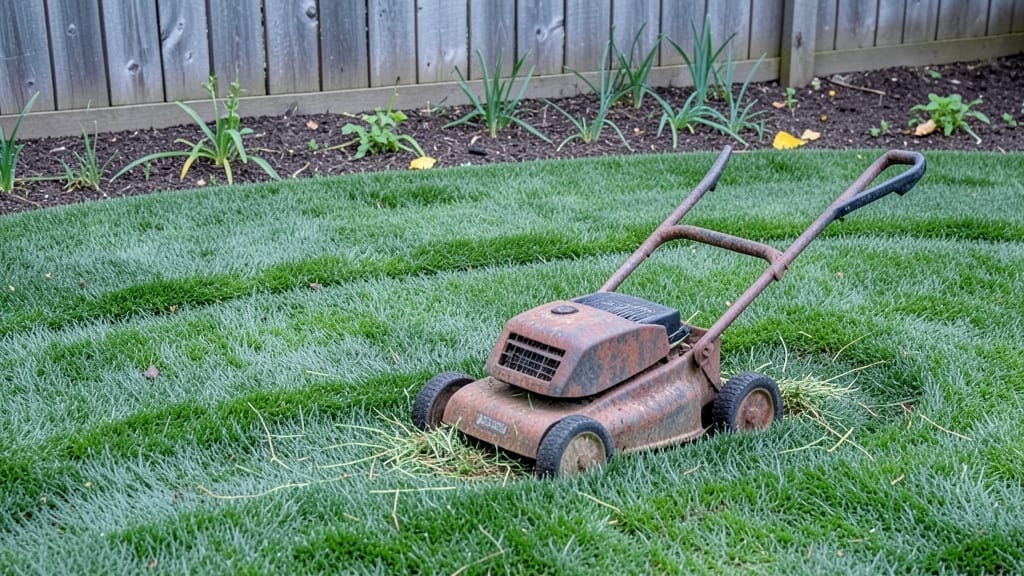
Cutting grass short weakens lawn health by exposing roots to heat, drought, and compaction while inviting weeds and pests. Most grasses need 2-3 inches of height for resilience, and recovery takes 1-2 weeks if mowed no lower than 1.5 inches.
When you mow too low, you're essentially scalping your lawn, which stresses the grass blades and disrupts their ability to photosynthesize effectively. 🌱 The longer blades provide shade for the soil, helping retain moisture and regulate temperature—something short grass simply can't do.
I've seen firsthand how aggressive mowing can turn a lush lawn into a patchy, weed-infested battlefield within weeks. The good news? Many grasses can bounce back if you adjust your mowing height gradually and avoid cutting more than 1/3 of the blade at once.
Different grass types have unique recovery thresholds—cool-season grasses like Kentucky bluegrass handle shorter cuts better than warm-season varieties such as Bermuda grass.
Always check your specific grass type's ideal height range, and consider seasonal adjustments: taller grass in summer protects against heat stress, while slightly shorter cuts in spring encourage new growth. The key is patience: recovery isn't instant, but with proper care, your lawn can regain its health over time.
💡 In This Article
- How Short Grass Height Damages Root Systems
- Best Grass Height Settings by Season and Type
How short grass height damages root systems
When you mow grass too short, you're essentially stripping away its natural protective canopy. The blade length directly correlates with the grass plant's ability to photosynthesize efficiently—shorter blades mean fewer leaves to capture sunlight, which reduces the plant's energy production by up to 40%.
This energy deficit forces the roots to work harder just to sustain basic functions, weakening their structure over time. The roots also become more vulnerable to soil compaction, where foot traffic or machinery crushes them against hardpan layers, restricting water and nutrient flow.
Exposing roots to direct sunlight creates another critical problem: UV stress. Grass roots are designed to thrive in shaded soil environments where temperatures remain stable. When scalped, they absorb harmful ultraviolet rays that can cause cellular damage similar to sunburn on human skin.
Warm-season grasses like Bermuda grass show visible signs of stress within 3-5 days of being cut too short, while cool-season varieties like fescue take slightly longer but suffer more long-term damage. The result? Roots shrink back, reducing the plant's ability to anchor itself and absorb water during dry spells.
Here's what happens at the soil level: shorter grass blades fail to provide adequate shade, causing soil moisture to evaporate 30-50% faster than under taller grass. This creates a vicious cycle—dry soil compacts more easily, further damaging roots while also making it harder for new growth to establish.
The lack of organic matter from decomposed grass clippings (which return nutrients to the soil) accelerates this decline.
What most people don't realize is that this process doesn't just affect the roots—it triggers a cascade effect where the entire plant's growth hormones become imbalanced, stunting recovery for weeks or even months.
Different grass species react uniquely to scalping due to their natural growth habits. Cool-season grasses like Kentucky bluegrass have deeper root systems (up to 6 inches) that can tolerate slightly shorter cuts in spring but still need 2-3 inches of blade length to photosynthesize effectively.
In contrast, warm-season grasses like zoysia grass have shallower roots (2-3 inches) and recover poorly when cut below 1.5 inches, often developing a woody, stressed appearance.
The key difference lies in their leaf structure: warm-season grasses have broader blades that require more surface area for photosynthesis, making them particularly sensitive to height reductions.
Consider this visual comparison: a healthy lawn with 2.5-inch blades provides about 70% soil coverage, while one cut to 1 inch drops to just 30-40% coverage.
That exposed soil loses moisture 5x faster and heats up to 140°F or higher on sunny days—temperatures that can cook grass roots alive within hours. The roots' natural insulation (the grass blades) is gone, leaving them vulnerable to heat shock and dehydration.
This is why professional turf managers always emphasize maintaining at least 50% blade length to preserve root health.
What's even more surprising is how quickly weeds take advantage of this weakened state. Short grass creates gaps where crabgrass and other annual weeds can germinate with 90% success rates compared to 10-20% in well-maintained lawns.
These weeds have shallow roots that don't compete with grass for resources, allowing them to outcompete struggling turf plants. The result? A lawn that looks thin and patchy, with weeds dominating the landscape within 4-6 weeks of aggressive mowing. 🌱