
Size
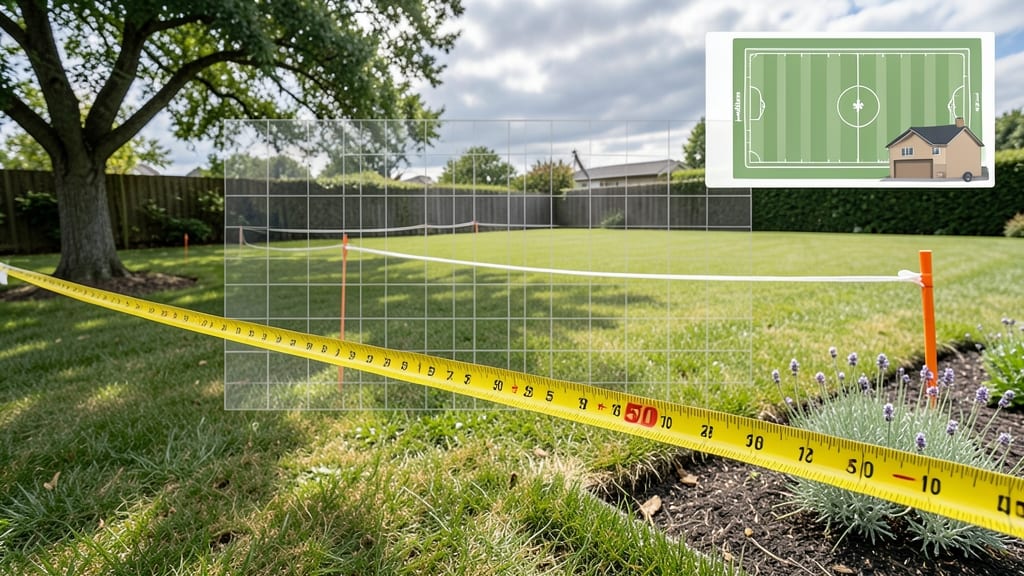
To visualize how big a 5,000 square feet lawn is, imagine a standard NBA basketball court (47' x 94') or a tennis court (78' x 36'), which is slightly larger. This size makes up about half of a typical suburban backyard, giving you plenty of room for landscaping, irrigation, and planting layouts.
A 5,000 square feet lawn is surprisingly spacious—enough to fit a large rectangular pool (20' x 25') with room left over for lounging areas. 🌿 For perspective, that's also about the size of three standard parking spaces lined up end-to-end, which helps when planning pathways or garden beds.
Many suburban homes allocate this space for a mix of lawn, flower beds, and patio areas, making it ideal for both aesthetics and functionality.
When dividing the space, I recommend dedicating 30-40% to lawn area for easy maintenance, leaving the rest for gardens, shrubs, or outdoor seating. Irrigation planning becomes critical here—most 5,000 sq ft yards need 2-3 sprinkler heads or a drip system to cover everything efficiently.
For planting, 3-foot spacing between shrubs and 18-inch spacing for perennials works well to avoid overcrowding.
💡 In This Article
- Visualizing 5,000 Square Feet: Common Object Comparisons
- Landscaping and Planting Tips for a 5,000 Sq Ft Yard
Visualizing 5,000 square feet: common object comparisons
The easiest way to grasp 5,000 square feet is by comparing it to familiar objects with precise dimensions.
A standard NBA basketball court measures 47 feet by 94 feet, totaling exactly 4,418 square feet—meaning your lawn is about 10% larger than a full court. 🏀 This comparison works well for planning rectangular garden layouts, as most basketball courts have straight edges that translate neatly into garden beds or patio spaces.
For a more everyday reference, consider a 20' x 25' rectangular pool, which covers 500 square feet. You'd need 10 of these pools side by side to match 5,000 square feet—enough space for a pool plus a sizable sunbathing area, deck, and landscaping.
Alternatively, a single-family garage averages 30' x 20' (600 sq ft), so your lawn would accommodate 8.3 garages in the same footprint, helping visualize how much room you have for driveways or storage sheds.
The square footage also translates neatly to parking spaces. A standard parking spot measures 9 feet wide by 18 feet long (162 sq ft), so 5,000 square feet equals roughly 31 parking spaces.
This is useful when planning pathways or garden beds—imagine arranging three rows of 10 spaces each to visualize how your yard could be divided into walkable sections or planting zones.
When planning dimensions, remember that square footage isn't just about area—it's about proportions. A 50' x 100' rectangle gives you the same 5,000 sq ft but with a longer, narrower shape ideal for front yards or sloping landscapes.
Meanwhile, a 70' x 71.5' square offers more balanced proportions, which many homeowners prefer for circular gardens or symmetrical layouts. The key is to measure your yard's actual dimensions first—most suburban lots vary between 50' to 80' in width.
For those with creative landscaping plans, consider how circular or triangular spaces fit into the equation. A circular garden bed with a 35.7-foot diameter covers exactly 1,000 square feet—so five of these would fit perfectly into your 5,000 sq ft yard.
This kind of geometric thinking helps when designing focal points like ponds, fire pits, or herb spirals that require precise spacing around them.
One often-overlooked comparison is the football field. While the entire field (including end zones) is 360 feet by 160 feet (57,600 sq ft), just 1/12th of it (5,000 sq ft) equals the size of your lawn.
Visualizing this helps when planning large-scale features like vegetable gardens or outdoor living spaces that need to be proportionate to the yard's scale. 🌟