
Fertilization
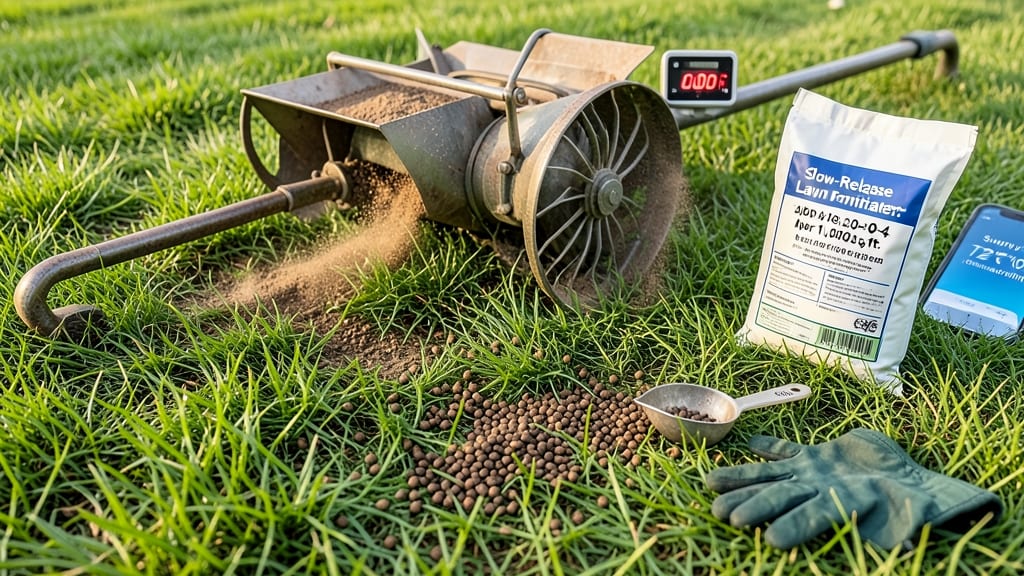
Perfectly even lawn fertilizer application is the secret to grass that makes neighbors stop mid-stride to admire. 🌱 I’ve spread fertilizer for years, and the difference between a patchy lawn and a uniformly lush carpet of green comes down to technique—not just the product.
Start with the right tools: a broadcast spreader for quick coverage or a drop spreader for precision. Clear debris first, then work in small sections to avoid overlap. Timing matters too—apply in early morning or late afternoon on a calm day to prevent wind from scattering granules unevenly.
You’ll see results within 2-3 weeks: deeper green, stronger roots, and fewer weeds. The key is consistency—same spreader settings, same overlap pattern, and same timing each season. Over-applying creates waste; under-applying leaves bare spots. For clay soil, use a lighter hand; for sandy soil, apply slightly more.
Always water after spreading to activate the fertilizer. Now, let’s get that lawn looking like a pro’s.
📚 In This Guide
- What you need
- Instructions
- Tips and common mistakes
- Wrapping up and next steps
What you need
- ● Lawn fertilizer: Choose a high-quality, slow-release or granular fertilizer (e.g., 16-4-8 or 20-5-10 NPK ratio). Calculate 0.5–1 lb of nitrogen per 1,000 sq ft based on your lawn’s needs (check the label for specifics).
- ● Broadcast spreader: A drop spreader (for precision) or rotary spreader (for larger areas). Ensure it’s calibrated for your fertilizer type.
- ● Measuring tape or wheel: To determine lawn size (in square feet) for accurate fertilizer calculations.
- ● Garden hose with shutoff nozzle: For cleaning the spreader afterward.
- ● Safety gear: Gloves (nitrogen can irritate skin), closed-toe shoes, and a dust mask if spreading in windy conditions.
- ● Water source: A hose or sprinkler system to activate water-soluble fertilizers (if using liquid) or water in post-application (for granular types).
- ● Calibration kit: Includes stakes and measuring tools to fine-tune your spreader’s settings for even distribution.
- ● Lawn roller: Lightweight option to gently press fertilizer into the soil (especially useful for dry or sandy lawns).
- ● Windbreak: A tarp or fence to block breezes if fertilizing on a windy day.
- ● Soil test kit: To check pH and nutrient levels before applying fertilizer (avoids over/under-application).
- ● Knee pads: For comfort if you’re spreading by hand in small areas.
Step-by-Step instructions for even lawn fertilizer application
Here's the method I've perfected over years of maintaining a thick, vibrant lawn—no streaks, no missed spots, just consistent coverage.
🌱 Step 1: Prepare Your Lawn and Equipment
Mow your lawn to a height of 3-4 inches before applying fertilizer. This ensures even distribution and prevents clumping of granules. Remove any debris, leaves, or toys from the lawn surface—even small obstacles can create uneven application patterns.
Calibrate your spreader according to the manufacturer's instructions. For granular fertilizers, set the spreader to the recommended rate per 1,000 square feet listed on the product label. If your lawn is 5,000 square feet, you'll need 5 times that amount. Double-check your spreader's settings—overapplying fertilizer burns grass while underapplying wastes money and weakens growth.
☀️ Step 2: Apply Fertilizer in Overlapping Passes
Start at one end of the lawn and work in straight lines, walking slowly to ensure even coverage. Use the drop spreader method for granular fertilizers: release a thin, continuous stream of granules as you walk. Stop at the lawn's edge to avoid overspreading onto sidewalks or driveways—this prevents runoff and keeps fertilizer where it belongs.
Make two perpendicular passes (first lengthwise, then widthwise) to guarantee full coverage. You'll see this as a crisscross pattern where no area remains untouched. Walk at a steady pace—too fast creates gaps, too slow causes clumps. Test your speed by walking a 10-foot section and adjusting until granules are evenly spaced like scattered confetti.
💧 Step 3: Water Immediately After Application
Water the lawn lightly but thoroughly within 24 hours of fertilizing to activate the granules. Use ¼ to ½ inch of water—enough to dissolve the fertilizer but not so much it washes it away. You'll know it's right when the soil feels damp 1-2 inches deep and no granules remain visible on the surface.
Early morning is ideal for watering because it allows the fertilizer to absorb into the soil before the heat of the day. Avoid fertilizing during hot, dry spells—granules can bake into the grass, creating uneven distribution. If rain is forecast within 48 hours, skip the watering step and let nature do the work.
✂️ Step 4: Monitor and Maintain for Optimal Results
Check your lawn 3-5 days after fertilizing for signs of proper absorption. Healthy grass should show vibrant green color without yellowing or browning. If you see dark green patches, you've overapplied—reduce the next dose by 25%. Underapplication appears as pale, weak growth—increase the rate slightly next time.
Repeat the process every 6-8 weeks during the growing season (spring through fall) for consistent results. Keep a log of application dates and rates—this helps track what works best for your grass type. Avoid fertilizing in extreme heat or drought—stressed grass won't absorb nutrients efficiently, leading to waste.
Tips & tricks for perfect lawn fertilizer application
The secret to that velvety lawn isn't just the fertilizer—it's how you apply it. Here's what I've learned after years of perfecting this process.
Spread Pattern Precision: In Step 2, when making your two perpendicular passes, imagine you're painting a fence—consistent strokes prevent streaks. Walk at a steady pace where each step lands roughly every 10 feet as mentioned, but adjust based on your spreader's width. I mark my starting point with a small flag to ensure I always begin in the same spot, creating that perfect crisscross pattern every time.
Equipment Calibration Check: Before you even begin Step 1, test your spreader's calibration on a 100-square-foot section of pavement or concrete. Measure the spread pattern—it should be uniform with no heavy clumps. If you see piles, your spreader needs adjustment. This simple test prevents the "over here, under there" look that ruins an otherwise perfect application.
Weather Window Strategy: The 24-hour watering window in Step 3 is your golden opportunity, but timing matters even more. Apply fertilizer on a cool, cloudy morning when temperatures are below 75°F. Hot sun can cause granules to bake into the grass before they dissolve, creating uneven absorption. I always check the forecast and schedule my application for the first cool day of the week.
Monitoring Made Easy: In Step 4, instead of just looking for color changes, do this quick test: Gently tug a small patch of grass 3-5 days after application. If it pulls up easily with roots attached, the fertilizer worked. If roots stay in the soil but grass pulls up easily, you need to adjust your application rate next time. This simple tug test tells you more than just visual inspection.
Pro Tips for Spread Lawn Fertilizer
- The secret to that velvety lawn isn't just the fertilizer—it's how you apply it. Here's what I've learned after years...
- Spread Pattern Precision: In Step 2, when making your two perpendicular passes, imagine you're painting a fence—consi...
- Equipment Calibration Check: Before you even begin Step 1, test your spreader's calibration on a 100-square-foot sect...
Frequently asked questions
When is the best time of year to fertilize my lawn?
The ideal times are early spring (just as grass greens up) and fall (late August to October). Avoid fertilizing during extreme heat or drought—this stresses grass and can burn it. For cooler climates, a third light application in late winter may help. Always check your fertilizer’s label for climate-specific recommendations!
How often should I fertilize my lawn?
Most lawns thrive with 3-4 applications per year, spaced 6-8 weeks apart. Over-fertilizing harms grass and pollutes waterways, while under-fertilizing leaves it weak. Use a slow-release fertilizer to minimize frequency. If your grass looks pale or patchy, it’s likely time for another round—but test soil first to avoid guesswork!
Can I use a broadcast spreader or should I switch to a drop spreader?
Both work, but drop spreaders are more precise for edges and small areas, while broadcast spreaders cover large lawns faster. For even distribution, calibrate your spreader (walk at a steady pace, overlap passes by 10%, and test coverage with a grid). If you’re new, start with a drop spreader for control—it’s harder to over-apply!
What should I do if I accidentally over-fertilize?
Don’t panic! Lightly water the lawn immediately to help dissolve excess nutrients. If brown patches appear, wait 2-3 weeks before reapplying. For severe cases, rake away affected areas and overseed. To prevent this, always measure twice—use the square-foot method (spread a small test area first) and follow label rates exactly.
Do I need to water after spreading fertilizer?
Yes! Water lightly (¼ inch) within 24-48 hours to activate nutrients and prevent runoff. Avoid heavy watering for 48 hours—it can wash fertilizer away. Early morning watering works best to reduce evaporation. Skip watering if rain is forecast within 24 hours, but don’t let the fertilizer dry into a crust (it’ll burn grass).
What’s the difference between organic and synthetic fertilizers?
| Factor | Organic | Synthetic |
|---|---|---|
| Release Rate | Slow (breaks down naturally) | Fast (immediate results) |
| Environmental Impact | Lower risk (improves soil long-term) | Higher risk (can leach chemicals) |
| Cost | More expensive upfront | Generally cheaper |
Choose organic for sustainability or synthetic for quick fixes. Many pros blend both for balanced results!
Wrapping up and next steps
Spreading lawn fertilizer correctly is the secret to a vibrant, healthy lawn—and you’ve got all the tools to make it happen! 🌱 Whether you’re using a broadcast spreader, drop spreader, or even a DIY method, even application ensures your grass gets the nutrients it needs without waste. Take pride in your work: a well-fertilized lawn isn’t just beautiful—it’s resilient against weeds, pests, and drought.
Ready to see the results? Schedule your next fertilization session based on your grass type and local climate, and watch your lawn transform into the envy of the neighborhood. Grab your spreader and get started! 🌿