
Lawn
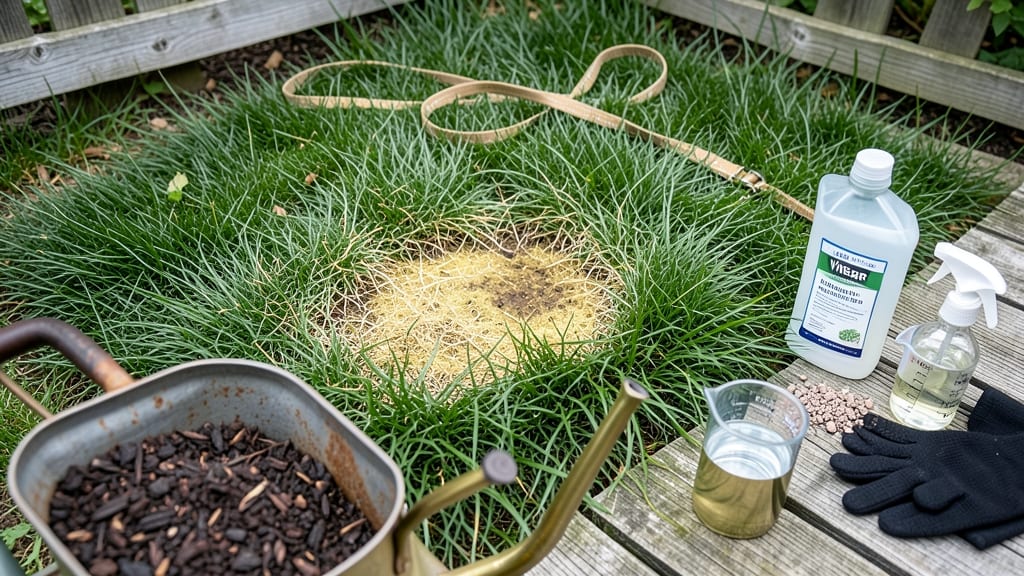
To stop dogs from peeing on lawns, implement consistent training with designated potty areas, reward positive behavior, and maintain proper hydration while using natural fertilizers like nitrogen-rich compost to eliminate urine odors that attract them back.
Dogs return to the same grassy spots because urine leaves behind ammonia-rich deposits that signal "safe" territory. 🌱 The grass texture also makes peeing easier, and some breeds have stronger marking instincts.
I've found that combining training with dog-safe lawn treatments—like vinegar sprays or compost—breaks this cycle by removing scent triggers while keeping your grass healthy.
Start by establishing a designated potty zone (like a gravel area) and reward your dog immediately when they use it. Hydration plays a key role too—always provide fresh water to reduce accidents. For stubborn cases, consider artificial turf patches in high-traffic areas, as dogs often avoid peeing on hard surfaces.
Consistency is everything: dogs learn through repetition, so stick to a schedule and avoid punishment. Over time, they'll associate the lawn with unpleasant odors and choose their designated spot instead. 🐾
💡 In This Article
- Why Dogs Target Grass: The Science Behind Urine Attraction
- Lawn Protection Strategies for Dog Owners
Why dogs target grass: the science behind urine attraction
Dogs are naturally drawn to grass because urine leaves behind ammonia compounds that create strong scent markers. When a dog pees, the urine's pH—typically between 6.0 and 7.5—reacts with soil bacteria, producing ammonia (NH₃), which has a sharp, pungent smell.
This scent acts like a chemical signal, telling other dogs, "This spot is mine!" The grass texture also makes peeing easier—its soft, fibrous structure absorbs urine better than hard surfaces, reducing the effort for your pup. 🌱
Breed instincts play a role too. Terriers, hounds, and small breeds like Chihuahuas often have stronger marking tendencies due to their ancestral survival instincts. For example, terriers were bred to hunt and mark territory, while hounds naturally follow scent trails.
Even mixed breeds can inherit these behaviors. The key is understanding that this isn't just an accident—it's a learned behavior tied to scent communication and physical comfort.
Soil composition matters more than you might think. Sandy or clay-heavy soils absorb urine differently, affecting how long the odor lingers. For instance, sandy soil drains quickly but leaves concentrated ammonia spots, while clay holds moisture and spreads the scent.
This is why dogs often return to the same patches—the lingering odor reinforces the "safe" signal. 💡 Testing your soil's pH (ideal for grass is 6.0-7.0) can help identify why your lawn becomes a hotspot.
Another factor is the dog's hydration level. Dehydrated dogs produce more concentrated urine, which contains higher ammonia levels and stronger odors. This creates a vicious cycle: the stronger the scent, the more attractive the spot becomes.
Always provide fresh water—aim for at least 1 ounce per pound of body weight daily—to dilute urine and reduce marking behavior. 🐾
Finally, dogs often associate grass with relief because it's soft and familiar. Unlike concrete or gravel, grass provides sensory comfort while allowing them to mark territory simultaneously. This dual benefit makes lawns irresistible without proper training. Breaking this cycle requires addressing both the physical (soil/grass) and behavioral (scent marking) aspects.
Consider this: A dog's sense of smell is 10,000-100,000 times more sensitive than humans'. What we perceive as faint urine odor is a strong, inviting signal to them. This explains why even small amounts of residual ammonia can draw them back repeatedly. 🧪