
Lawn
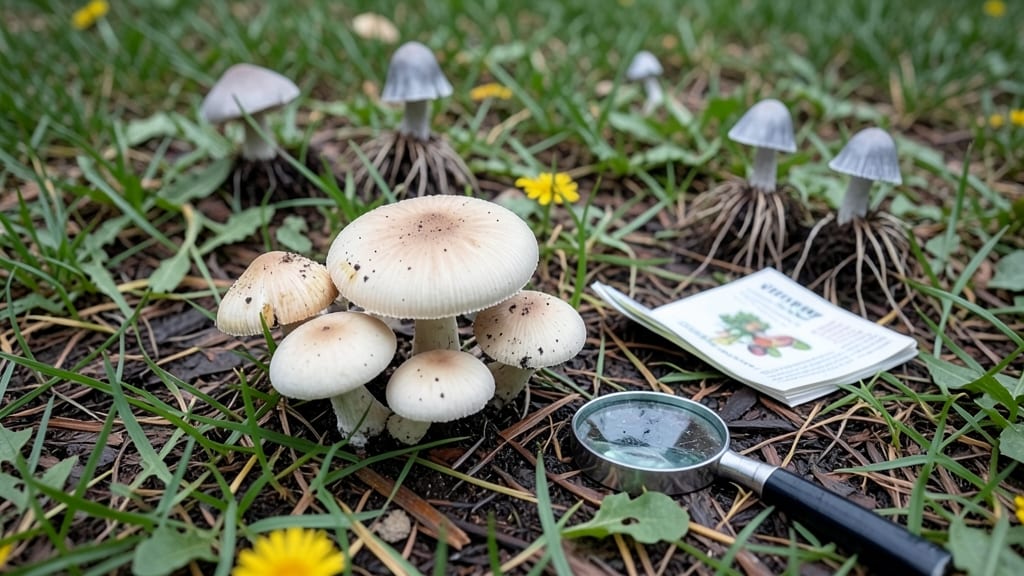
Identifying toadstools in your lawn 🍄 can feel like solving a mystery—especially when you’re not sure whether that mushroom is a harmless neighbor or a dangerous intruder.
Stumbling upon a mysterious toadstool in your lawn can spark curiosity—or panic. Before you reach for the rake, learn how to tell harmless fungi from deadly look-alikes that could endanger pets, children, or even your garden’s health.
Some species, like the common meadow mushroom, are safe to spot, while others, such as the death cap, pack a lethal punch. The difference often comes down to tiny details: gill color, stem structure, or even the smell.
In this guide, I’ll walk you through the key traits to spot, the most common lawn fungi, and when to call in an expert—so you can keep your yard safe without a single wrong move.
Key features to identify poisonous vs safe lawn toadstools
When you spot a toadstool popping up in your lawn, your first instinct might be to grab a rake—but not all fungi are created equal. Some species are completely harmless, while others, like the Death Cap (Amanita phalloides), can be deadly if ingested.
The key to staying safe lies in understanding five critical visual traits that distinguish toxic look-alikes from safe varieties.
Start by examining the cap shape and surface. Toxic species often have smooth, sleek caps, while safe varieties may feature scales, fibers, or warts.
For example, the Destroying Angel (Amanita bisporigera) has a pure white, egg-shaped cap, whereas the edible Chanterelle (Cantharellus cibarius) boasts a golden, wrinkled surface. Pay attention to these details—they’re your first line of defense.
Next, check the gill color and attachment. White gills are a major red flag, especially if they’re free and widely spaced, as seen in the Death Cap.
In contrast, safe species like the Field Mushroom (Agaricus campestris) often have pink or brown gills that darken with age. This simple test can save you from a dangerous mistake.
⚠️ comparison table ⚠️
| Feature | Poisonous Species (Danger) | Safe Species (Low Risk) |
|---|---|---|
| Cap Shape | Smooth, convex, or egg-shaped (e.g., Death Cap) | Scaly, fibrous, or wrinkled (e.g., Chanterelle) |
| Gill Color | White or pale (e.g., Destroying Angel) | Pink, brown, or yellow (e.g., Field Mushroom) |
| Stem Structure | Ringed or bulbous base (e.g., Amanita genus) | Smooth or slightly tapered (e.g., Oyster Mushroom) |
| Spore Print | White (e.g., Death Cap) | Brown or black (e.g., Shiitake) |
| Smell | Foul or absent (e.g., Death Cap) | Earthy or pleasant (e.g., Morel) |
Don’t overlook the stem structure, which can reveal a lot about toxicity. Many dangerous species, like the Destroying Angel, feature a ring (volva) at the base or a bulbous sac.
Safe varieties, such as the Oyster Mushroom (Pleurotus ostreatus), typically have smooth, short stems without these warning signs. This is where a magnifying glass comes in handy—examine the base closely.
Another game-changer? The spore print. Place the cap gill-side down on white paper and leave it overnight. If the print is white, it’s likely toxic (common in Amanita species).
Safe mushrooms often produce brown or black spores, like the Shiitake (Lentinula edodes). This test is foolproof and takes just a few hours.
Lastly, trust your nose. Toxic toadstools rarely have a pleasant aroma, while safe varieties often emit an earthy, nutty, or fruity scent. For instance, the Morel (Morchella esculenta) smells sweet and spicy, whereas the Death Cap has no smell—or a faintly unpleasant one.
If it stinks, steer clear.
If you’re still unsure after checking these features, avoid touching or consuming the mushroom. Instead, take a photo from multiple angles, note the location, and consult a local mycologist or poison control center.
When in doubt, err on the side of caution—your pets and kids depend on it.
Once you’ve identified a toxic species, remove it carefully using a shovel or trowel, ensuring you get the entire mushroom and roots. Dispose of it in a sealed bag, far from pets or children.
For recurring outbreaks, consider improving drainage or reducing lawn moisture, as many toxic species thrive in damp conditions.
Now that you’re armed with these five key traits, you can confidently navigate your lawn’s fungal inhabitants. Remember: when in doubt, don’t touch. Your garden—and your family’s safety—will thank you.
Common lawn toadstools: safe vs dangerous species breakdown
Identifying toadstools in your lawn starts with understanding the key differences between harmless species and those that pose serious risks. Many lawn fungi are completely safe, but a few can be deadly if ingested by pets or children.
The Death Cap (Amanita phalloides) and Destroying Angel (Amanita bisporigera) are two of the most dangerous, often growing in grassy areas after rain.
Visual clues like cap shape, gill color, and stem structure are your best tools. For example, a white gill under the cap often signals danger, while brown or pink gills are usually harmless.
Always check for a volva (cup-like base) or skirt on the stem—these are red flags for toxic species.
Regional variations matter too. In the Pacific Northwest, you might spot morels (Morchella spp.), which are edible but can be mistaken for deadly look-alikes. Meanwhile, the Field Mushroom (Agaricus campestris) thrives in lawns nationwide and is safe for humans (though pets should avoid it).
Safe Toadstools
- Field Mushroom (Agaricus campestris): Brown cap, white gills turning pink, no volva.
- Oyster Mushroom (Pleurotus ostreatus): Fan-shaped cap, white gills, grows on wood or soil.
- Morel (Morchella spp.): Honeycomb cap, no gills, grows in spring.
Dangerous Toadstools
- Death Cap (Amanita phalloides): White gills, bulbous base with volva, greenish-yellow cap.
- Destroying Angel (Amanita bisporigera): Pure white cap and gills, sac-like volva, no smell.
- Fly Agaric (Amanita muscaria): Red cap with white dots, white gills, toxic but not deadly.
Safe Characteristics
- No volva or skirt on stem.
- Gills turn pink/brown with age.
- Mild or pleasant odor.
Danger Signs
- White gills that stay white.
- Bulbous base with volva.
- No odor or foul smell.
The Field Mushroom is one of the safest lawn fungi, often appearing in circles (fairy rings) after rain. Its cap starts brown and scales as it matures, and its stem is white with a ring.
If you see clusters of these, they’re unlikely to harm your lawn or pets—just avoid eating them without confirmation.
On the other hand, the Death Cap is a silent killer, often hiding in grass until fully grown. Its greenish-yellow cap and sac-like volva at the base are unmistakable warning signs.
If you suspect this species, do not touch it—even skin contact can be risky. Instead, take a photo from a distance and consult a local mycologist.
For regional safety, Eastern U.S. lawns often host the Shaggy Mane (Coprinus comatus), which is edible but short-lived. In the West, the Chanterelle (Cantharellus spp.) grows in wooded lawn edges and is prized by foragers.
Always cross-reference with a field guide or app like iNaturalist to confirm identifications.
If you’re unsure, remove the toadstool carefully by twisting at the base and disposing of it far from pets or children. Overwatering your lawn can encourage fungal growth, so maintain balanced moisture levels and aerate compacted soil to reduce risks.