
How To
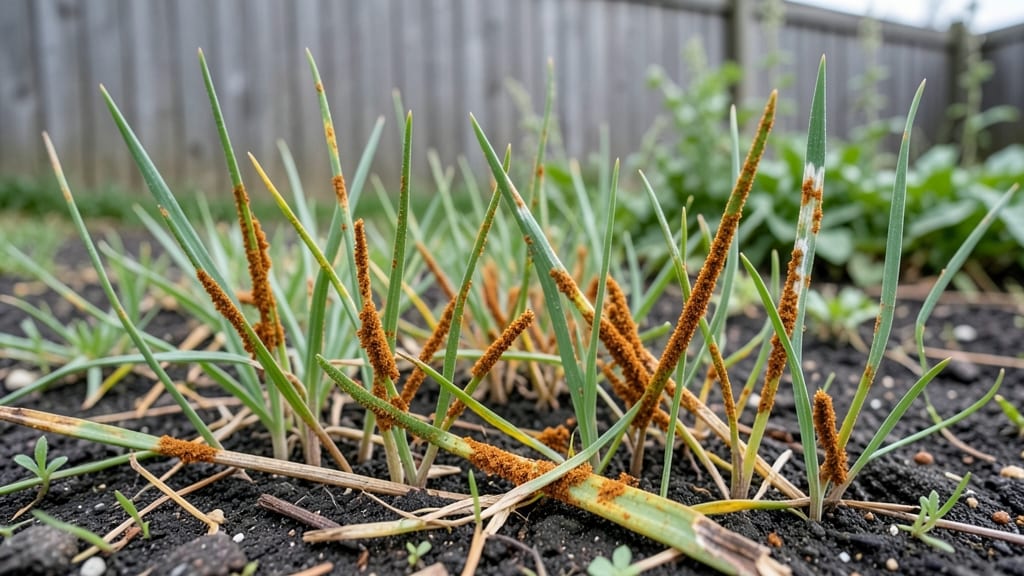
This fungal infection thrives on grass blades, forming those telltale orange pustules, but it doesn't produce toxins harmful to humans. 🌱 The real concerns come when people rake or burn infected debris, releasing spores that might trigger allergies in those with respiratory sensitivities.
For most people, grass rust is simply an unsightly lawn nuisance rather than a health hazard—though proper cleanup can prevent secondary issues like mold or pest infestations in weakened turf.
If you're dealing with an infestation, focus on removing affected grass clippings with gloves and disposing of them properly. This minimizes exposure risks while giving your lawn time to recover naturally.
For severe cases, consulting a lawn care professional ensures you address both the rust and any underlying soil or water management issues that might be contributing to the problem.
💡 In This Article
- Understanding Grass Rust: Fungal Behavior and Human Interaction
- Managing Grass Rust Safely in Gardens and Lawns
Understanding grass rust: fungal behavior and human interaction
Grass rust belongs to the Puccinia genus of fungi, which specializes in infecting grasses and turf through a complex lifecycle involving multiple spore stages. Unlike toxic fungi like Aspergillus or harmful molds, Puccinia produces spores that are not designed to infect humans—they require living grass tissue to complete their development.
The fungus enters grass blades through stomata (tiny pores) and forms visible orange pustules packed with urediniospores, which can travel up to 100 feet in wind currents during ideal conditions (warm, humid weather).
Here's what makes grass rust different from dangerous plant pathogens: its spores lack the enzymes or toxins that target human cells. For example, ergot fungus produces alkaloids harmful to mammals, while grass rust focuses solely on grass physiology.
The orange pustules you see contain thousands of spores, but these are not infectious to humans—they're simply waiting to infect new grass hosts. The key difference lies in their biological targets: Puccinia spores germinate only when they encounter grass leaf surfaces, not human skin or respiratory tissues.
Allergic reactions to grass rust occur in less than 1% of exposed individuals, typically those with pre-existing mold or pollen sensitivities. When handling heavily infected plant debris, microscopic spores can become airborne and trigger symptoms like sneezing, itchy eyes, or mild skin irritation—similar to reactions from hay fever.
The severity depends on exposure duration and spore concentration: a single grass blade won't cause issues, but raking 10+ square feet of heavily infected turf without protection might. This is why gardeners often report symptoms after cleanup rather than during casual lawn walking.
The indirect risks come from weakened grass ecosystems. When grass rust damages turf, it creates ideal conditions for secondary invaders like chinch bugs or dollar spot fungus. These pests thrive in stressed grass, potentially spreading to nearby gardens or homes.
The connection between grass rust and human health is therefore ecological: a rust-infested lawn may indirectly support pests that could carry other allergens or pathogens. This is why proper lawn maintenance—like removing infected clippings and improving drainage—reduces both aesthetic issues and indirect health risks.
To put this in perspective, compare grass rust to black mold (Stachybotrys), which produces mycotoxins harmful to humans. While both are fungi, black mold grows on organic materials like cellulose and can release toxins when disturbed, whereas grass rust remains plant-specific.
The key distinction is biological specialization: Puccinia evolved to exploit grass physiology, not human biology. This targeted adaptation explains why direct exposure poses virtually no risk for the average person.
What most people don't realize is how the fungus's lifecycle actually works against human exposure. Grass rust produces five distinct spore types during its development, but only the urediniospores (orange pustules) are airborne. These spores require 12-24 hours of moisture to germinate, meaning dry conditions naturally limit their spread.
This biological requirement creates a built-in safety mechanism: grass rust can't persist in human environments where humidity and grass hosts are absent.
For those with sensitivities, prevention comes down to basic hygiene: wear gloves when handling infected debris and dispose of clippings in sealed bags. The risk isn't from the fungus itself but from the mechanical irritation of spores entering respiratory systems during prolonged exposure.
Think of it like pollen—annoying for some, harmless for most, but requiring minimal precautions during high-exposure activities like lawn maintenance. 🌱