
Lawn
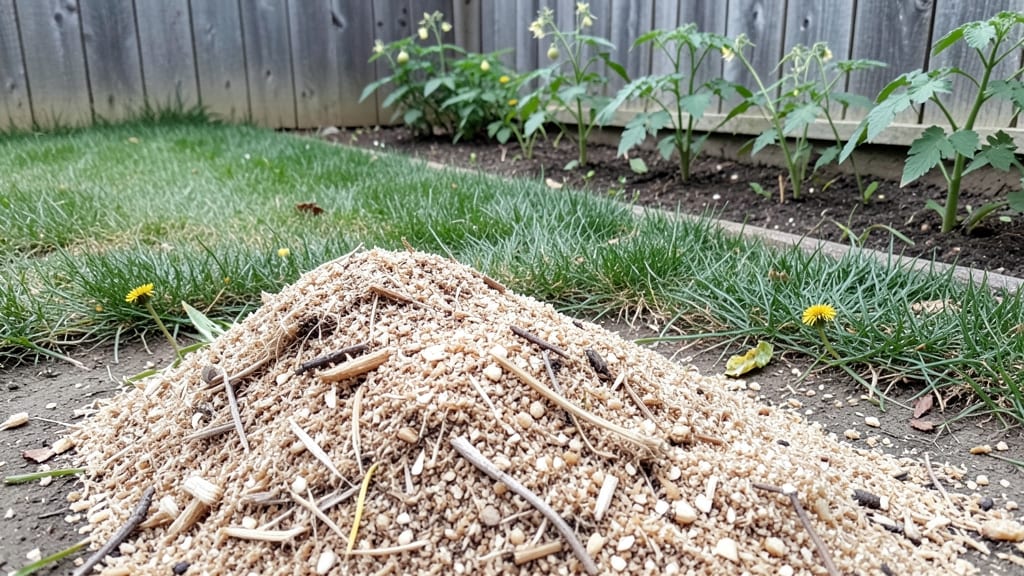
Sawdust is not good for grass because it smothers roots, disrupts soil aeration, and can alter pH levels, often leading to yellowing, fungal growth, or stunted growth. Organic mulches like wood chips or compost are safer alternatives for lawn health.
Sawdust may seem like a free, natural option for lawn care, but its fine particles clog soil pores, blocking oxygen and water from reaching grass roots. 🌱 This creates a suffocating layer that encourages fungal growth while depleting nitrogen—leaving your lawn looking patchy and weak.
Even when fresh, sawdust breaks down too quickly, creating a crust that repels moisture instead of helping it penetrate.
For healthy grass, opt for chunkier organic options like wood chips or pine straw, which decompose slowly while improving soil structure. These alternatives maintain proper aeration, support beneficial microbes, and keep moisture levels balanced without the risks of sawdust.
💡 In This Article
- How Sawdust Harms Grass Roots and Soil
- Best Organic Mulches for Lawns Instead of Sawdust
How sawdust harms grass roots and soil
The problem starts with sawdust's particle size—typically under 0.5 millimeters, these tiny fragments create a dense mat that blocks 15-30% of soil pores within days.
This physical barrier prevents oxygen from reaching roots, forcing them into anaerobic conditions where they struggle to respire normally. 🌱 The lack of oxygen also triggers ethylene gas production, a plant stress hormone that accelerates yellowing and leaf drop.
Chemically, sawdust acts like a nitrogen vacuum. As it decomposes, microbes consume 2-3 times more nitrogen than grass needs to grow, creating what scientists call a "robber effect." This nitrogen depletion shows up as stunted growth and pale grass within 4-6 weeks of application.
The breakdown process also lowers soil pH by 0.5-1.0 points, making nutrients like phosphorus and potassium less available to roots.
Moisture dynamics take another turn for the worse. Sawdust's high surface area creates a hydrophobic crust that repels water instead of absorbing it. Studies show sawdust-treated soil holds 40% less moisture at saturation compared to untreated soil, leaving roots parched even when the surface appears damp.
This moisture blockage is why sawdust mulch often leads to drought stress symptoms despite regular watering.
For comparison, safe mulches like pine straw or shredded hardwood bark have particles 5-10mm in diameter, allowing both air and water to circulate while decomposing slowly. These alternatives maintain soil structure while adding organic matter that improves long-term fertility—exactly what sawdust fails to provide.
The key difference is decomposition rate: sawdust breaks down in 3-6 months, while proper mulches may take 2-3 years, giving grass roots consistent support.
Fungal growth becomes another major issue. The anaerobic conditions created by sawdust favor pathogens like Rhizoctonia and Fusarium, which thrive in compacted, low-oxygen soils. These fungi attack root systems, creating brown patches that spread rapidly.
In contrast, well-aerated soils with proper mulch support beneficial microbes that outcompete these pathogens naturally.
The texture difference is striking too. Sawdust feels like fine powder when dry and forms a cement-like crust when wet, while proper mulches remain loose and crumbly.
This structural difference means sawdust can actually increase soil compaction over time, making it harder for roots to penetrate deeper layers where nutrients and moisture accumulate.