
Lawn
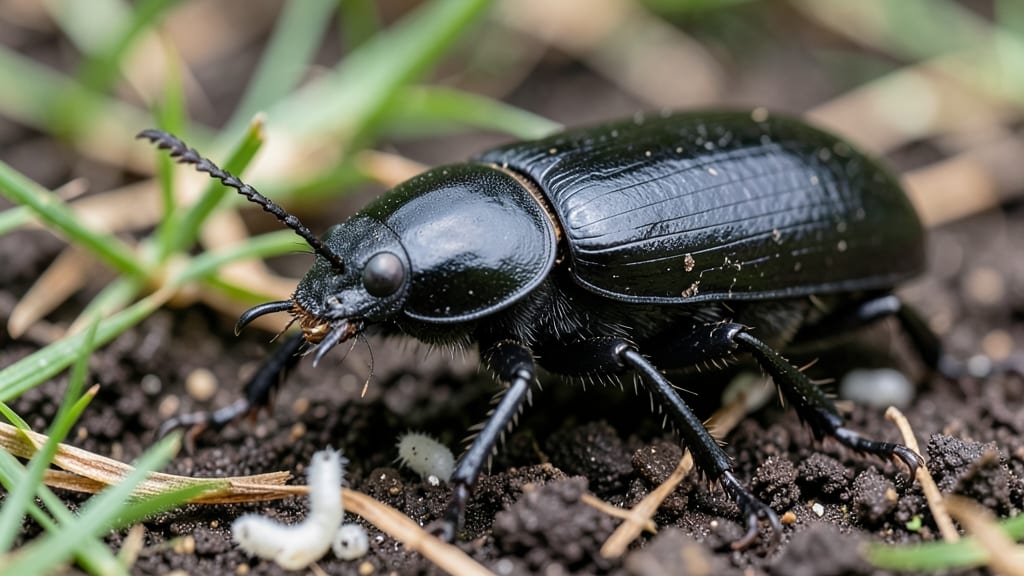
Natural lawn grub control starts with a simple, non-toxic barrier that works within 24 hours—no harsh chemicals needed. 🌱 I’ve saved my lawn from brown patches and tunneling damage using diatomaceous earth, a powder that dehydrates grubs while keeping pets and kids safe.
The key is applying it right after mowing when the lawn is dry but still slightly damp. This method targets Japanese beetle grubs and other common culprits by creating a microscopic shield that grubs can’t cross.
You’ll need about 1 pound per 100 square feet, applied evenly with a spreader. Reapply after rain or watering, and you’ll see fewer grubs in just a few days. The best part? It’s a one-time fix that prevents new infestations from taking hold.
By the end of the week, your lawn will look healthier, with fewer moles and skunks digging up your yard. The grass recovers faster, and you avoid the chemical smell that lingers for weeks. It’s a game-changer for organic lawn care that actually works.
Works for all grass types, from cool-season fescue to warm-season Bermuda. Here’s how to do it right the first time—no guesswork, just results.
The Hidden Triggers Behind Grubs
Grubs—those sneaky, worm-like larvae—don’t just appear out of nowhere. They thrive because of specific conditions in your lawn, often tied to human habits, environmental factors, or even the health of your soil.
Understanding these triggers is the first step to stopping them naturally. Let’s break down the science behind why your lawn becomes a grub buffet.
Grubs love moisture—too much of it, in fact. When lawns are overwatered, especially with frequent, shallow waterings, the top layer of soil stays soggy.
This creates the perfect environment for: - Japanese beetle larvae (the most common grub culprit) to burrow and feed undisturbed. - Soil compaction to worsen, making roots weaker and grubs harder to spot. - Fungal growth, which grubs also munch on, further stressing your grass.
Why it happens scientifically: Grubs breathe through tiny openings called spiracles along their bodies. In dry soil, they retreat deeper, but in saturated conditions, they stay near the surface—where they’re easier to control with natural methods like diatomaceous earth. However, if the soil stays too wet, they thrive unchecked.
Actionable fix:
- Water deeply but infrequently (1–1.5 inches per week, including rain).
- Improve drainage with sand or compost if your lawn holds water like a sponge.
- Avoid daily light watering, which keeps the topsoil damp for grub parties.
Thatch—a layer of dead grass, roots, and debris—isn’t always bad. But when it thickens to more than ½ inch, it becomes a grub hiding spot and a moisture trap.
Here’s how: - Grubs burrow into thatch to escape predators (like birds or beetles). - The dense layer blocks natural predators (like nematodes) from reaching them. - Thatch insulates soil, keeping it warmer and more hospitable for grub development.
Why it happens scientifically: Thatch acts like a mulch blanket, slowing water evaporation and creating a microclimate where grubs develop faster. Studies show that lawns with thick thatch have 30–50% more grub activity than well-aerated ones.
Actionable fix:
- Dethatch in early spring or fall using a rake or vertical mower (but don’t overdo it—remove only excess).
- Aerate your lawn to break up compacted thatch layers.
- Overseed to encourage new grass growth that outcompetes grubs for space.
Grubs don’t just eat your lawn—they choose lawns where grass is already struggling.
Weak grass signals to adult beetles (like Japanese beetles) that: - Nutrients are abundant (from decaying roots). - Competition is low (fewer healthy roots to fend off larvae). - Soil is soft and easy to tunnel into.
Why it happens scientifically: Adult beetles use chemical cues from stressed plants to lay eggs. Weak grass releases volatile organic compounds (VOCs) that attract them. Once eggs hatch, the tender roots of weak grass are a grub buffet.
Actionable fix:
- Fertilize properly—use a slow-release, organic fertilizer (like compost or bone meal) to strengthen roots.
- Mow high (3–4 inches) to shade soil and reduce stress.
- Test your soil—grubs thrive in low-nitrogen, high-carbon soils. Adjust pH if needed (ideal: 6.0–7.0).
Grubs are cold-blooded—they grow faster in warm soil (70–90°F).
Combine that with compacted soil, and you’ve got a recipe for disaster: - Compacted soil lacks oxygen, forcing grubs to feed more aggressively to survive. - Heat retention (from poor airflow) speeds up their metabolism and molting cycles. - Reduced microbial activity means fewer natural predators (like beneficial nematodes) to keep grub populations in check.
Why it happens scientifically: Grubs enter a diapause (dormancy) in cold soil but metabolize rapidly when temperatures rise. Compacted soil also traps heat, creating a greenhouse effect for grub growth.
Actionable fix:
- Aerate in late summer or early fall to relieve compaction.
- Top-dress with compost to improve soil structure and heat dissipation.
- Avoid heavy foot traffic on wet lawns to prevent further compaction.
If your lawn has been recently tilled, aerated, or overseeded, adult beetles zero in on it. Why? Because:
- Exposed soil is easier to lay eggs in.
- Freshly disturbed areas have loose, nutrient-rich soil—grub catnip.
- New grass seedlings are tender and easy to chew through.
Why it happens scientifically: Beetles use visual and olfactory cues to find disturbed soil. A 2018 study in Journal of Economic Entomology found that lawns with recent tilling had 4x more grub eggs than undisturbed ones within 48 hours.
Actionable fix:
- Avoid major soil disturbances in late summer (when beetles are most active).
- If overseeding, use a grub-resistant grass blend (like tall fescue or perennial ryegrass).
- Apply diatomaceous earth as a barrier before beetles lay eggs (late June–July).
Natural Ways to Stop Grubs Fast
Grubs wreaking havoc on your lawn don’t have to mean a chemical battle. With the right natural grub control methods, you can protect your grass without harming the environment, pets, or kids. Below, we break down targeted solutions for common grub-related issues—plus prevention tips to keep your lawn thriving long-term.
If you’ve spotted yellowing patches, spongy soil, or raccoons digging up your yard, grubs are likely the culprit. Here’s how to tackle them naturally and effectively:
🍳 Step 1: Starve Them Out (Diatomaceous Earth Barrier)
Grubs need moisture to survive—deprive them of it with a food-grade diatomaceous earth (DE) barrier.
- How to apply:
- Lightly sprinkle DE (about 1–2 cups per 10 sq ft) around the base of trees, shrubs, and high-risk lawn areas (like where you’ve seen grub damage).
- Water lightly afterward to help it sink into the soil (but don’t drown it—grubs hate dry conditions).
- Reapply every 2–4 weeks or after rain, as DE loses effectiveness when wet.
- Why it works: DE creates microscopic cuts in grub exoskeletons, causing them to dehydrate and die within 24–48 hours.
> 💡 Pro Tip: Focus on edges of lawns, garden beds, and mulch lines—these are grub hotspots!
👨🍳 Step 2: Encourage Natural Predators (Birds & Beneficial Nematodes)
Instead of fighting grubs alone, leverage nature’s pest control:
- 🐦 Attract birds:
- Install bird feeders or birdhouses near your lawn.
- Robins, skunks, and moles love grubs—let them do the work!
- 🦠 Use beneficial nematodes:
- Heterorhabditis bacteriophora nematodes seek out grubs, inject bacteria, and kill them in 48 hours.
- How to apply:
- Mix 1–2 lbs of nematodes per 1,000 sq ft with water.
- Apply in the evening (they die in sunlight) using a sprayer or hose-end applicator.
- Water lightly afterward to help them move into the soil.
> ✨ Bonus: Nematodes won’t harm plants, pets, or kids—just grubs!
🥘 Step 3: Fix Soil & Grass Health (Grubs Hate Strong Lawns)
Weak grass = grub buffet. Strengthen your lawn so it resists infestations:
- 🌱 Overseed thin areas with grub-resistant grass (like tall fescue or Kentucky bluegrass).
- 💧 Water deeply but less often (grubs thrive in overwatered, soggy soil).
- 🌿 Aerate compacted soil (grubs love tight, easy-to-burrow soil).
- 🍂 Remove thatch buildup (thick thatch traps moisture, inviting grubs).
> 🎯 Prevention Tip: A healthy lawn is the best grub deterrent—think of it as armor against pests!
Once you’ve eliminated existing grubs, lock them out with these proactive strategies:
| Problem | Natural Fix | How Often |
|---|---|---|
| Japanese beetles | Neem oil spray (repels adults) | Every 2 weeks (summer) |
| Overwatering | Adjust irrigation (1–1.5" per week) | Seasonal check |
| Thatch buildup | Dethatch in early fall | Once per year |
| Weak grass | Fertilize with milorganite | Spring & fall |
> 🌡️ Best Time to Act: Late summer to early fall (when grubs are young and vulnerable).
If your lawn is already damaged, follow this emergency routine:
- 🌞 Morning: Apply diatomaceous earth around high-risk zones.
- 🌧️ Afternoon: Water lightly to activate DE.
- 🌙 Evening: Release beneficial nematodes (if available).
- 📅 Next Day: Check for bird activity—they’ll help finish the job!
- ❌ Avoid chemical pesticides (they kill beneficial insects and pollute soil).
- ❌ Don’t overwater (grubs love damp conditions).
- ❌ Skip aeration (compacted soil = grub paradise).
By combining DE barriers, nematodes, and lawn care, you can eliminate grubs naturally—without harsh chemicals. Healthy grass + smart prevention = a grub-free lawn for years! 🌱💪
Frequently asked questions
How do I know if my lawn has grubs and not just drought stress?
Look for spongy patches that feel soft when stepped on (like a trampoline) and yellowing grass that pulls up easily with roots intact. Dig up a small section—if you find white, C-shaped larvae (½–¾ inch long), those are grubs. Drought stress usually shows brown, crispy patches that don’t pull up.
Is diatomaceous earth safe for pets and kids after application?
Yes, once settled into the soil, food-grade diatomaceous earth is non-toxic. Just avoid letting pets or kids play in freshly applied areas until it’s lightly watered in (about 30 minutes24 hours.
When’s the best time of year to treat for grubs naturally?
Target late summer (August–September) when grubs are young and vulnerable. This is when Japanese beetles lay eggs, and the larvae are near the surface. For southern climates, treat in early fall; for northern areas, late summer works best. Avoid treating in winter when grubs go dormant.
Can I use coffee grounds as a natural grub repellent?
Coffee grounds can help slightly by improving soil health, but they’re not an effective grub killer. For better results, mix used grounds with diatomaceous earth (1:1 ratio) and sprinkle around high-risk areas. The real power comes from DE’s dehydrating effect—coffee grounds alone won’t eliminate grubs but may deter some pests.
How long does it take to see results after applying nematodes?
You’ll typically see visible improvement in 3–7 days, but full results take 2–4 weeks as nematodes multiply and target remaining grubs. For fastest action, combine with diatomaceous earth. Reapply nematodes every 4–6 weeks during grub season (late summer/fall) for ongoing control.