
Lawn
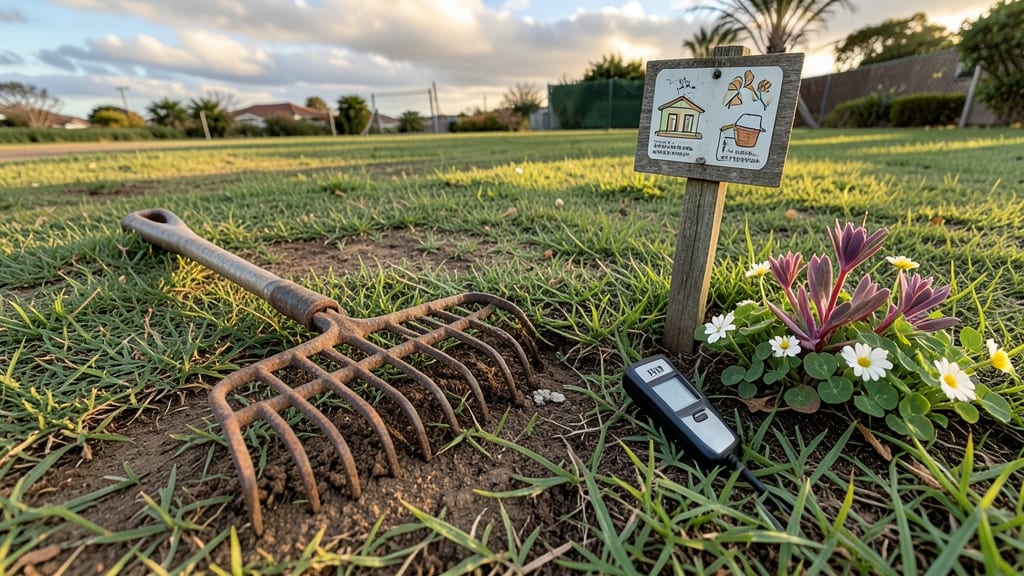
South African lawns are fighting a losing battle against the lawn problems South Africa’s relentless heat and drought—until you know these heat-stress rescue tricks. 🌿 I’ve watched buffalo grass turn from vibrant green to crispy brown in weeks unless you intervene with the right approach.
The problem isn’t just lack of water; it’s compacted soil, poor drainage, and grass that wasn’t bred for our climate.
Native grasses like Rhodes grass and Kikuyu handle heat better than imported varieties, but even they need help. Start by aerating compacted soil in late afternoon to reduce stress, then top-dress with a thin layer of compost to retain moisture.
Overwatering backfires—deep, infrequent watering (like a 2-inch soak every 5-7 days) trains roots to seek water deeper.
What you’ll end up with is a lawn that stays lush despite 100°F days, resists pests like mole crickets, and needs half the water of traditional turf.
The key is matching grass to climate and fixing soil first—no more guessing games. Here’s how to make it work without breaking the bank.
Works for backyard lawns, sports fields, or even small patches—just adjust watering based on your soil type. Let’s turn that brown patch into a heat-proof green oasis that neighbors will envy.
Root Causes of Grass Struggles
South Africa’s unique climate—with its scorching heat, erratic rainfall, and nutrient-poor soils—creates a perfect storm for lawn problems. Understanding why your grass fights back is the first step to fixing it. Let’s dig into the science behind the struggle.
---
South Africa’s summer sun isn’t just hot—it’s intense, often exceeding 35°C (95°F) for weeks. Grass, like most plants, relies on photosynthesis to produce energy, but high temperatures overwhelm its cellular machinery. Here’s how it breaks down:
- Stomata Closure: To conserve water, grass blades close their stomata (tiny pores).
While this prevents dehydration, it also blocks CO₂ intake, starving the plant of the raw material for growth. - Cell Membrane Damage: Prolonged heat weakens cell membranes, causing oxidative stress—a chemical chain reaction that damages proteins and DNA.
Think of it like a lawn getting sunburned at a cellular level. - Root Shrinkage: Heat dries out soil quickly, forcing roots to shrink to reduce water loss. Without deep roots, grass struggles to access moisture from lower soil layers.
💡 Pro Tip: Heat stress is worse in compacted or sandy soils (common in SA). Aerating in spring loosens soil, helping roots breathe and retain moisture.
---
South Africa’s drought-prone regions (like the Western Cape) mean water restrictions are a reality. But even when water is available, poor irrigation habits can sabotage your lawn:
- Overwatering: While drought is a threat, excessive watering (especially in the evening) promotes fungal diseases like brown patch or dollar spot. Wet leaves + heat = a fungal buffet. - Underwatering: Grass needs 1–2 inches of water per week (including rain).
Less than that triggers dormancy, turning green blades yellow or brown. - Uneven Water Distribution: Sprinklers that miss spots or run too long create patchy growth. Clay soils (common in Gauteng) hold water poorly, leading to root rot if over-saturated.
✨ Fix It: Use drip irrigation or soaker hoses for deep, slow watering. Early morning (4–8 AM) is ideal—water evaporates less, and grass dries quickly, reducing disease risk.
---
South African soils are often low in organic matter and lack key nutrients. Without proper nourishment, grass becomes weak, patchy, or prone to pests. The biggest culprits:
| Nutrient | Why It’s Missing | Signs of Deficiency | |--------------------|-----------------------------------------------|--------------------------------------------------| | Nitrogen (N) | Leaches out in heavy rains or poor soil. | Pale yellow-green grass, slow growth. | | Phosphorus (P) | Binds to clay/iron in acidic soils (pH <6). | Dark green/purple stems, weak root development. | | Potassium (K) | Washed away by overwatering or drought. | Brown leaf tips, poor drought resistance. | | Iron (Fe) | Unavailable in alkaline soils (pH >7.5). | Yellowing between veins (like a "lime-induced" look). |
🔥 Quick Test: Grab a soil sample (5cm deep) and mix it with vinegar. If it fizzes, your soil is alkaline (common in SA)—lime may be blocking iron uptake.
--- South Africa’s warm, humid climate (especially in summer) is a pest and disease paradise. Here’s what’s chewing on your lawn:
- Grubs (White Grubs): - Cause: Larvae of beetles (like the black beetle) feed on grass roots, causing brown, spongy patches that pull up easily. - Why It Happens: Grubs thrive in overwatered, nitrogen-rich lawns (they love the buffet). - Chinch Bugs: - Cause: These sap-sucking insects inject toxins, turning grass straw-colored in small, irregular patches. - Why It Happens: They love dry, compacted soils (common in SA’s urban areas). - Fungal Diseases (e.g., Fusarium Patch, Rhizoctonia): - Cause: Thrives in hot, humid conditions with poor airflow (thick thatch or overwatering). - Why It Happens: Fungi spore in moist soil and infect stressed grass—heat weakens defenses.
🎯 Prevention: Aerate to improve airflow, avoid night watering, and apply neem oil (a natural fungicide) in summer.
--- Not all grass is created equal. Cool-season grasses (like Kentucky Bluegrass) wilt in SA’s heat, while warm-season grasses (like Kikuyu, Buffalo, or Couch) are bred to thrive in 30°C+ temperatures. Planting the wrong type leads to:
- Slow Growth: Cool-season grass goes dormant in summer, turning brown. - Weak Recovery: Some grasses (like Fescue) struggle to regrow after drought due to shallow roots. - Pest Magnet: Stressed grass attracts grubs and chinch bugs faster.
💡 Solution: If you’re stuck with the wrong grass, overseed with a drought-resistant variety (e.g., Tifway 419 Bermuda for high-traffic areas).
--- South Africa’s soils vary wildly—from acidic (pH <6) in forest areas to alkaline (pH >7.5) in arid regions. pH affects nutrient availability:
- Too Acidic (pH <6): - Problem: Locks out phosphorus and calcium, causing stunted growth. - Fix: Add lime (calcium carbonate) to raise pH. - Too Alkaline (pH >7.5): - Problem: Iron and manganese become unavailable, leading to yellowing (chlorosis). - Fix: Apply chelated iron or sulfur to lower pH.
📊 Test It: A DIY pH test kit (R50–R100) or send a sample to a local agricultural lab for precision.
How to solve it
H2: Practical Fixes for Drought-Stressed Lawns
South Africa’s punishing sun and erratic rainfall can turn a lush lawn into a patchy, brown battlefield—but don’t panic! With the right strategies, you can revive your grass and fortify it against future heat waves.
Below is your step-by-step rescue plan, tailored to common causes of lawn stress in our climate.
---
When grass turns crispy or gray under the relentless sun, it’s screaming for water + shade relief. Here’s how to nurse it back to life:
#### 💧 Step 1: Deep Watering at the Right Times - When: Early morning (4–6 AM) or late evening (6–8 PM) to minimize evaporation. - How: Water deeply (4–6 inches) 2–3 times per week instead of daily shallow sprinkles.
Use a soaker hose or drip irrigation for efficiency. - Pro Tip: 🌡️ Test soil moisture—dig 5 cm deep; if dry, water again. If damp, hold off.
#### 🌿 Step 2: Mow High and Less Often - Height: Raise your mower to 7–10 cm (3–4 inches) to shade roots and retain moisture. - Frequency: Mow only when grass grows 1/3 taller (every 7–10 days in summer). - Avoid: Cutting more than 1/3 of the blade height at once—this stresses grass further.
#### 🛡️ Step 3: Shield Grass from Scorching Sun - Temporary Fix: Use shade cloth (30–50%) over stressed areas for 2–4 weeks until roots recover. - Permanent Fix: Plant fast-growing shade trees (e.g., acacia, jacaranda) or install permanent shade sails for high-traffic zones. - Alternative: Mulch with straw or wood chips to block sunlight and cool soil.
#### 💡 Prevention for Next Summer - Choose heat-tolerant grass like Kikuyu, Buffalo, or Rhodes Grass—they thrive in South Africa’s climate. - Improve soil with compost or gypsum to boost water retention. - Aerate annually to help roots access deep moisture.
---
If your lawn has mushy patches, discolored rings, or slimy spots, fungi like Brown Patch or Dollar Spot are likely to blame—often worsened by poor drainage or overwatering.
#### 🧼 Step 1: Stop the Spread - Remove infected grass (cut out circles, dig up roots) and dispose of it (don’t compost!). - Rake the area to improve airflow and dryness.
#### 💊 Step 2: Apply Fungicide - Choose a systemic fungicide (e.g., propiconazole or trifloxystrobin) labeled for lawn fungi. - Follow label instructions—overuse can harm beneficial microbes. - Reapply every 3–4 weeks if needed.
#### 🌧️ Step 3: Fix Watering Habits - Water early (before 10 AM) to let grass dry by evening. - Avoid wetting leaves—use impact sprinklers for deep root watering. - Check drainage: If water pools, level the lawn or add sand topsoil.
#### 🔥 Prevention Tips - Mow regularly to prevent thick thatch (fungi love this). - Avoid nitrogen-heavy fertilizers in summer—they encourage fungal growth. - Test soil pH (ideal: 6.0–7.0); fungi thrive in acidic soil.
---
Crawly invaders like chinch bugs, grubs, or mole crickets suck the life out of grass, leaving yellow patches or tunnels. Here’s how to evict them:
#### 🕵️ Step 1: Identify the Culprit - Chinch bugs: Tiny black bugs, V-shaped yellow patches. - Grubs: White, C-shaped larvae (dig up a patch to check). - Mole crickets: Large, brown crickets with surface tunnels.
#### 🪲 Step 2: Natural or Chemical Control | Pest | Fix | |----------------|------------------------------------------------------------------------| | Chinch Bugs | Apply neem oil or insecticidal soap (early morning). | | Grubs | Use beneficial nematodes (microscopic worms) or imidacloprid granules. | | Mole Crickets | Handpick at night (they’re slow!) or use fipronil granules. |
#### 🌱 Step 3: Strengthen Grass Defense - Overseed thin areas with drought-resistant grass seed. - Reduce thatch with a dethatcher to disrupt pest habitats. - Encourage predators like birds, toads, or ladybugs with a small water feature.
#### ✨ Prevention for Good - Mow high to deter pests hiding in short grass. - Avoid excessive fertilizer—it attracts grubs. - Inspect regularly (especially after rain—pests love damp soil).
--- If your lawn has bald patches, it’s time to reseed or sod—but first, fix the underlying issue.
#### 🌱 Step 1: Prepare the Soil - Remove debris (rocks, dead grass). - Loosen soil with a rake or aerator (10 cm deep). - Mix in compost (50% soil, 50% compost) for nutrients.
#### 🌾 Step 2: Choose the Right Grass Seed - For shade: Fescue or Ryegrass. - For sun: Kikuyu or Buffalo Grass. - For wear: Tall Fescue or Zoysia.
#### 💧 Step 3: Plant and Protect - Sprinkle seed evenly, then lightly cover with soil (no more than 6 mm deep). - Keep moist (water twice daily for 2 weeks, then taper off). - Avoid foot traffic for 4–6 weeks.
#### 💡 Pro Tips for Success - Plant in spring or fall (avoid peak summer heat). - Use a starter fertilizer (high in phosphorus) to encourage roots. - Mulch with straw to retain moisture and block weeds.
--- Once your lawn recovers, lock in resilience with these low-maintenance habits:
- 💧 Drip Irrigation System: Saves water and delivers it directly to roots. - 🌿 Native Ground Covers: Mix in clover or creeping thyme between grass for shade and moisture retention. - 🕒 Smart Watering Schedule: Set a timer for early morning watering (30 mins/day in summer). - 🌱 Soil Conditioners: Add hydrogel crystals or biochar to hold 3x more water.
--- Final Thought: A drought-proof lawn isn’t just about survival—it’s about thriving in South Africa’s climate. Start with one fix, monitor progress, and gradually build a heat-resistant green space that keeps up with the sun! 🌞💚
Frequently asked questions
Why does my lawn turn brown so quickly in South Africa's heat?
Grass struggles in our climate because of heat stress and drought conditions. When temperatures exceed 35°C (95°F), grass blades close their stomata to conserve water, which blocks CO₂ intake and starves the plant. Compacted or sandy soils (common in SA) make this worse by preventing roots from accessing moisture.
What are the most common lawn pests in South Africa?
The biggest culprits are chinch bugs (tiny black bugs causing V-shaped yellow patches), grubs (white larvae that eat roots), and mole crickets (large brown insects creating surface tunnels). These pests thrive in dry, compacted soils and overwatered lawns—both common in our urban areas.
Can I fix fungal diseases like brown patch without chemicals?
Yes! Start by removing infected grass and raking the area to improve airflow. Apply neem oil (a natural fungicide) and adjust your watering schedule to early morning only. Avoid nitrogen-heavy fertilizers in summer, as they encourage fungal growth. For severe cases, consider beneficial microbes like mycorrhizal fungi.
Which grass types are best for South Africa's climate?
Opt for warm-season grasses like Kikuyu, Buffalo, or Rhodes Grass—they're bred to handle 30°C+ temperatures and drought conditions. Avoid cool-season grasses (like Kentucky Bluegrass) which go dormant in summer. For high-traffic areas, Tifway 419 Bermuda is a great choice.
How often should I water my lawn in South African summers?
Water deeply 2-3 times per week (4-6 inches each time) rather than daily shallow watering. The best times are early morning (4-6 AM) or late evening (6-8 PM) to minimize evaporation. Always check soil moisture—if the top 5 cm is dry, it's time to water again.