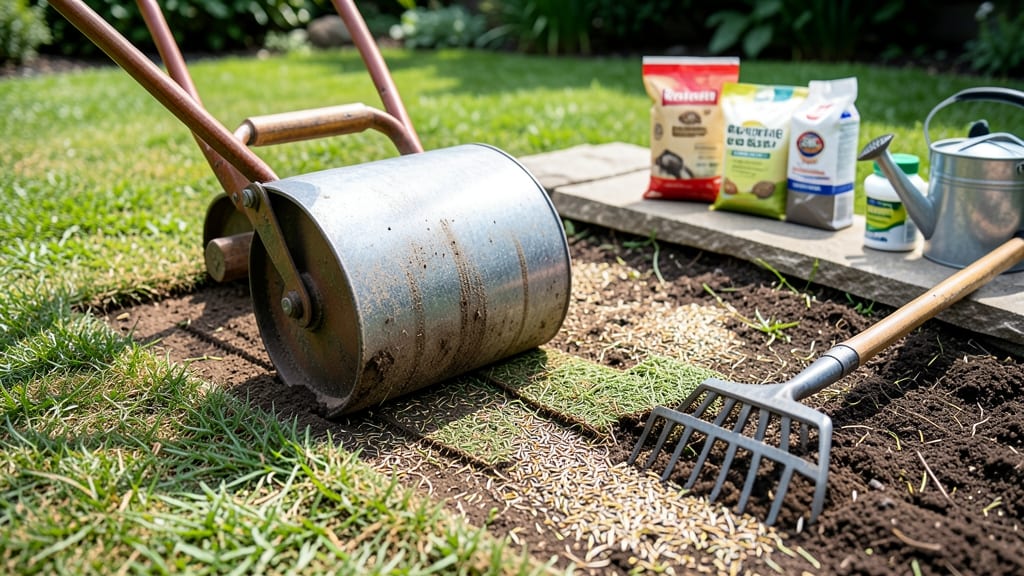
Buying guide: how to choose the right lawn repair roll
1. Coverage Area vs. Repair Size 💡
Choosing the right coverage area is critical to avoid wasting money or running short. Mini rolls (25-50 sq ft) are perfect for quick fixes like pet accidents or car spots, while mid-range (75-100 sq ft) options handle sunburnt patches or small bare sections. For large-scale repairs—think sun-damaged lawns or post-winter recovery—opt for high-coverage rolls (100+ sq ft). Counter-intuitively, I recommend oversizing slightly if you’re unsure; it’s easier to store extras than rush to buy more later. Measure your repair area first to avoid guesswork.
2. Grass Blend Type (Realism and Climate Suitability) ⚡
The grass blend determines how well your repair blends with your lawn and thrives in your climate. Kentucky bluegrass is ideal for cool climates and delivers a lush, natural look, while ryegrass blends establish faster in warmer regions. For sun-resistant repairs, look for UV-stabilized or no-mow grass blends, which stay green longer without frequent mowing. If you’re in a high-traffic area, prioritize deep-rooted turfgrass—it withstands foot traffic better than shallow-rooted options. I’ve found that pre-germinated seeds grow roots faster, giving you visible results in days, not weeks.
3. Adhesive Quality and Ease of Installation ✅
A self-adhesive backing is a game-changer—no glue, no mess, just peel-and-stick convenience. However, not all adhesives perform equally. High-quality adhesives bond securely to clean, level surfaces, while cheaper options may peel or shift, especially in hot weather. For best results, prep your repair area by removing debris, leveling the soil, and ensuring it’s moist (but not soggy). If you’re installing in extreme heat, apply the roll in the early morning or late afternoon to prevent the adhesive from failing. Pro tip: Press firmly around the edges to seal any gaps and prevent weeds from creeping in.
4. Durability and Sun/Foot Traffic Resistance 🔍
Durability is where budget-friendly rolls often fall short. Look for UV-stabilized grass blends to prevent fading and browning under direct sunlight. For high-traffic areas (like pet paths or kids’ play zones), prioritize deep-rooted turfgrass or rolls labeled as pet-friendly—they recover faster from wear. Avoid rolls marketed as "instant" but lacking herbicide-free or weed-blocking properties; these can lead to unsightly weeds popping up through your repair. In my experience, premium rolls with sod-like quality hold up best under stress, but even mid-range options can perform well if paired with proper watering and care.
Frequently asked questions
Q: What is a lawn repair roll, and how does it work?
A lawn repair roll is a pre-germinated grass patch designed to instantly cover bare spots, brown patches, or thin grass areas. It works by providing pre-sprouted grass seeds embedded in a biodegradable mat, which you simply peel, stick, and water. Unlike traditional seeding, these rolls eliminate the waiting period—you’ll see visible growth within days, not weeks. The self-adhesive backing on most rolls ensures easy installation without glue or extra tools, making it ideal for quick fixes like pet damage, car spots, or sunburnt areas.
Q: Can I use a lawn repair roll on any type of grass or climate?
Most lawn repair rolls are designed to blend with common grass types like Kentucky bluegrass or ryegrass, but compatibility depends on the product. For cool climates, opt for rolls with a Kentucky bluegrass blend, while warmer regions benefit from ryegrass or UV-stabilized blends. Always check the product description for climate suitability. If you’re unsure, a pre-germinated roll with a versatile grass blend (like the mid-range options in our roundup) is your safest bet for seamless integration.
Q: How do I prepare the lawn before applying a repair roll?
Proper prep is key to long-lasting results. Start by removing debris, rocks, or weeds from the repair area. Level the soil to ensure a smooth surface, and lightly water the spot to moisten the soil—this helps the adhesive grip better. Avoid soggy conditions, as excess water can weaken adhesion. For best results, install the roll in the early morning or late afternoon to prevent heat-related issues, especially in hot climates. Press firmly around the edges to seal gaps and prevent weeds from creeping in.
Q: Why did my lawn repair roll peel or shift after installation?
Peeling or shifting often occurs due to poor adhesion, usually from uneven surfaces, dry soil, or extreme heat. Ensure the repair area is clean, level, and slightly moist before applying. If installing in hot weather, avoid midday heat—opt for cooler hours. For stubborn adhesion issues, some rolls include a reinforced adhesive backing, while others may require a light spray of water to activate the bond. If peeling persists, check if the roll was stored properly (avoid exposure to direct sunlight or moisture before use).
Q: How long does it take for the grass in a repair roll to grow and blend with my lawn?
With a pre-germinated lawn repair roll, you’ll typically see visible growth within 3–7 days, depending on climate and care. Full root establishment takes about 2–4 weeks, after which the grass should blend seamlessly with your existing lawn. Regular watering (without over-saturating) and avoiding heavy foot traffic for the first 48 hours will accelerate growth. For faster results, choose rolls with deep-rooted turfgrass blends, as they establish quicker than shallow-rooted options.
Q: Is a lawn repair roll worth the investment compared to seeding or sod?
A lawn repair roll is a cost-effective middle ground between seeding (which takes weeks to grow) and sod (a pricier, labor-intensive option). It’s ideal for small to mid-sized repairs where speed and ease matter most. While sod offers immediate, permanent coverage, repair rolls are far more affordable and easier to install. For large-scale repairs or high-traffic areas, consider a premium sod-like roll—these deliver durability closer to traditional sod but with the convenience of a roll. If you’re fixing a few bare spots, a repair roll is absolutely worth it for instant, natural-looking results.
Q: What’s the best lawn repair roll for high-traffic areas like pet paths or kids’ play zones?
For high-traffic areas, prioritize rolls with a deep-rooted turfgrass blend and herbicide-free, weed-blocking properties. The premium choice in our roundup is designed for durability, resisting wear from pets or foot traffic better than budget options. If you’re on a tighter budget, a mid-range roll with UV stabilization will still perform well with proper care—just avoid heavy use until the grass fully establishes (about 3–4 weeks). Always water thoroughly after installation to help roots grip the soil.