
Lawn
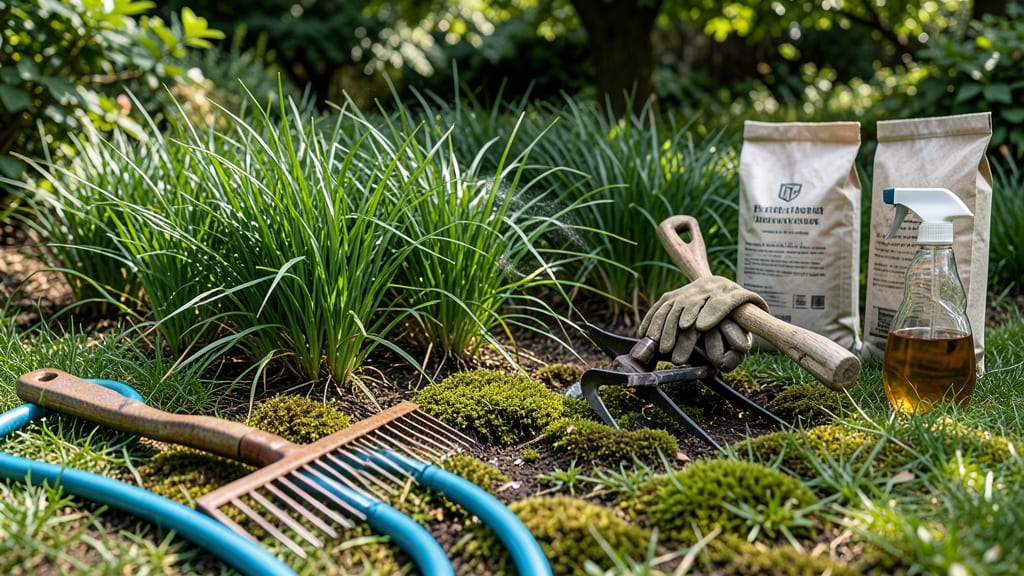
That vinegar-based spot cleanse for the removal of moss in lawns saves your lawn in just 15 minutes—no harsh chemicals, no scalping, and no waiting weeks for results. 🌱 I’ve battled moss for years, and this method finally gave me a lawn that stays lush and green without the guesswork.
The key? Targeting the moss directly while protecting your grass, so you don’t accidentally strip your lawn bare in the process.
Most people grab a rake and tear into the problem, only to realize too late they’ve ripped up the grass along with the moss.
This method skips the brute force—you’ll use household vinegar, a plastic spray bottle, and a stiff brush to lift the moss cleanly, leaving your grass unharmed. It’s perfect for small patches or stubborn spots that refuse to fade, even after overseeding.
By the time you’re done, your lawn will look fresh and even, with no bare patches or that dreaded spongy feel underfoot. The vinegar breaks down the moss cells on contact, so you see results immediately, and your grass recovers faster than with traditional methods.
Plus, it’s a zero-waste solution that won’t harm pets or kids once it dries.
This works best in spring or fall, when temperatures are mild and your grass is actively growing. If your lawn is already thin, pair this with some overseeding to thicken it up—moss thrives where grass struggles, so giving your lawn a boost is half the battle.
Ready to reclaim your yard?
The Hidden Triggers Behind Moss
Moss isn’t just a pesky green nuisance—it’s a symptom of deeper lawn health issues. Understanding why it thrives in your yard is the first step to eliminating it for good. Below, we break down the real culprits behind moss growth, backed by science and actionable insights.
Moss loves moisture, but it doesn’t just tolerate dampness—it thrives in standing water that grasses can’t handle. Here’s why:
- Compacted soil prevents water from draining properly, creating soggy pockets where moss roots take hold. Think of it like a swamp—ideal for moss, disastrous for turf.
- Clay-heavy soils (common in many regions) hold water like a sponge, suffocating grass roots while moss spreads unchecked.
- Shady, low-lying areas (like slopes or depressions) trap water after rain, turning them into moss magnets.
💡 Pro Tip: If your lawn feels spongy underfoot or puddles linger for hours, you’ve got a drainage problem—and moss is just the first warning sign.
Grass needs sunlight to photosynthesize, but moss? It’s the opportunist of the plant world. Here’s how shade fuels its growth:
- Moss spores germinate in low-light conditions because they don’t rely on photosynthesis like grasses. They steal nutrients instead.
- Trees, fences, or buildings block sunlight, creating microclimates where air circulates poorly and moisture lingers.
- Even partial shade (like dappled sunlight) can weaken grass over time, giving moss a competitive edge.
✨ Key Insight: If your lawn has bare patches under trees, moss isn’t the problem—it’s the solution to a failing grass ecosystem.
Moss doesn’t just grow in bad soil—it prefers it. Here’s the science:
- Acidic pH (below 6.0) is moss’s sweet spot. Most grasses thrive in neutral to slightly acidic soil (6.0–7.0), but moss? It’s a low-maintenance survivor.
- Low nitrogen levels weaken grass, while moss can fix its own nitrogen from the air (thanks to symbiotic bacteria). It’s like cheating at a nutrient arms race.
- Poor organic matter means less competition for moss. Healthy soil teems with microbes and fungi that outcompete moss—until they don’t.
📊 Soil Test Reality Check: If your soil test shows high acidity or low organic matter, moss isn’t the enemy—it’s a barometer of deeper issues.
Too much of a "good thing" can backfire. Here’s how lawn care mistakes invite moss:
- Excessive nitrogen fertilizer can burn grass roots, creating thin spots where moss moves in. It’s like inviting a squatter into a vacant lot.
- Skipping aeration compacts soil, reducing oxygen and water flow—moss’s favorite conditions.
- Infrequent mowing lets thatch build up, trapping moisture and blocking sunlight from reaching the soil.
🔥 Warning Sign: If your lawn looks "healthy" on top but has spongy patches underneath, over-fertilization might be the culprit.
Now that you know why moss is taking over, the next step is fixing the root causes—literally. Stay tuned for vinegar-based spot treatments that target moss and restore your lawn’s balance.
Quick Fixes for a Lush Lawn
Moss may seem like a stubborn foe, but with the right approach, you can reclaim your vibrant green lawn—fast! Below are targeted solutions based on the most common causes of moss overgrowth, plus prevention tips to keep it from creeping back.
Whether your lawn is shady, compacted, or just neglected, these fixes are designed to be easy, effective, and vinegar-friendly where possible.
Moss thrives in soggy, waterlogged areas where grass struggles to grow. If your lawn feels spongy underfoot or puddles linger after rain, drainage is the culprit.
How to Fix It: 🔥 Aerate the Soil – Use a manual or powered aerator to create small holes in the lawn, allowing water, air, and nutrients to penetrate deeper.
Rent or borrow one from a garden center if needed. 🍳 Improve Drainage – If water pools in low spots, consider slope adjustments (for small areas) or installing French drains (for larger issues).
For quick fixes, mix sand or compost into the soil to loosen compaction. 👨🍳 Overseed with Grass – After aerating, spread fast-growing grass seed (like ryegrass or fescue) to outcompete moss.
Keep the area lightly moist for 2–3 weeks. ⏰ Timeframe: 1–2 weeks for aeration effects; 4–6 weeks for grass establishment.
💡 Pro Tip: Test your soil’s drainage by digging a 6-inch hole, filling it with water, and timing how long it takes to drain. If it takes longer than 6 hours, drainage is poor.
Moss loves shade because it doesn’t need sunlight to survive—unlike grass, which wilts in low-light conditions.
How to Fix It: 🔥 Choose Shade-Tolerant Grass – Swap out sun-loving grasses for shade-friendly varieties like fine fescue or creeping red fescue.
These thrive in 4–6 hours of sunlight or less. 🍳 Thin the Canopy – If trees are blocking light, prune branches to allow more sunlight to reach the lawn.
Just avoid over-pruning, which can stress trees. 👨🍳 Add a Thin Topsoil Layer – Spread ½-inch of topsoil over mossy areas, then overseed. This gives grass a better chance to establish before moss reclaims space. ⏰ Timeframe: 3–4 weeks for grass to sprout; moss will weaken as grass fills in.
🌡️ Pro Tip: If shading is unavoidable (e.g., dense trees), mulch nearby garden beds with wood chips to prevent moss from spreading from shaded soil to the lawn.
Moss doesn’t need much water—it hates dry conditions—but lawns that stay damp for long periods become moss magnets.
How to Fix It: 🔥 Adjust Your Watering Schedule – Water deeply but infrequently (1–1.5 inches per week) to encourage deep root growth.
Avoid daily light watering, which keeps soil soggy. 🍳 Use Vinegar for Spot Treatment – Mix 1 gallon of white vinegar with 1 gallon of water and spray directly on moss. The acetic acid kills moss without harming grass (if used sparingly).
Reapply every 3–5 days until moss dies back (usually 1–2 weeks). 👨🍳 Improve Airflow – Trim back overgrown grass and weeds to reduce humidity near the soil.
A lawn rake can also help break up moss mats before treatment. ⏰ Timeframe: 1–2 weeks for vinegar to work; moss should disappear as soil dries.
✨ Pro Tip: Water in the early morning to allow grass to dry by evening, discouraging moss growth.
Moss prefers acidic conditions, while most grasses thrive in neutral to slightly alkaline soil (pH 6.0–7.0).
How to Fix It: 🔥 Test Your Soil’s pH – Use a DIY soil test kit (available at garden centers) to confirm acidity.
If pH is below 6.0, it’s time to adjust. 🍳 Apply Lime – Sprinkle pelletized lime evenly over the lawn (follow package rates for your soil test results).
Lime raises pH gradually—reapply in 3–6 months if needed. 👨🍳 Overseed After Lime – Once pH is balanced, aerate and overseed to help grass reclaim the area. Moss will struggle as conditions become less favorable. ⏰ Timeframe: 4–6 weeks for pH adjustment; moss decline in 2–3 months.
🎯 Pro Tip: If your soil is very acidic, consider sulfur-free fertilizers to avoid worsening the issue.
Once you’ve banished moss, stop it from returning with these long-term strategies:
- 🌿 Mow High – Keep grass at 3–4 inches tall to shade out moss and strengthen roots.
- 💧 Water Deeply, Less Often – Encourage deep roots that outcompete moss.
- 🍂 Rake Regularly – Remove moss before it spreads spores (early spring or fall).
- 🌱 Overseed Bare Spots – Fill thin areas with grass seed to prevent moss from moving in.
- 🌳 Trim Overhanging Branches – Increase sunlight to discourage moss growth.
By tackling the root cause of moss—whether it’s shade, poor drainage, or acidic soil—you’ll restore your lawn’s health without toxic chemicals. For stubborn patches, vinegar spot treatments work wonders in just 15 minutes! 🚀
Frequently asked questions
Can I use vinegar to kill moss without harming my grass?
Yes, but with caution! Use a 1:1 vinegar-to-water mix and apply it only to moss patches—never on healthy grass. The acetic acid kills moss on contact, but it can burn grass if overused. For best results, spray in early morning on a dry day and avoid watering for 24 hours afterward.
How do I know if my lawn has poor drainage causing moss?
Test it yourself: Dig a 6-inch hole, fill it with water, and time how long it takes to drain. If it takes longer than 6 hours, your soil has poor drainage. Moss thrives in soggy conditions, so improving airflow with aeration or adding sand/compost can help.
Will moss come back after I remove it?
It might if the underlying issues (like shade, poor drainage, or acidic soil) aren’t fixed. After removal, overseed bare spots, adjust pH with lime (if needed), and improve airflow to discourage regrowth. Regular maintenance—like mowing high and watering deeply—keeps moss at bay long-term.
Can I use commercial moss killers instead of vinegar?
Yes, but they often contain harsh chemicals like iron sulfate or ferrous ammonium sulfate, which can harm grass and pets. Vinegar is a natural, pet-safe alternative that works well for spot treatments. If you prefer commercial products, opt for fertilizer-based moss killers designed for lawns.
How often should I rake moss out of my lawn?
Remove moss once or twice a year, ideally in early spring or fall, when grass is actively growing. Use a stiff rake or dethatching tool to lift it without damaging the lawn. This prevents moss from spreading spores and gives grass a better chance to reclaim the space.