
Mower
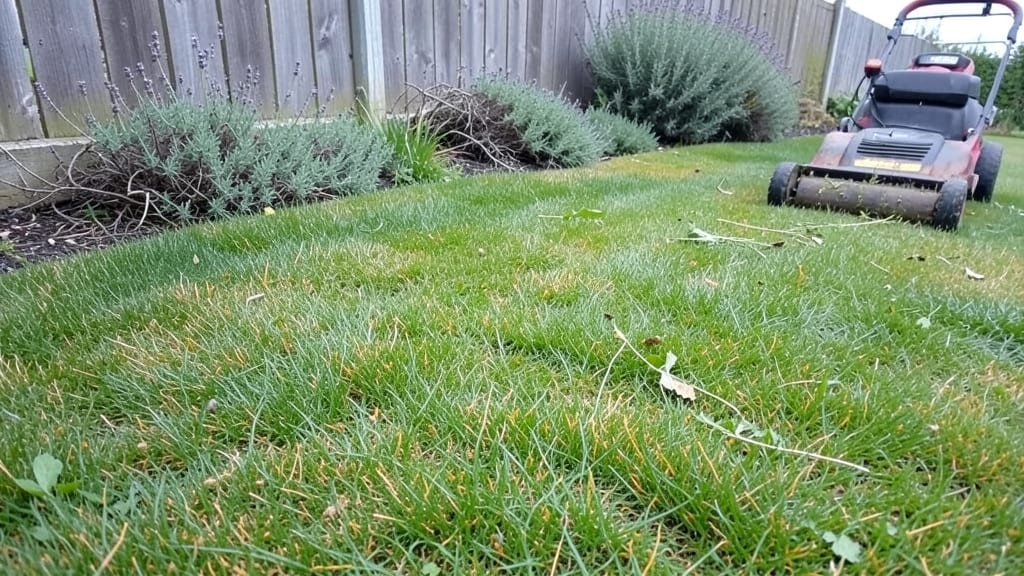
Mowing your lawn once a month creates overgrowth, weed dominance, and grass stress because most turfgrasses thrive with cuttings every 1-2 weeks. Neglect weakens roots, attracts pests, and disrupts growth cycles, making recovery difficult if you resume too late.
Monthly mowing throws off your grass's natural growth rhythm, forcing blades to stretch unnaturally for shade competition.
This elongation stresses roots while thick thatch blocks water and nutrients, creating perfect conditions for weeds like crabgrass. 🌱 I've seen lawns go from lush green to patchy brown in just two months when mowing stops—once the cycle starts, breaking it requires patience and proper techniques to revive.
What's worse is how quickly pests take advantage. Overgrown grass traps moisture, inviting fungal diseases and grubs that chew through roots. Even if you eventually return to regular mowing, the damage may already be done—some grasses never fully recover their density or color.
💡 In This Article
- How Monthly Mowing Damages Grass Roots and Growth Cycles
- Recovery Steps for Overgrown Lawns After Neglect
How monthly mowing damages grass roots and growth cycles
When you stretch mowing intervals to once a month, your grass enters survival mode. Most turfgrasses like Kentucky bluegrass or tall fescue grow at a rate of ½ to 1 inch per week under ideal conditions.
Cutting them at 3-4 inches tall keeps blades healthy, but when left untrimmed, they elongate rapidly—sometimes doubling in height—to compete for sunlight. This unnatural stretch weakens the cell walls in blades, making them more susceptible to breakage and disease.
The real damage happens below ground. Grass roots rely on a balance between photosynthesis (energy production) and growth hormones. When blades grow too tall, they shade lower stems, reducing light penetration by up to 70% in dense overgrowth.
This forces roots to work harder for less energy, leading to root suffocation as thick thatch (dead organic matter) blocks water and nutrients from reaching soil. 🌱 In extreme cases, I've seen roots shrink by 30-40% in neglected lawns, leaving them vulnerable to drought and pests.
Photosynthesis disruption is another silent killer. Healthy grass blades need direct sunlight to convert carbon dioxide into energy. When blades stretch beyond 6 inches tall, the lower portions starve for light, turning yellow and dying.
This creates gaps where weeds like crabgrass thrive—they germinate best in open, sunlit soil. The longer you wait, the more these invasive species take over, making recovery nearly impossible without complete removal.
Temperature and season play critical roles too. In summer, grasses grow aggressively to escape heat stress, but monthly mowing forces them into a cycle of rapid elongation followed by shock when finally cut.
This creates a stress-fragility loop: blades grow weak from overreach, then snap under mower blades, leaving brown patches. Cool-season grasses (like ryegrass) fare slightly better, but even they suffer from thatch buildup that can reach 1-2 inches thick in just two months of neglect.
Here's what happens when you finally resume regular mowing: the sudden height reduction causes physiological shock, similar to pruning a tree too aggressively. Grass blades may turn brown temporarily as they redirect energy to repair damaged cells.
In severe cases, the lawn may never fully recover its original density, especially if roots were already compromised. The key is acting early—once overgrowth exceeds 8 inches, recovery becomes a long-term project requiring dethatching, aeration, and targeted fertilization.
To visualize the impact, imagine a forest where trees grow unchecked for months. The tallest branches block sunlight from lower plants, creating a dense canopy that smothers the understory. Your lawn works the same way—only instead of trees, you're dealing with grass blades competing for survival in their own ecosystem.
The difference? Trees can recover; grass may not. 💫