
Lawn
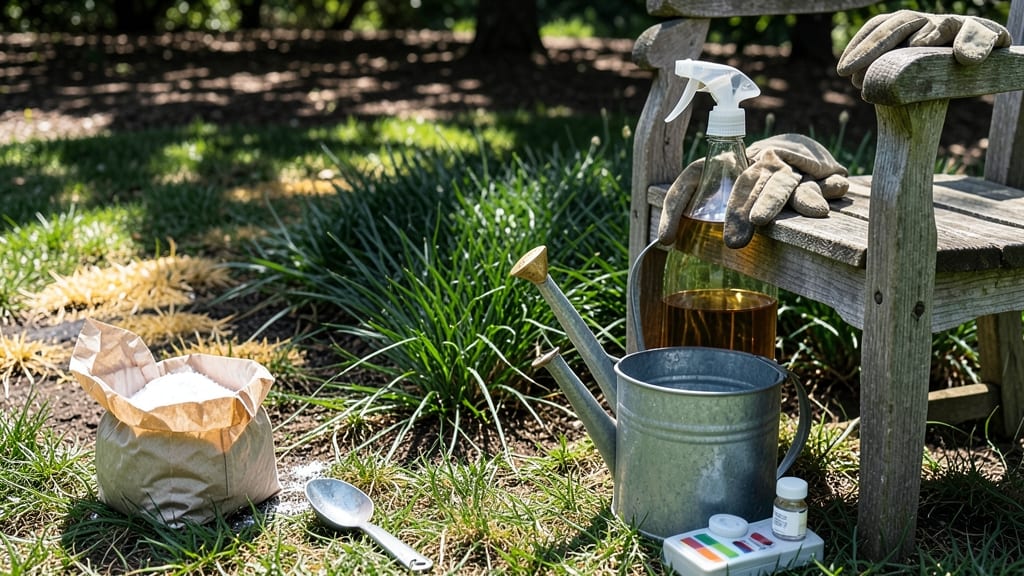
To neutralize dog urine on lawns, dilute the pH immediately by flushing with water, then apply a baking soda-vinegar solution or enzymatic cleaner to break down uric acid. Always test soil pH afterward to ensure proper balance.
Dog urine contains high levels of ammonia and uric acid, which raise soil pH and create a toxic environment for grass roots. 🌱 This chemical imbalance prevents your lawn from absorbing essential nutrients, leading to yellow patches that spread quickly.
The key is acting fast—within 24 hours—to minimize damage and restore healthy soil chemistry. I’ve found that combining immediate water dilution with a natural pH balancer like baking soda gives the best results for most home lawns.
For stubborn stains, commercial enzymatic cleaners are worth the investment—they specifically target uric acid crystals that water alone can’t remove. Pro tip: After treatment, monitor your lawn for 2-3 weeks and retest soil pH if discoloration persists.
This two-step approach (neutralization + follow-up) is what actually saves your grass from permanent damage.
💡 In This Article
- Why Dog Urine Burns Grass and How pH Affects Lawn Recovery
- Step-by-Step Dog Urine Neutralization Guide for Healthy Lawns
Why dog urine burns grass and how pH affects lawn recovery
Dog urine contains concentrated ammonia and uric acid, with a pH level between 6.5 and 8.0—far more alkaline than healthy soil (6.0 to 7.0). When deposited on grass, the ammonia immediately volatilizes, creating a 10-15% nitrogen concentration in the soil.
This sudden nitrogen spike forces grass blades to grow rapidly while starving roots of phosphorus and potassium, leading to the classic yellow-brown burn pattern. The uric acid crystals further disrupt soil microbes, which are essential for breaking down organic matter and releasing nutrients.
The real damage happens at the root level.
Grass roots need a balanced pH to absorb nutrients efficiently—when soil becomes too alkaline (above 7.0), iron and manganese become locked out, causing chlorosis (yellowing) even if nitrogen levels appear high. 🌱 What’s fascinating is how this process mimics fertilizer burn, but worse: synthetic fertilizers provide controlled nitrogen release, while dog urine delivers a toxic shock.
Studies show that repeated urination in the same spot can raise soil pH by 1.5 to 2.0 points within weeks, creating permanent dead zones if untreated.
Here's the chemical breakdown: Ammonia (NH₃) converts to ammonium (NH₄⁺) in soil, which grass can use—but only in moderation. The problem is the accompanying uric acid (C₅H₄N₄O₃) forms insoluble crystals that act like tiny glass shards, physically damaging root cell membranes.
This dual attack explains why water alone often fails: while it dilutes ammonia, the uric acid remains behind, continuing to disrupt soil chemistry. The key is breaking this cycle by either neutralizing the pH or physically removing the uric acid crystals.
Visual signs of this imbalance appear within 24-48 hours: grass turns yellow at the edges of urine spots, then browns as roots die back. The damage spreads because healthy grass blades leach nutrients from surrounding areas to compensate.
What most pet owners miss is that the soil beneath these spots often remains acidic (below 6.0) due to the uric acid's lingering effects—this is why simple watering can make things worse by accelerating nutrient leaching.
The solution requires addressing both the immediate ammonia spike AND the long-term pH disruption.
Consider this comparison: A single dog produces about 10-12 milliliters of urine per pound of body weight daily. For a 50-pound dog, that's 500-600 milliliters of potentially damaging liquid daily.
When concentrated in small lawn areas, this creates "hot spots" where soil chemistry becomes permanently altered unless actively corrected. The good news? Grass is remarkably resilient when given the right conditions to recover—proper neutralization can restore these areas within 3-4 weeks with consistent care.
What most people don't realize is that the nitrogen in dog urine isn't the main problem—it's actually beneficial in small doses. The real culprits are the ammonia volatility and uric acid accumulation.
Here's how they interact: Ammonia burns grass blades directly, while uric acid disrupts the soil ecosystem that supports root health. This two-pronged attack explains why single treatments often fail—you need to address both the immediate burn AND the underlying soil chemistry imbalance for complete recovery.