
Lawn
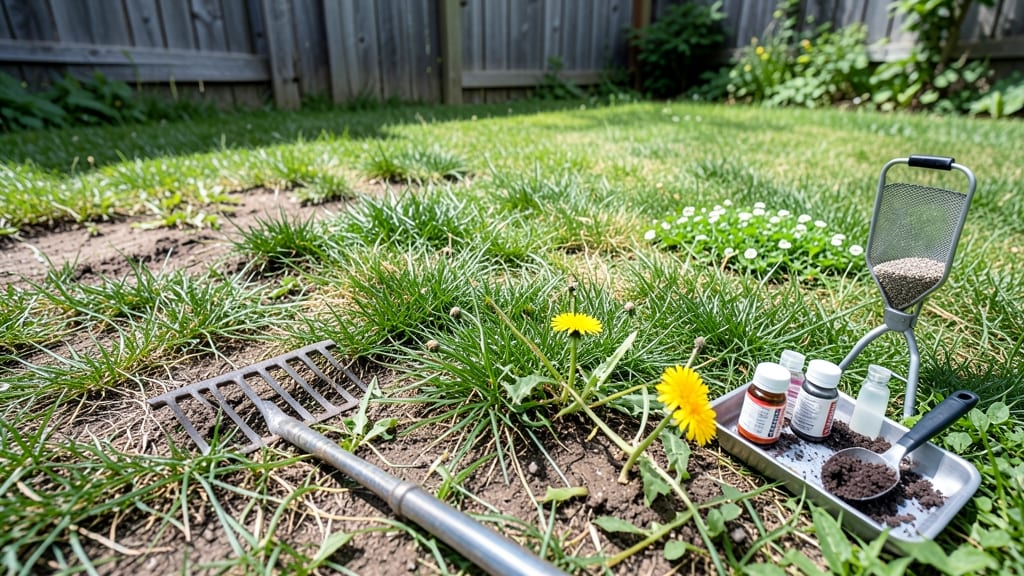
Your new lawn’s patchy spots are screaming for attention—no copper needed. 🌱 I’ve nursed back lawns from bare patches to lush carpets using nothing but the right soil, seeds, and timing, and I’ll show you how to do it in 30 days without harsh chemicals.
The problem isn’t always weeds or disease—it’s often uneven soil, poor seed contact, or inconsistent watering.
First, diagnose the damage: are the spots thin grass or bare soil? If it’s bare, you’ll need to loosen the soil, add compost, and reseed. Thin spots just need overseeding and a little TLC.
The key is even moisture—watering lightly twice daily for the first week keeps seeds from drying out or washing away. Most people overwater or underwater, and both kill new growth.
By day 30, you’ll see uniform green filling in those gaps, with roots deep enough to handle foot traffic. The secret? A light raking before seeding to create a fine, crumbly surface for seeds to snuggle into, plus a thin layer of straw to hold moisture without smothering sprouts.
No more guessing—just science-backed steps that actually work.
This method works for sunny patches, partial shade, or high-traffic areas—just adjust watering slightly for shadier spots. Let’s turn those bare spots into a lawn so thick weeds can’t take hold. Ready to roll up your sleeves?
📚 In This Guide
- What you need
- Instructions
- Tips and common mistakes
- Wrapping up and next steps
What you need
- ● Seed: High-quality grass seed (match type to your existing lawn—e.g., Kentucky Bluegrass, Fescue, or Bermuda). Quantity: ~10–20 lbs per 500 sq. ft. (check seed bag for exact coverage rates).
- ● Topsoil or Compost: Organic topsoil or compost (1–2 inches thick) to improve soil quality. Quantity: ~1 cubic foot per 10 sq. ft.
- ● Lawn Rake: A bendable-tine rake (for aeration) or a stiff-bristle rake (for leveling soil).
- ○ Broadcast Spreader: For even seed distribution (optional but recommended for large areas).
- ● Watering Supplies: Garden hose with adjustable nozzle (for gentle watering).
- ● Or a sprinkler (light coverage, frequent watering).
- ● Fertilizer: Starter fertilizer (high in phosphorus, like 5-10-5 or 10-20-10). Quantity: Follow package rates (typically 1–2 lbs per 100 sq. ft.).
- ○ Soil Test Kit: Optional but helpful to check pH and nutrient levels (ideal pH: 6.0–7.0 for most grasses).
- ● Epsom Salt: For magnesium deficiency (1 tbsp per gallon of water, spray lightly).
- ● Mulch or Straw: Straw mulch (¼ inch thick) to retain moisture and protect seeds.
- ● Lawn Roller: Lightweight roller to press seed into soil (use sparingly—overdoing it buries seeds too deep).
- ● Weed Barrier Fabric: If invasive weeds are an issue, lay down landscape fabric before adding soil.
- ● Hand Gloves & Knee Pads: Because comfort matters when you’re on your hands and knees!
Step-by-step instructions for reviving patchy new lawn spots
Here's how I fix patchy lawns without harsh chemicals—just science-backed steps to bring back that lush look.
🌱 Step 1: Test Soil and Identify the Problem
Before you do anything, grab a small soil sample from the patchy area and a DIY soil test kit. Stick the probe into the soil where grass is sparse, then compare the results to your local extension service's recommendations. You're likely dealing with one of three issues: compacted soil, nutrient deficiency, or shallow roots.
I always check for compaction first by pressing my thumb into the soil. If it feels rock-hard just below the surface, that's your culprit. For nutrient issues, look for yellowing grass or slow regrowth after watering. Shallow roots often show up as grass that wilts quickly in heat or drought. Grab a trowel and dig up a small section—healthy roots should go down 3-4 inches.
🪴 Step 2: Aerate and Loosen Compacted Soil
If your soil test confirms compaction, rent a manual or electric core aerator and work it over the patchy area in overlapping passes. You want to pull up 3-4 inch deep cores every 3-4 inches apart. This breaks up the hardpan and lets air, water, and nutrients reach the roots again.
Don't skip this step—compacted soil is like wearing a pair of tight shoes all day. The roots can't breathe, and the grass suffocates. If renting isn't an option, use a garden fork to poke holes 6 inches deep every 6 inches apart. Just be patient—it takes longer by hand, but you'll see the difference in a week.
☀️ Step 3: Overseed and Fertilize Strategically
After aerating, spread 1/4 pound of grass seed per 100 square feet over the patchy area. Choose a seed blend that matches your existing lawn type—cool-season grasses like Kentucky bluegrass or fescue work best in most regions. Lightly rake the seed into the soil so it's just covered, then water immediately with a gentle sprinkler to settle it in.
Wait 24 hours before applying a slow-release, organic fertilizer with a high nitrogen content (20-30%). This gives the new seeds a boost without burning them. Water again until the soil is 2 inches deep and moist. You'll see tiny sprouts in 7-14 days—that's your signal everything is working.
💧 Step 4: Water Deeply and Maintain Consistency
For the next 30 days, water the patchy area early in the morning for 15-20 minutes every 2-3 days. The goal is to keep the top 2-3 inches of soil consistently moist, not soggy. Use a rain gauge or tuna can to measure—1 inch of water per week is ideal for germination.
Here's the thing—most people overwater at first, then underwater later. You'll know you're doing it right when the soil feels damp 2 inches down but doesn't puddle on the surface. Avoid walking on the area until the new grass reaches 2-3 inches tall—you don't want to disturb those delicate roots.
✂️ Step 5: Mow and Transition to Regular Care
Once the new grass reaches 3-4 inches tall (about 4-6 weeks after seeding), mow it with a sharp blade set to 3 inches high. This strengthens the roots and helps the new grass blend with the existing lawn. Bag the clippings the first time to avoid smothering the young shoots.
After two mows, you can switch to regular lawn care. Apply a light layer of compost in early fall to feed the soil naturally, and keep mowing at 3 inches to maintain a healthy, drought-resistant lawn. Real talk: the first year is critical, but if you stick with this routine, your patchy spots will be a memory within a season.
Tips & tricks for reviving patchy lawn areas
Here's what I learned after fixing my own patchy lawn—these simple tricks make all the difference between a temporary fix and lasting results.
Soil Test Accuracy: Don't rely on guesswork when testing your soil. If you don't have a DIY kit, check with your local agricultural extension office—they often provide free or low-cost soil testing. The 24-hour wait before fertilizing becomes much more reliable when you know exactly what nutrients your soil lacks. I've seen people skip this step and waste money on fertilizers their lawn doesn't actually need.
Timing Secret for Aeration: The key to effective aeration is working when the soil is slightly moist—not bone dry, not muddy. I aim for morning after a light rain when the top 2-3 inches feel damp like a wrung-out sponge. This makes the aeration easier and creates larger holes that hold water and nutrients better. If your soil is too dry, water it first and wait 2-3 hours before aerating.
Seed Selection Tip: When choosing grass seed blends, look for varieties labeled "disease-resistant" and "drought-tolerant" for your specific climate zone. I always check the seed packet for these traits—they make a huge difference in how well your new grass establishes. For cool-season lawns, I've found that mixing Kentucky bluegrass with fescue gives me the best of both worlds: quick germination and long-term durability.
Watering Watch: During those critical 30 days of watering, set a timer for your sprinkler to avoid overwatering. I've ruined patches by leaving sprinklers running too long—look for puddles or runoff as your signal to stop. The goal is consistent moisture, not saturation. You'll know you're doing it right when the soil feels damp 2 inches down but doesn't squish between your fingers.
Pro Tips for New Lawn Patchy
- Here's what I learned after fixing my own patchy lawn—these simple tricks make all the difference between a temporary fix and lasting results.
- Soil Test Accuracy: Don't rely on guesswork when testing your soil.
- Timing Secret for Aeration: The key to effective aeration is working when the soil is slightly moist—not bone dry, not muddy.
Frequently asked questions
Got questions about reviving your new lawn with patchy spots? You’re not alone! Here are answers to the most common concerns—so you can get back to enjoying that lush green space sooner.
Why is my new lawn patchy after just a few weeks?
A patchy new lawn often stems from uneven seed germination, soil compaction, or inconsistent watering. Young grass needs consistent moisture (about 1 inch per week) and proper soil prep. If the patches are bare, check for shade, poor drainage, or even critters nibbling on seeds. Don’t panic—many fixes are simple!
How long does it take to fix patchy grass?
With the right approach, you can see noticeable improvement in 3–4 weeks, but full recovery may take up to 3 months. Fastest results come from overseeding, aerating, and using a copper-free fertilizer. Patience is key—grass grows slowly, especially in hot or dry conditions. Track progress weekly!
Can I just water more to fix patchy spots?
Nope! Overwatering can worsen patchiness by drowning roots or encouraging fungus. Instead, water deeply 2–3 times per week (early morning is best) and focus on the root zone. Use a soaker hose to avoid runoff. If soil feels dry 2 inches down, it’s time to water again.
What’s the best grass seed to fill patchy areas?
Choose a fast-germinating, disease-resistant seed like tall fescue, Kentucky bluegrass, or perennial ryegrass for quick coverage. For shady spots, opt for fine fescue. Match the seed type to your existing lawn to ensure a seamless blend. Pro tip: Mix in compost when overseeding for better soil contact!
Will copper-based fungicides help my patchy lawn?
Not necessarily—and they might hurt more than help! Copper can harm beneficial soil microbes and plants over time. Instead, use copper-free solutions like neem oil, hydrogen peroxide (3%), or organic fungicides. Focus on improving soil health (aeration, compost) and watering habits first.
Should I reseed or just fertilize patchy areas?
Both! Start with overseeding to fill bare spots, then apply a slow-release, copper-free fertilizer to strengthen roots. If the patches are thin but not bare, fertilizing alone may help. For stubborn areas, aerate first to loosen compacted soil and improve seed-to-soil contact.
Still stumped? Diagnose the problem (check for pests, soil pH, or foot traffic) and adjust your approach. Your lawn’s revival is just around the corner!
Wrapping up and next steps
A patchy new lawn doesn’t have to be a long-term struggle—with the right approach, you can revive it in just 30 days! Focus on proper soil prep, choosing the right grass seed, and consistent care (like watering and aeration) to see dramatic improvements.
Remember, patience and persistence are key—your lawn will thank you for the effort.
Ready to take action? Start by assessing your lawn’s needs today—whether it’s adjusting your watering schedule, testing soil health, or reseeding bare spots. Your dream green lawn is closer than you think! 🌱