
Lawn
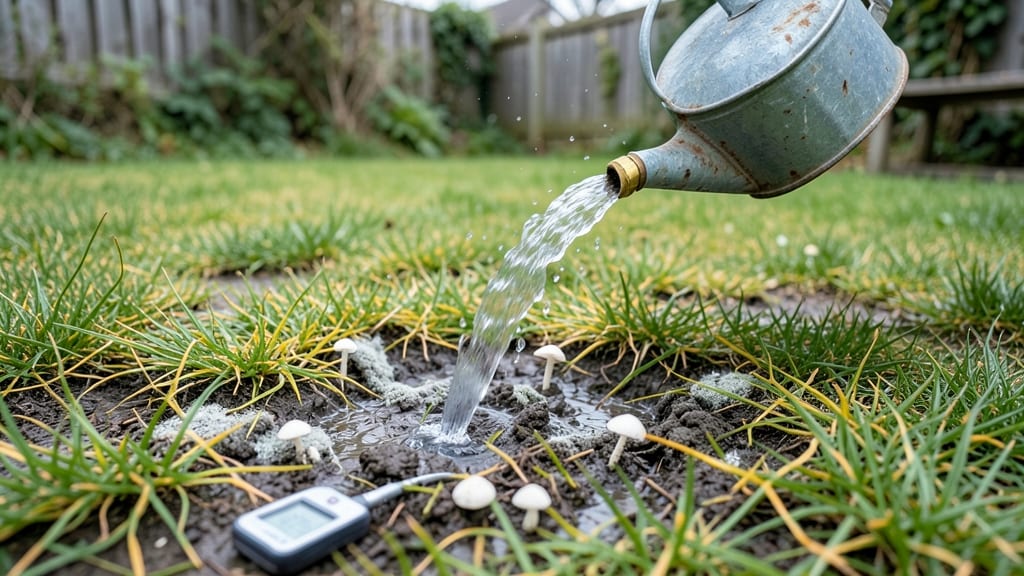
Your lawn feels like a swamp when you walk on it—overwatered grass turns lush into a soggy mess, inviting fungus and suffocating roots. 🌱 I’ve fixed this problem before, and the solution starts with understanding why your yard’s drowning in its own moisture.
The good news? Most cases are reversible with the right adjustments.
Yellowing patches, mushrooms sprouting overnight, and that musty smell when you step on the grass? Those are red flags. Overwatering leaches nutrients, promotes root rot, and creates the perfect breeding ground for fungal infections like brown patch or dollar spot.
The longer you wait, the harder it gets to revive your lawn.
First, cut back on watering—deep, infrequent soaks work better than daily light sprinkles. Then improve drainage by aerating compacted soil and redirecting water away from low spots. Within 2-3 weeks, you’ll see firmer grass and fewer fungal signs if you act now.
For stubborn cases, a soil test reveals if you need gypsum or sand amendments. Severe fungal infections might need fungicide, but most homeowners fix it themselves with these basic steps. Let’s get your lawn back to healthy, not soggy.
The Hidden Triggers Behind Soggy Grass
That lush, green lawn you’ve worked so hard to cultivate can quickly turn into a soggy, spongy mess—even with good intentions. Overwatering isn’t just about pouring too much water at once; it’s a sneaky mix of human habits, environmental factors, and lawn physics.
Understanding why it happens is the first step to fixing it. Let’s break down the real culprits behind your lawn’s waterlogged woes.
Automatic sprinklers, drip lines, and smart timers are designed to make lawn care effortless—but they can also be the silent saboteurs of your grass. Here’s how:
- Overlapping spray patterns: If sprinkler heads are too close together, water pools in the same spots, preventing proper drainage. Fix: Adjust sprinkler heads so they spray in non-overlapping zones (aim for 10–15% overlap max).
- Run times that ignore soil type: Clay soil stays soggy for days, while sandy soil drains in hours. A 30-minute cycle might be perfect for sand but a disaster for clay. Fix: Test your soil’s drainage rate (see below) and adjust watering schedules accordingly.
- Broken or misaligned sprinklers: A clogged nozzle or tilted head can send water in erratic arcs, creating localized puddles. Fix: Audit your system monthly—look for uneven spray patterns or heads spraying upward (wasting water and encouraging fungal growth).
Pro Tip: 🌡️ Use the "percolation test" to check drainage: Dig a 6-inch hole, fill it with water, and time how long it takes to drain. Clay soil = 6+ hours (high risk for overwatering), sandy soil = 1–2 hours (low risk). Adjust irrigation accordingly.
Rain is free water, but too much of it can turn your lawn into a swamp—especially if your drainage is already compromised. Key factors:
- Heavy or frequent rainfall: If your area gets 1+ inch of rain per week consistently, your lawn may not need extra watering. Fix: Install a rain sensor on your irrigation system to pause watering during wet spells.
- Poor natural drainage: Flat yards, compacted soil, or clay-heavy topsoil act like bathtubs, trapping water. Fix: Test for drainage issues by digging a small trench—if water pools instead of seeping away, you may need soil amendments (sand or compost) or French drains.
- Seasonal shifts: Spring thaw and fall rains can saturate soil long after the weather clears. Fix: Reduce irrigation by 30–50% during these transition periods and aerate your lawn to improve water absorption.
Even the most well-meaning lawn care routines can lead to overwatering. Common mistakes include:
- Watering on a schedule, not by need: Early morning is ideal, but midday or evening watering increases evaporation loss and fungal risks. Fix: Water before 10 AM and check soil moisture with a screwdriver test—if it slides in easily, you’ve overdone it.
- Ignoring grass type and growth stage: Cool-season grasses (like Kentucky bluegrass) need more water in summer, while warm-season grasses (like Bermuda) thrive in heat with less frequent, deeper watering. Fix: Match your watering to your grass type’s root depth and drought tolerance.
- Using the "blade of grass" rule: If grass springs back when stepped on, it’s "happy"—but this can mask chronic overwatering. Fix: Step on grass 10 minutes after watering. If it stays bent, you’re overdoing it.
Pro Tip: ✨ Try the "catch can test" to measure irrigation accuracy: Place empty tuna cans around your lawn during a watering cycle. If they collect more than 1 inch per week (including rain), you’re overwatering.
Grass isn’t just a pretty carpet—it’s a living system with limits. Overwatering disrupts its natural balance:
- Root suffocation: Too much water displaces oxygen in the soil, strangling roots and inviting fungal diseases like brown patch or dollar spot. Fix: Water deeply but infrequently (1–1.5 inches per week) to encourage deep root growth.
- Weed invasion: Moist, compacted soil is a magnet for annual bluegrass and crabgrass, which thrive in soggy conditions. Fix: Improve drainage and oversow with drought-tolerant grasses like tall fescue.
- Nutrient leaching: Excess water washes away nitrogen and potassium, leaving grass weak and yellow. Fix: Test soil pH and amend with compost or slow-release fertilizer to rebuild nutrients.
Revive Your Soggy Grass Now
Fixing an overwatered lawn starts with identifying the root cause—literally—and taking targeted action. Whether your grass is drowning in excess moisture, struggling with poor drainage, or suffering from fungal invasions, these solutions will help you restore a healthy, resilient lawn.
Below, we’ve mapped out practical fixes for common causes, along with prevention tips to keep your grass thriving long-term.
---
If your lawn feels like a swamp after rain or watering, the issue is likely overwatering or poor soil drainage. Here’s how to fix it:
#### 🔥 Step 1: Test Your Soil’s Drainage Before making changes, check how well your soil drains: - Dig a small hole (6–8 inches deep) and fill it with water. - If the water drains in under 4 hours, your soil is okay. - If it takes longer than 6 hours, you’ve got a drainage problem.
#### 🍳 Step 2: Improve Soil Aeration & Drainage - Core aeration (rent a machine or hire a pro) to create channels for water escape. - Add organic matter: Mix in compost or peat moss to loosen compacted soil. - Install a French drain if water pools in low spots—dig a trench, fill with gravel, and cover with landscape fabric.
#### 👨🍳 Step 3: Adjust Your Watering Schedule - Water deeply but infrequently—aim for 1–1.5 inches per week (including rain). - Water early in the morning (4–8 AM) to reduce evaporation and fungal growth. - Avoid daily light watering—this keeps roots shallow and encourages rot.
💡 Pro Tip: Use a rain gauge or tuna can to measure rainfall—overwatering often happens because homeowners don’t account for natural precipitation!
---
If your lawn has mushrooms, mold, or discolored patches, excess moisture is likely feeding fungal growth. Act fast:
#### ⏰ Step 1: Reduce Moisture Immediately - Skip watering for 3–5 days to let the soil dry out. - Rake affected areas to improve airflow and speed up drying. - Mow higher (3–4 inches) to shade the soil and prevent fungal spores from spreading.
#### 🔪 Step 2: Apply Fungicide (If Needed) - Use a broad-spectrum fungicide (like propiconazole or myclobutanil) for severe cases. - Follow label instructions—overapplying can harm beneficial microbes.
#### 🌡️ Step 3: Prevent Future Outbreaks - Improve drainage (see above) to eliminate standing water. - Avoid watering at night—fungi thrive in damp, dark conditions. - Remove thatch buildup (layer of dead grass) with a dethatching rake.
✨ Prevention Bonus: Spread compost or sand in high-risk areas to improve soil structure and reduce fungal hotspots.
---
If your lawn looks yellow, spongy, or pulls up easily, roots may be suffocating from too much water. Here’s how to nurse it back to health:
#### 💪 Step 1: Stop Watering & Let It Recover - Hold off on watering for 1–2 weeks unless the soil is bone-dry. - Pull up severely damaged grass and reseed bare spots with drought-tolerant grass seed (like tall fescue or Bermuda).
#### 🥗 Step 2: Feed & Strengthen Roots - Apply a slow-release fertilizer (high in phosphorus and potassium) to encourage root growth. - Top-dress with compost to improve soil health and microbial activity.
#### 🎯 Step 3: Long-Term Soil Health - Test your soil (kit from a garden center) to check pH and nutrient levels. - Add gypsum or lime if soil is too acidic or compacted. - Plant deep-rooted ground covers (like clover) in high-traffic areas to reduce compaction.
💡 Pro Tip: If your lawn is mostly dead, consider sod replacement in worst-hit areas—it’s faster than reseeding!
--- Once your lawn is back on track, keep these maintenance habits to avoid soggy grass again: ✅ Check sprinklers weekly—misaligned heads waste water and create puddles. ✅ Install a rain sensor on your irrigation system to pause watering during storms. ✅ Grade your yard so water flows away from your house and lawn (not toward it). ✅ Mulch garden beds to absorb excess water before it reaches the lawn.
--- With the right fixes, your lawn can bounce back from overwatering damage in 4–6 weeks. Stay consistent with care, and you’ll have a lush, resilient green space that handles rain (and drought!) like a pro. 🌿💦
Frequently asked questions
How can I tell if my lawn is overwatered vs. underwatered?
Overwatered grass feels spongy when walked on and often has a musty smell. Look for yellowing patches with mushrooms or mold growing, while underwatered grass turns brown and crispy at the tips. Stick a screwdriver in the soil—if it slides in easily (under 3 inches), you’re overwatering. If it’s bone-dry at 4+ inches, you’re underwatering.
Will stopping watering immediately fix an overwatered lawn?
Not always—stopping watering helps prevent further damage, but drainage issues still need fixing. Let the soil dry out for 3–5 days first, then improve airflow with raking or aeration. Severe cases may need fungicide treatment if mold or mushrooms appear. Think of it like treating a cold: rest helps, but you still need medicine for full recovery.
Can I use sand to fix poor drainage in my lawn?
Yes, but only if your soil is clay-heavy. Mix sand and compost (50/50 ratio) into the top 2–3 inches of soil to improve drainage. Avoid pure sand—it can make soil too porous and wash away nutrients. For large areas, consider core aeration first to create channels for water escape before adding amendments.
How long does it take to recover from overwatering?
Mild cases show improvement in 2–3 weeks with proper care, while severe damage (like fungal infections) may take 4–6 weeks. Focus on drainage fixes, reducing watering, and fertilizing to speed recovery. If grass stays yellow or spongy after 6 weeks, consider reseeding or sod replacement in worst areas.
Are there any plants that thrive in overwatered conditions?
Most lawn grasses struggle with excess moisture, but wetland plants like cattails, rushes, or sedges can handle soggy soil. For lawns, consider tall fescue or Bermuda grass—they’re more drought-tolerant than others. If your yard stays waterlogged, redesign with native wetland species or install a French drain system first to improve overall drainage.