
Plants
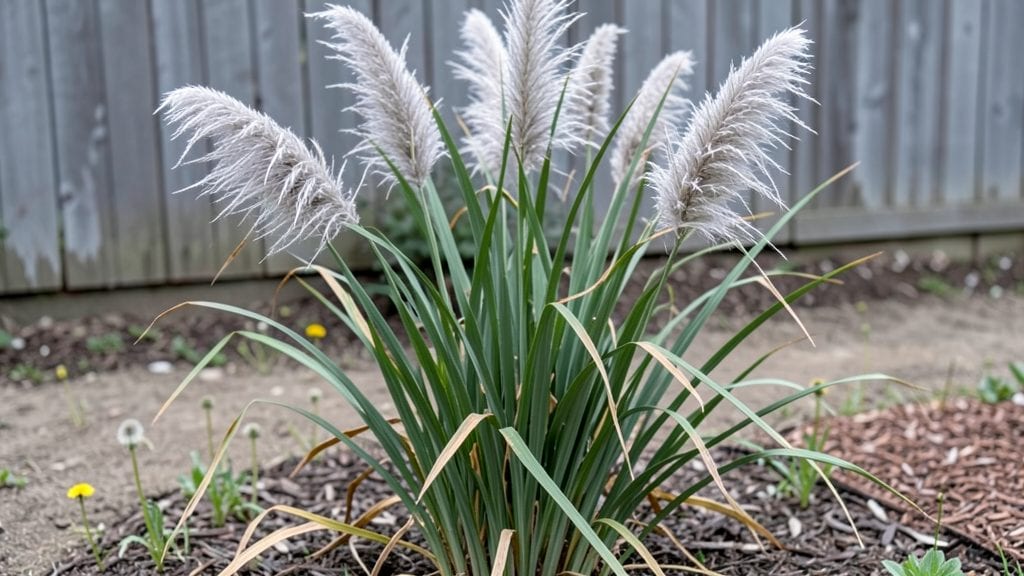
Pampas grass is a perennial plant that thrives in warm climates but dies back to the ground in freezing temperatures, regrowing from its hardy root system each spring when conditions improve.
This ornamental grass relies on its extensive root network to store nutrients and energy during dormancy, allowing it to bounce back once temperatures rise. 🌱 In colder regions, it may appear dead in winter but survives underground, making it a resilient choice for gardeners in USDA zones 7-11.
The key to its persistence lies in proper winter care—mulching protects the roots while pruning dead foliage in late winter promotes fresh growth.
What sets pampas grass apart is its ability to regenerate from just a small portion of its root system, even after severe dieback. This makes it far more forgiving than many other perennials when faced with harsh winters.
For those in marginal climates, selecting dwarf varieties like 'Pumila' can improve cold tolerance while maintaining the plant's signature fluffy plumes.
💡 In This Article
- Pampas Grass Survival in Cold Climates
- Year-Round Care for Pampas Grass in Cold Regions
Pampas grass survival in cold climates
Here's what's actually happening underground when pampas grass (Cortaderia selloana) faces freezing temperatures: its deep, fibrous root system acts like a natural energy reserve. These roots can extend up to 6-8 feet below ground, storing carbohydrates (like starches and sugars) during warm months to fuel regrowth.
The plant enters dormancy when nighttime temperatures consistently drop below 25°F, triggering a biochemical process where cell membranes stabilize and metabolic activity slows dramatically—almost like hibernation. 🌟
The key factor is the root crown's location—typically 2-4 inches below soil level—which protects it from frost penetration. Studies show that even when above-ground foliage blackens and collapses in 10-15°F conditions, the root crown remains viable.
This explains why pampas grass often "comes back from the dead" in spring, sometimes even after appearing completely dead for months. The root system's ability to regenerate from just 1-2 inches of remaining tissue is particularly impressive, a trait shared with other resilient perennials like bamboo.
When comparing hardiness zones, pampas grass thrives in USDA zones 7-11, with some cultivars showing tolerance down to zone 6 when properly winterized. The critical threshold isn't just temperature but also soil moisture—wet, frozen soil can suffocate roots, while dry conditions create insulation.
In zone 7, where winter lows might hit 0°F, the plant's survival depends on this root insulation working in tandem with protective mulching. What most people don't realize is that the plant's dieback pattern isn't uniform—older stems may brown first, while newer growth near the crown often survives longer.
Seasonal dieback follows a predictable pattern: first, the plumes (flowering stalks) turn brown and brittle, followed by the leaves which curl and darken. The root system remains metabolically active until soil temperatures drop below 32°F, at which point all above-ground growth halts.
This dormancy period can last 4-6 months in colder regions, with regrowth typically beginning when daytime temperatures consistently exceed 50°F for at least 2-3 weeks. The plant's ability to time this precisely is remarkable—it's not just responding to warmth but also to increasing daylight hours.
One fascinating mechanism is the plant's ability to "reset" its growth cycle annually. After dieback, the root crown produces new shoots from meristematic tissue (growth points) located at the base.
These new shoots emerge when soil temperatures reach 55-60°F, and they grow rapidly to take advantage of spring's nutrient flush. The plant's perennial nature isn't just about surviving winter—it's about strategically timing its energy expenditure to maximize spring growth.
This is why you'll often see pampas grass putting on dramatic new growth within 4-6 weeks of warm weather arriving, sometimes even before other perennials in the garden. ✨
For gardeners in marginal climates (zones 6-7), understanding this cycle is crucial. The plant's resilience comes with caveats—prolonged exposure to -10°F or colder can damage even the hardiest root systems, and wet winters increase the risk of crown rot.
However, with proper winter care (like mulching), pampas grass can push its cold tolerance by 3-5°F, making it a surprisingly adaptable perennial for those willing to provide a little extra protection.
The science behind this involves a complex interplay of temperature thresholds, soil conditions, and the plant's internal biological clocks—all working together to create this seemingly magical regrowth each spring.