
Lawn
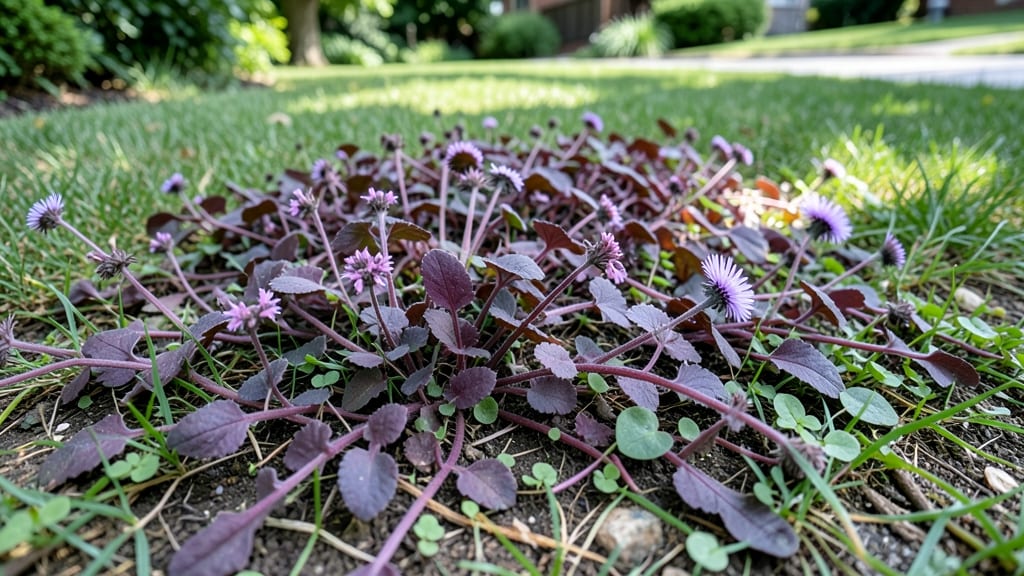
Those stubborn purple weeds growing in your lawn aren’t just an eyesore—they’re stealing nutrients from your grass. 🌱 I’ve wrestled with clover, chickweed, and henbit, and I’ll show you how to identify them, pull them out for good, and keep them from coming back.
The first step is knowing your enemy: clover has three leaflets, chickweed looks like tiny green stars, and henbit forms dense mats. Once you spot them, you can tackle them with organic methods like vinegar spray or manual pulling, or go for targeted herbicides if needed.
By late spring or early fall—when weeds are actively growing—you’ll see your lawn thicken and green up again. The key is consistency: overseeding bare spots and keeping your grass healthy so weeds don’t stand a chance.
This works for any lawn, whether you’re dealing with a small patch or a full yard takeover. Let’s get that grass growing strong again!
Root Causes Of Purple Lawn Invaders
Those stubborn purple weeds popping up in your lawn aren’t just a random nuisance—they’re usually a sign that something’s off with your grass’s growing conditions. Understanding the why behind their appearance is the first step to stopping them for good.
Let’s break down the science behind their persistence and how your lawn might be unknowingly inviting them in.
🌱 Overwatering Creates a Weed Magnet
Purple weeds like henbit or chickweed thrive in damp, soggy soil—conditions often caused by overwatering. Here’s what’s happening:
- Excess moisture weakens grass roots, giving weeds an opening to spread. Most lawns only need 1–1.5 inches of water per week (including rain), but many homeowners water too frequently or for too long.
- Poor drainage turns your lawn into a weed paradise. Compacted soil or clay-heavy dirt traps water, creating the ideal environment for moisture-loving weeds to germinate and flourish.
- Fungal risks rise in waterlogged grass, further stressing your turf and leaving gaps for weeds to invade.
Actionable fix: Audit your watering schedule—early morning is best—and test your soil’s drainage. If water pools after 24 hours, you may need to aerate or amend your soil with sand or compost.
🌞 Too Much Sun or Shade Stress
Purple weeds often exploit lawns that are either overly sunny (burning grass) or too shady (starving grass). Here’s the science:
- Sunburned grass (from intense heat or drought) creates bare spots where weeds like purple nutsedge or clover take root. Thin grass can’t compete, so weeds fill the void.
- Shady lawns struggle because most cool-season grasses (like fescue or bluegrass) need 4–6 hours of sunlight daily. Without enough light, grass grows weak, while shade-tolerant weeds like creeping Charlie (a purple-hued weed) dominate.
Actionable fix:
- For sun damage: Water deeply in the morning, mow higher (3–4 inches), and consider shade-tolerant grass seeds if your lawn gets less than 4 hours of sun.
- For shade issues: Thin overgrown trees or shrubs to let light filter through, or overseed with shade-friendly grasses like fine fescue.
🪴 Soil pH Imbalances Favor Weeds
Purple weeds often signal a soil pH problem. Most lawn grasses prefer a slightly acidic pH (6.0–7.0), but weeds like henbit or moss (which can turn purple in dry spells) love extremes:
- Alkaline soil (pH >7.0) locks out essential nutrients like iron and manganese, weakening grass while weeds adapt.
- Acidic soil (pH <5.5) can also stress grass, especially if it’s too low in nitrogen, creating gaps for weeds.
Actionable fix: Test your soil’s pH with a DIY kit or send a sample to your local extension office. Adjust with:
- Lime (to raise pH) for acidic soil.
- Sulfur or peat moss (to lower pH) for alkaline soil.
💡 Pro tip: Re-test in 2–3 months—overcorrecting pH can harm your lawn just as much as weeds!
🌾 Poor Fertilization Leaves Gaps
Weeds move in when grass is malnourished. Purple weeds like dandelions or plantain exploit lawns that are:
- Under-fertilized: Grass needs nitrogen, phosphorus, and potassium to stay thick. Without these, weeds outcompete it.
- Over-fertilized: Too much fertilizer (especially nitrogen) can burn grass, creating dead patches where weeds sprout.
- Lacking micronutrients: Deficiencies in iron, zinc, or magnesium turn grass yellow or purple, weakening its defense against weeds.
Actionable fix:
- Apply a slow-release, balanced fertilizer (like 16-4-8) in early spring and fall.
- Avoid high-nitrogen lawn foods in summer—they encourage rapid (but weak) grass growth.
- Consider a soil test to identify specific deficiencies and amend accordingly.
🪰 Compacted Soil Strangles Grass Roots
Heavy foot traffic, pets, or machinery can compact soil, crushing grass roots and preventing them from accessing water and nutrients. Compacted soil also creates a hardpan layer that blocks root growth, leaving your lawn vulnerable to weeds like crabgrass or moss.
Actionable fix:
- Aerate your lawn in early fall (when grass is actively growing) using a core aerator to pull out small soil plugs.
- Top-dress with compost or sand to improve soil structure.
- Reduce high-traffic areas or install pathways to protect compacted spots.
✨ Bonus: Overseed after aerating to thicken grass and crowd out weeds naturally!
Simple Fixes for Purple Weeds
Got those stubborn purple invaders creeping into your lawn? Don’t panic—these weeds are beatable! Below, we’ve mapped out practical, step-by-step solutions based on the most common causes (like poor soil, overwatering, or compacted grass). Plus, we’ll share prevention tips to keep your lawn lush and weed-free long-term.
If your lawn already has a purple weed takeover, act fast with these short-term solutions:
🌱 Pulling by Hand (Best for Small Patches)
- When to use: Early-stage weeds (young, small purple sprouts).
- How to do it:
- Wait for rain or water the soil 1–2 hours before pulling to loosen roots. 💦
- Grab the weed at the base (use gloves!) and twist gently to avoid breaking the root. ⚡
- Fill a bucket with soapy water and drop weeds in to kill them (don’t compost them—they’ll regrow!).
- Pro tip: Do this in the morning or evening when weeds are soft and easier to remove. ☀️
🔪 Spot-Treating with Vinegar (Organic Option)
- When to use: Small, isolated weeds where you don’t want herbicides.
- How to do it: 1.
Mix 1 gallon of white vinegar (5% acetic acid) + 1 cup dish soap + 1 cup salt in a spray bottle. 🧼 2. Spray directly on weeds (avoid healthy grass—vinegar kills everything!).
- Reapply every 2–3 days until weeds turn brown and die. ⏳ - Warning: Only use on dry, sunny days—vinegar works best in direct sunlight.
💡 Fix Compacted or Poor Soil
If your lawn has thin grass and clay-heavy soil, purple weeds thrive. Aerate and amend to choke them out:
- Step 1: Aerate your lawn (rent a core aerator or hire a pro). ⛏️
- Step 2: Spread 2–3 inches of compost or topsoil over the area. 🌿
- Step 3: Overseed with a dense, competitive grass (like Kentucky Bluegrass or Fescue).
- Prevention tip: Test your soil (DIY kits at garden stores) and adjust pH if needed—purple weeds love alkaline soil (pH 7.0+).
Balance it with sulfur or peat moss if necessary.
👨🍳 Adjust Watering Habits
Overwatering = weed paradise. Fix your schedule:
- Water deeply but infrequently (1–1.5 inches per week, including rain).
- Water early morning (before 10 AM) to reduce fungal growth and encourage deep grass roots. 🌅
- Avoid daily light watering—this keeps soil moist, inviting weeds.
- Prevention tip: Install a rain gauge or smart sprinkler timer to track moisture levels.
🔥 Use Pre-Emergent Herbicides (Prevent Future Growth)
If you’ve got bare spots or high weed pressure, a pre-emergent herbicide can stop seeds from sprouting.
- Best time to apply: Early spring (before weeds germinate) or fall (weeds are prepping for winter).
- How to apply: 1.
Mow your lawn short (1–1.5 inches). 2. Apply evenly with a spreader (follow product instructions). 3. Water lightly after application to activate it. 💧 - Pro tip: Corn gluten meal (a natural pre-emergent) works too—sprinkle 20 lbs per 1,000 sq ft in early spring. ✨
🎯 Post-Emergent Herbicides (For Existing Weeds)
If you’ve got established purple weeds, a selective herbicide (like 2,4-D or dicamba) can target them without killing your grass. - How to use: 1. Read the label carefully—some products require specific grass types.
- Spray on a calm day (no wind) and avoid watering for 24–48 hours.
- Reapply in 7–10 days if needed. - Safety tip: Wear gloves and a mask—herbicides can irritate skin and lungs. 😷
Once you’ve cleared the purple weeds, lock them out with these maintenance habits:
| Problem | Solution | How Often |
|---|---|---|
| Thin grass | Overseed bare spots | Early fall or spring |
| High foot traffic | Walk on paths, avoid compacting grass | Daily (walk patterns) |
| Poor drainage | Rake leaves/debris, improve grading | After heavy rain |
| Over-fertilizing | Use slow-release fertilizer | Every 6–8 weeks |
| Mowing too short | Keep grass at 3–4 inches | Weekly (or as needed) |
💡 Bonus Tip: Mulch clippings after mowing—they return nutrients to the soil and suppress weeds naturally. ♻️
Final Thought: Purple weeds are opportunists—they move in when your lawn is weak. By fixing soil, adjusting water, and keeping grass thick, you’ll outcompete them before they even start. Stay consistent, and your lawn will be weed-free in no time! 🚀
Frequently asked questions
What are the most common purple weeds in lawns?
The most likely culprits are henbit (purple stems with tiny leaves), chickweed (tiny star-shaped leaves), and creeping Charlie (purple-tinged clover-like growth). Other suspects include purple nutsedge (grass-like with purple tips) and moss (turns purple in dry conditions).
Is vinegar safe to use on purple weeds?
Vinegar is an effective organic option, but use it carefully! A mix of 1 gallon white vinegar + 1 cup dish soap + 1 cup salt kills weeds on contact. Only spray on weeds (not grass) and do it on dry, sunny days for best results. Reapply every 2-3 days until weeds die.
When is the best time to treat purple weeds?
Target weeds in early spring (before they spread) or late summer/fall when they're actively growing. For chemical treatments, apply pre-emergent herbicides in early spring and post-emergent herbicides in fall when weeds are vulnerable but before frost.
Will overseeding my lawn prevent purple weeds?
Thick, healthy grass crowds out weeds naturally. After treating existing weeds, overseed bare spots in early fall with a dense grass variety like Kentucky Bluegrass or Fescue. Keep grass at 3-4 inches tall to shade out weed seeds.
Are purple weeds harmful to my lawn?
Not directly harmful, but they're a sign your lawn needs attention. Purple weeds compete with grass for water and nutrients, weakening your turf. The real danger is what they reveal—poor soil, overwatering, or compacted ground—which can damage grass long-term if left unchecked.