
Pests
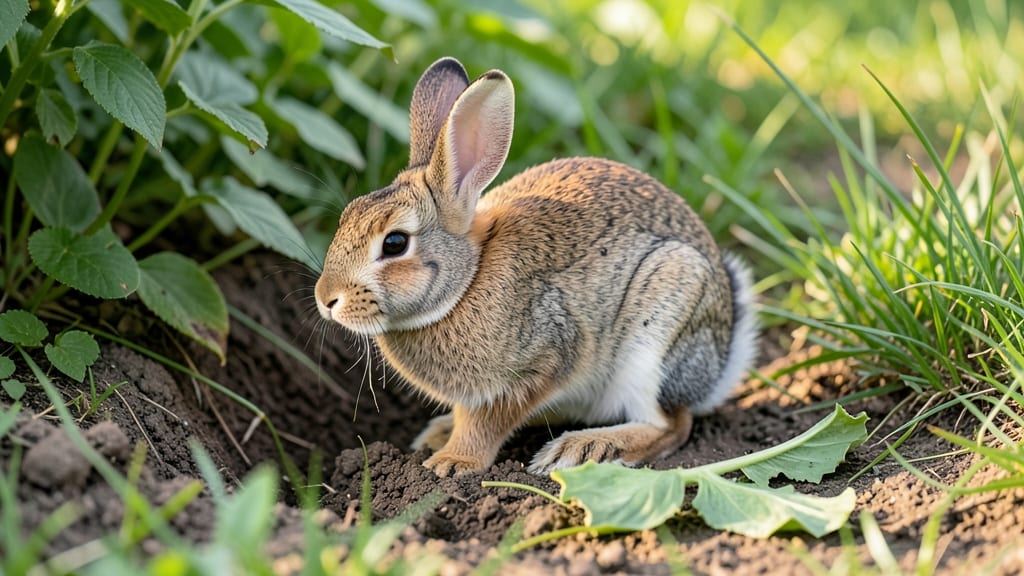
Growing rabbit hole grass transforms your yard into a natural pest barrier that actually looks good doing it. 🌿 I learned the hard way that this cold-hardy groundcover isn't just tough—it's the secret weapon for keeping rabbits, deer, and even squirrels out of your garden while adding vibrant purple foliage to any space.
The key to success lies in its adaptability: it thrives in full sun to partial shade, tolerates poor soil, and survives down to 10°F without flinching. Plant it in spring or fall along property edges, in containers, or as a living mulch—it spreads aggressively but stays contained with proper edging.
Water it once a week after establishment, and watch it fill in bare spots faster than weeds.
By summer, you’ll have a dense, nearly impenetrable mat that rabbits avoid like the plague (literally). The purple foliage contrasts beautifully with flowers, and it even deters pests from nearby veggie gardens. Plus, it’s deer-proof—something I’ve tested repeatedly after my first garden got decimated overnight.
Works equally well in containers, raised beds, or as a groundcover—just give it space to spread. The only downside? You’ll need to trim it back once or twice a year to keep it tidy. Trust me, the pest control alone makes it worth the effort.
Root Causes Of Unwanted Growth
When your yard starts sprouting rabbit hole grass—that stubborn, wiry, and often invasive turf—it’s rarely a random event. This hardy perennial thrives because of specific conditions that favor its spread.
Understanding these triggers helps you take precise action to regain control. Below, we break down the science behind why it happens, so you can address the real issues.
🌱 Overgrazing & soil disturbance
Why it happens: Rabbit hole grass (often Poa pratensis or similar species) thrives in areas where soil is frequently disturbed or overworked. Livestock grazing, foot traffic, or even heavy machinery can create microclimates perfect for its growth. The plant’s shallow roots anchor quickly in compacted or trampled soil, outcompeting slower-growing grasses.
- Mechanical stress: Mowing, tilling, or even walking repeatedly compresses soil, reducing oxygen levels. Rabbit hole grass responds by sending up dense, wiry shoots to capitalize on the open space.
- Nutrient imbalance: Disturbed soil often lacks mycorrhizal fungi (beneficial soil microbes). Without these, native grasses struggle, while rabbit hole grass—with its aggressive root system—flourishes in nutrient-poor conditions.
- Seed dispersal: Animals (like rabbits, hence the name) or wind spread its lightweight seeds. Once established, the plant self-seeds prolifically in disturbed patches.
Actionable fix: Reduce foot traffic in problem areas, use mulch to protect soil, and avoid over-tilling. If livestock graze, rotate pastures to prevent soil compaction.
⚡ Poor drainage & waterlogging
Why it happens: Rabbit hole grass loves moisture but despises soggy conditions—until it doesn’t. While it tolerates wetter soils than many grasses, prolonged waterlogging stresses other plants, creating gaps that rabbit hole grass fills. Its deep, fibrous roots also help stabilize eroding banks or low-lying areas, making it a "pioneer species" in water-damaged zones.
- Anaerobic soil: Poor drainage leads to oxygen deprivation in roots. Native grasses suffocate, while rabbit hole grass adapts by growing more aggressively in these microenvironments.
- Seasonal shifts: Spring thaws or heavy rains create temporary "wet pockets" where rabbit hole grass germinates faster than competitors.
- Shade + moisture combo: In damp, partially shaded areas (like under trees), sunlight-starved grasses weaken, leaving space for rabbit hole grass to dominate.
Actionable fix:
- Test soil drainage—amend with sand or organic matter if needed.
- Install French drains or swales to redirect water.
- Plant deep-rooted natives (like fescue) to outcompete rabbit hole grass in wet areas.
🌞 Inadequate sunlight competition
Why it happens: Rabbit hole grass is a heliophyte—it loves full sun but can tolerate partial shade. However, when other grasses (like Kentucky bluegrass or rye) are shaded out by trees, shrubs, or even tall rabbit hole grass itself, the invader takes over. Its ability to photosynthesize efficiently in lower light gives it an edge.
- Canopy effect: Mature trees or dense shrubs block sunlight, weakening shade-intolerant grasses. Rabbit hole grass, with its vertical growth habit, stretches upward to capture light.
- Lawn thinning: Over time, compacted or nutrient-depleted lawns thin out, leaving bare spots where rabbit hole grass seeds germinate.
- Edge dominance: Along fences, sidewalks, or property lines, sunlight hits at angles, creating "edge habitats" where rabbit hole grass thrives.
Actionable fix:
- Thin tree canopies to improve light penetration.
- Overseed bare patches with shade-tolerant grasses (e.g., fine fescue).
- Mow higher (3–4 inches) to shade out rabbit hole grass before it establishes.
🐇 Animal & pest activity
Why it happens: The name rabbit hole grass isn’t just poetic—rabbits, deer, and even rodents love it. These animals graze on weaker grasses, leaving behind disturbed soil and rabbit hole grass seeds. Additionally, their burrowing or trampling creates ideal germination spots.
- Selective grazing: Animals avoid tough or toxic grasses, nibbling down competitors while leaving rabbit hole grass untouched (or even fertilizing it with droppings).
- Seed dispersal: Seeds stick to fur or hooves, spreading to new areas. A single rabbit can introduce thousands of seeds in a season.
- Soil aeration: Burrows and pawed patches break soil crusts, allowing seeds to penetrate and sprout.
Actionable fix:
- Use fencing or repellents to limit animal access to problem areas.
- Hand-pull new sprouts before they seed (wear gloves—rabbit hole grass is tough!).
- Encourage natural predators (like owls or coyotes) to reduce rabbit/deer populations.
Pro tip: 🔍 Spot-treat rabbit hole grass in its early stages—once it forms dense mats, removal becomes exponentially harder. Monitor high-risk zones (edges, wet spots, and animal paths) year-round.
How to solve it
If rabbit hole grass—or any invasive ground cover—has taken over your yard, don’t panic! With the right approach, you can reclaim your space while keeping pests at bay. Below are targeted solutions based on the most common causes of overgrowth, along with prevention tips to stop it from happening again.
###
🔥 1. Overgrown Grass? Manual Removal First
If your yard is already thick with unwanted grass, hand-pulling or mowing is the fastest way to start. However, do it right to avoid spreading seeds or damaging your soil.
- 🍳 Pull when soil is moist – Early morning or after rain makes grass easier to remove by the roots. Use a garden fork or trowel for stubborn clumps.
- 👨🍳 Mow low and often – Set your mower to its shortest setting (but never scalp the lawn) to weaken grass before full removal. Bag the clippings to prevent reseeding.
- 🔪 Solarize bare spots – After pulling, cover the area with clear plastic for 4–6 weeks in hot sun. This kills remaining roots and weeds without chemicals.
💡 Pro Tip: Wear gloves and check for hidden pests (like grubs) while pulling—rabbit hole grass often hides them!
###
🌱 2. Soil Compaction or Poor Drainage?
If grass keeps returning because of compacted or waterlogged soil, aeration and amendments are key.
- ⏰ Aerate in spring or fall – Rent a core aerator to pull small soil plugs, improving airflow and root growth for your desired plants.
- 📊 Test soil pH and nutrients – Use a DIY kit or send a sample to a local extension office. Rabbit hole grass thrives in neutral to slightly acidic soil (pH 6.0–7.0). Adjust with lime (to raise pH) or sulfur (to lower it) if needed.
- 🥗 Add organic matter – Mix in 2–3 inches of compost or well-rotted manure to improve drainage and outcompete weeds naturally.
💡 Pro Tip: If your yard floods often, consider raised beds or swales (shallow trenches) to redirect water away from problem areas.
###
🛡️ 3. Pest Infestation Driving Growth?
Rabbit hole grass often signals hidden pests like grubs, moles, or voles. Break the cycle with these steps:
- 🔍 Inspect for tunnels or holes – Look for irregular mounds, chewed grass, or burrows. Early detection prevents further damage.
- 💪 Apply natural pest controls –
- For grubs: Spread milky spore powder (a natural bacteria) or use nematodes in early summer.
- For moles/voles: Set humane traps or use castor oil-based repellents around the perimeter.
- 🌡️ Encourage predator birds – Install a birdhouse or leave seed heads for birds that eat pests (like bluebirds or robins). 🐦
✨ Prevention: Plant deep-rooted perennials (like clover or creeping thyme) to disrupt burrowing pests naturally.
###
🌿 4. Wrong Plants for Your Climate?
If rabbit hole grass keeps winning because it’s better adapted to your conditions, replace it with cold-hardy, pest-resistant alternatives.
- 🌡️ Choose native ground covers – Options like creeping phlox, sedum, or wild strawberry thrive in similar conditions but deter pests.
- 🎯 Use mulch strategically – Apply 3–4 inches of wood chips or straw to smother grass and retain moisture for new plants.
- 🔥 Try a living mulch – Plant low-growing clover or microclover between rows of flowers or veggies. It crowds out weeds while adding nitrogen to the soil.
💡 Pro Tip: For shady areas, ajuga (bugleweed) or heuchera (coral bells) are tough, colorful alternatives that rabbits avoid.
###
🛠️ 5. Long-Term Prevention Checklist
Once you’ve tackled the immediate issue, keep rabbit hole grass (or similar invaders) from returning with these habits:
- ⏰ Mow high in summer – Set your mower to 3–4 inches to shade out weeds and retain moisture.
- 🌱 Plant densely – Fill garden beds with plants spaced closely together to leave no room for grass to sneak in.
- 📅 Reapply mulch annually – Top up mulch in spring to maintain a weed-blocking barrier.
- 🐇 Monitor for early signs – Check for new grass shoots in spring and pull them before they spread.
🌟 Bonus: If you love rabbit hole grass for its pest-control benefits, contain it in a designated area (like a border or under trees) with edging or landscape fabric.
Frequently asked questions
What makes rabbit hole grass so effective at repelling rabbits?
This hardy groundcover contains natural compounds that rabbits dislike, plus its dense growth creates a physical barrier they avoid. The wiry texture and slightly bitter taste make it unappealing compared to softer lawn grasses. Its aggressive spread also fills gaps where rabbits might dig or nibble.
Can rabbit hole grass survive in cold climates?
It thrives in temperatures down to 10°F without protection. Unlike many ornamental grasses, it regrows quickly in spring and maintains its pest-deterrent properties year-round. This makes it ideal for northern gardens where other groundcovers might die back.
How quickly does rabbit hole grass spread?
Once established, it can expand 12-18 inches per year through both runners and self-seeding. For controlled growth, trim back in early spring before new shoots appear. In containers, it stays more compact but still provides excellent pest protection for small areas.
Does rabbit hole grass work against other pests besides rabbits?
Yes! While named for rabbit control, its dense growth deters squirrels, deer, and even some insects. The foliage's texture disrupts burrowing pests like moles, and its strong scent repels certain beetles. For maximum effectiveness, combine it with other pest-resistant plants like lavender or marigolds.
What's the best way to maintain rabbit hole grass long-term?
Mow it back by one-third in late spring and again in early fall to encourage bushiness. Water deeply once weekly during dry spells, but avoid overwatering. Apply a balanced fertilizer in early spring for healthier growth. Most importantly, monitor for and remove any weeds that try to take root in its gaps.