
Lawn
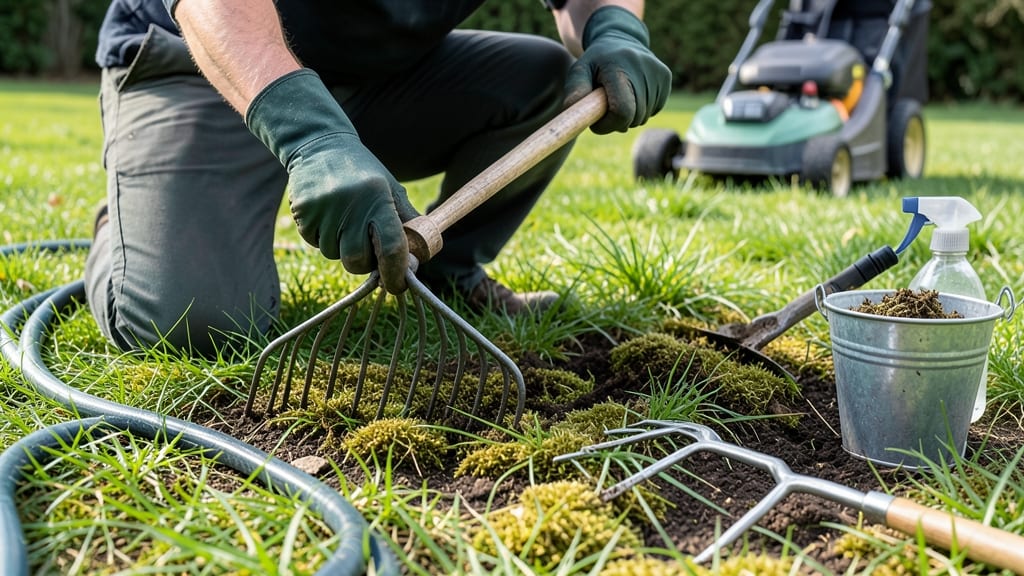
Your lawn can go from patchy and spongy to lush and springy in just 30 minutes—no matter how thick that moss has gotten—after removing moss from grass lawn properly. ✨ I’ve wrestled with mossy lawns in both damp climates and shady spots, and the secret isn’t brute force—it’s understanding why it’s there in the first place.
Most people reach for harsh chemicals first, but the real fix starts with simple adjustments that actually strengthen your grass.
The truth is, moss thrives where grass struggles—shady corners, compacted soil, or when lawns get too wet or too dry. My first mossy lawn taught me that overwatering and poor drainage are the real culprits, not just "bad grass."
The good news? Fixing these issues is easier than you think, and you’ll see results faster than you’d expect. No heavy machinery or toxic sprays required—just the right tools and a little elbow grease.
By the end of this, you’ll have a lawn that’s firm underfoot, free of that slippery moss layer, and ready to support healthy grass growth. The best part?
The methods I’m sharing work for both small patches and entire yards, and they’ll help prevent moss from coming back for good. Let’s get that lawn back in fighting shape—without sacrificing its health.
Whether you’re dealing with a damp spring lawn or a shady backyard, the same principles apply. We’ll cover when to tackle moss (hint: early fall or late winter is ideal), what tools to use, and how to keep your grass thriving once the moss is gone.
No more guessing—just proven results from real gardens.
The Hidden Triggers Behind Moss Growth
Moss might look like a harmless, fuzzy carpet on your lawn, but it’s actually a red flag that your grass isn’t getting what it needs to thrive. Understanding the why behind moss invasion is the first step to reclaiming a lush, healthy lawn.
Let’s break down the key factors—each with a scientific twist—that turn your grass into moss’s favorite real estate.
Moss thrives in wet conditions, while grass roots struggle to breathe when submerged. Here’s why drainage fails:
- Compacted Soil: Heavy foot traffic, machinery, or clay-heavy soil compresses the ground, preventing water from seeping away. Moss spores latch onto the damp surface like a sponge.
- Slope Issues: Flat or low-lying areas act as natural puddles, especially after rain. Even a slight dip in your yard can create a moss-friendly microclimate.
- Clay Soil: Clay doesn’t drain well—it holds water like a sponge, creating the perfect moss buffet. Test it: Dig a small hole; if water pools for hours, your soil is the problem.
Actionable Fix: Aerate compacted areas in fall or spring to loosen soil and improve drainage. For clay soil, mix in organic matter (like compost or sand) to create air pockets.
Grass needs 4–6 hours of sunlight daily to photosynthesize and grow. Moss? It’s a low-light champion that outcompetes grass in dim areas. Here’s why:
- Weakened Grass Roots: Shade reduces grass’s ability to produce energy, making it thin and vulnerable to moss invasion.
- Moss’s Photosynthetic Edge: Moss can grow in as little as 2 hours of light per day, while grass starves.
- Moisture Retention: Shady areas dry slower, keeping the ground damp longer—moss’s ideal condition.
Actionable Fix: Thin overgrown trees or trim branches to let more light reach the lawn. If shade is unavoidable, choose shade-tolerant grasses like fine fescue or creeping red fescue.
Moss loves acidic soil (pH below 6.0), while most grasses prefer a neutral to slightly acidic range (6.0–7.0). Here’s the science:
- Aluminum & Iron Toxicity: Acidic soil releases harmful metals that stress grass roots, making them susceptible to moss.
- Moss’s pH Preference: Many moss species thrive in pH 4.5–5.5, while grass struggles below 6.0.
- Decomposition Boost: Acidic conditions speed up organic matter breakdown, feeding moss but starving grass of nutrients.
Actionable Fix: Test your soil’s pH with a home kit or lab test. If it’s below 6.0, apply lime (calcium carbonate) in fall or early spring to raise the pH gradually.
Moss spreads when grass lacks essential nutrients, especially nitrogen, phosphorus, and potassium. Here’s how it happens:
- Poor Soil Fertility: Over time, lawns deplete nutrients without replenishment. Moss absorbs what’s left, while grass weakens.
- Thatched Buildup: A thick thatch layer (dead grass, roots) blocks nutrients from reaching the soil, creating a moss-friendly mat.
- Improper Fertilization: Too little fertilizer = weak grass. Too much can burn roots, leaving gaps for moss.
Actionable Fix: Test your soil for nutrient levels and apply a balanced fertilizer (10-10-10 or 16-4-8) in early fall or spring. Pro tip: Dethatch if the layer exceeds ½ inch thick to restore nutrient flow.
Now that you know the root causes of moss, you’re ready to tackle the problem head-on. The next step? Targeted removal and prevention strategies to restore your lawn’s glory.
Quick Fixes for a Lush Lawn
Moss may seem like a stubborn foe, but with the right approach, you can reclaim your lawn in no time. The key is identifying the root cause and applying targeted solutions. Below, we’ve mapped out practical fixes for common reasons moss thrives—plus prevention tips to keep it from creeping back.
If moss is taking over shaded areas, sunlight is your first line of defense. Moss thrives in low-light conditions, while grass needs at least 4-6 hours of direct sunlight daily. Here’s how to fix it:
- 🌳 Trim Overhanging Branches: Use pruning shears or a chainsaw to thin out tree limbs blocking sunlight. Aim for 30-50% more light exposure in problem areas.
- 🏡 Adjust Landscaping: Remove or relocate tall shrubs, fences, or structures casting deep shadows. Even a slight shift can make a difference.
- 💡 Install Outdoor Lights: Solar-powered path lights or floodlights can deter moss growth by warming the soil slightly during the day.
💡 Pro Tip: If pruning isn’t an option, consider moss-resistant ground covers (like clover or creeping thyme) in heavily shaded spots to outcompete moss naturally.
Moss loves damp, compacted soil. If your lawn stays soggy after rain, it’s an open invitation for moss. Try these fixes:
| Problem | Solution |
|---|---|
| Poor Soil Drainage |
|
| Low-Spotted Areas |
|
🌡️ Pro Tip: Test your soil’s drainage by digging a 6-inch hole and filling it with water. If it drains in less than 4 hours, your lawn is likely fine. If not, act fast!
When grass is sparse, moss fills the gaps like a weed. To crowd out moss, you need a thick, healthy lawn. Here’s how:
- 🌱 Overseed Bare Patches: Choose a fast-growing grass seed (like perennial ryegrass) and spread it evenly. Water lightly twice daily until germination (7-14 days).
- 💊 Fertilize Properly: Apply a slow-release nitrogen fertilizer (10-0-10 ratio) in early spring or fall. Avoid over-fertilizing—moss can thrive in nutrient-rich but compacted soil.
- 🪒 Mow High: Set your lawnmower to 3-4 inches to encourage deep roots and shade out moss.
✨ Pro Tip: For stubborn moss, mix grass seed with a moss-killing product (like iron-based treatments) before overseeding. This kills moss and feeds grass in one step!
Moss prefers acidic soil (pH 4.5-6.0), while most grasses thrive in neutral to slightly alkaline soil (pH 6.0-7.5). A simple soil test can reveal the issue:
- 📊 Test Your Soil: Use a DIY soil test kit (available at garden centers) or send a sample to a local extension office.
- 🧪 Raise pH if Too Acidic:
- Spread lime (calcium carbonate) at the rate of 25-50 lbs per 1,000 sq ft based on test results.
- Rake it into the top ¼ inch of soil and water thoroughly.
- 🌿 Lower pH if Too Alkaline:
- Apply sulfur or peat moss (follow package rates) and water well.
- Use organic matter like pine needles to gradually acidify the soil over time.
🎯 Pro Tip: Re-test your soil 3-4 months after treatment to ensure the pH is in the ideal range for grass.
Once you’ve banished moss, these habits will help prevent its return:
- 💧 Water Deeply but Less Often: Moss thrives in constant moisture. Water lawns 1-1.5 inches per week (including rain) and let the soil dry between waterings.
- 🪓 Aerate Annually: Compacted soil is moss’s best friend. Aerate once a year to keep roots healthy and water flowing freely.
- 🌿 Choose Moss-Resistant Grass: Opt for tall fescue, Kentucky bluegrass, or perennial ryegrass, which outcompete moss better than fine fescue.
- 🍂 Clean Up Debris: Remove fallen leaves and organic matter promptly—they smother grass and feed moss.
- 🔄 Rethink Shady Areas: If moss keeps returning, consider replacing grass with moss-resistant alternatives like clover, sedum, or ornamental grasses.
With these targeted fixes, your lawn will go from mossy and lackluster to lush and green in no time. The key is consistency—moss won’t stand a chance against a well-maintained, happy lawn! 🌿✨
Frequently asked questions
Is it better to rake moss off my lawn or use chemicals?
Raking is the gentler, eco-friendly approach for small patches. Use a stiff rake to remove moss when it's dry, then aerate and overseed to restore grass. Chemicals (like iron-based treatments) work faster but can harm beneficial soil organisms. For large areas, spot-treat with chemicals first, then rake and reseed.
Can I remove moss without damaging my grass?
Avoid harsh methods like vinegar or bleach—they can kill grass too. Instead, use a dry moss rake to lift it gently, then apply a light iron treatment (like iron sulfate) to kill remaining moss without harming grass. Always follow up by overseeding bare spots with shade-tolerant grass varieties.
How often should I aerate to prevent moss from coming back?
Aerate once a year in spring or fall to keep soil loose and improve drainage. For high-traffic lawns or clay soil, aerate twice yearly. This prevents compaction—the #1 reason moss thrives. Pair aeration with overseeding and top-dressing with compost for best results.
Will lime really help if my moss problem is from shade?
Lime helps with acidic soil, but shade is the bigger issue. Test your soil first—if pH is below 6.0, lime can improve grass health. However, the real fix for shade is thinning trees or planting shade-tolerant grasses like fine fescue. Combine both methods for best results.
How long does it take to see results after treating moss?
With mechanical removal (raking + aerating), you'll see improvement in 2-4 weeks. Chemical treatments (like iron) work faster—1-2 weeks—but may need reapplication. For full recovery, overseeding takes 4-6 weeks to establish. Consistency is key—moss won't return if you fix drainage and soil conditions!