
Lawn
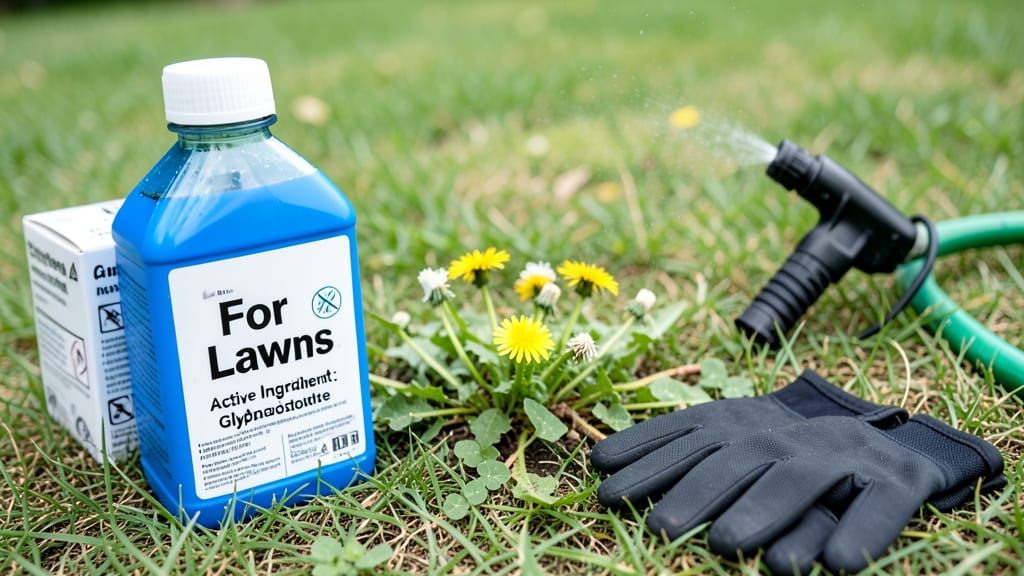
Understanding Roundup for lawns' active ingredients means knowing glyphosate works by disrupting a specific enzyme in plants—one that only weeds and grasses possess. This targeted approach explains why it kills broadleaf weeds while leaving lawn grasses unharmed, though the science behind this selectivity has faced increasing scrutiny in recent years.
The concentration matters too: most lawn formulations contain 41% glyphosate by volume, a potency that requires careful handling.
Safety concerns center on glyphosate's classification as a probable carcinogen by the World Health Organization, though regulatory agencies like the EPA maintain it's safe when used as directed.
The key lies in application precision—overspray can drift onto edible plants or beneficial insects, while improper timing may leave residues that persist longer than expected. Always check your local regulations, as some areas now restrict or ban its use entirely.
For those seeking alternatives, organic options like corn gluten meal or vinegar-based sprays target weeds differently—either by preventing seed germination or desiccating foliage. These methods require more frequent applications but eliminate chemical residues, making them ideal for organic lawns or areas near vegetable gardens.
The trade-off? Organic solutions often work slower and may not match glyphosate's broad-spectrum effectiveness.
Before choosing any herbicide, test a small area first to assess both efficacy and potential damage to your lawn. Consider soil health too: over-reliance on glyphosate can disrupt microbial balance, while organic alternatives may improve long-term soil structure. The right approach depends on your priorities—quick results or sustainable lawn care.
📚 In This Guide
- What you need
- Instructions
- Tips and common mistakes
- Wrapping up and next steps
What you need
- ● Roundup (or glyphosate-based herbicide): Choose a product with active ingredients like glyphosate (e.g., 41% glyphosate isopropylamine salt). A 1-gallon concentrate typically covers up to 2,500 sq. ft. (check label for exact rates).
- ○ Sprayer: Hose-end sprayer (optional but handy) for large areas, or
- ● Backpack sprayer (1-2 gallon capacity) for targeted control.
- ● Protective gear: Long sleeves and pants (preferably waterproof)
- ● Gloves (nitrile or rubber, chemical-resistant)
- ● Safety goggles (to shield eyes from spray)
- ● Measuring cup or scale: For precise herbicide dilution (if mixing manually).
- ● Water: 5 gallons per 1-gallon concentrate (for dilution; adjust per label).
- ○ Weed identification guide (optional but helpful): To confirm glyphosate-safe weeds (e.g., dandelions, crabgrass).
- ● String trimmer or edger: For clearing thick weeds before spraying.
- ● Broadcast spreader: For even application on large lawns.
- ● Weather app: To check for no-rain forecasts (48+ hours) post-application.
- ● Lawn marker flags: To mark treated areas and avoid overspray on plants.
Understanding glyphosate: how Roundup works to control weeds in lawns
Glyphosate-based herbicides like Roundup don’t just kill weeds—they disrupt a specific biochemical pathway that plants need to survive. Here’s how the active ingredients work and how to use them effectively for targeted lawn care.
Identify Glyphosate’s Target: The EPSP Synthase Pathway
Glyphosate targets a unique enzyme called EPSP synthase, which is essential for synthesizing certain amino acids—specifically, those plants need to grow. Unlike selective herbicides, glyphosate doesn’t discriminate between broadleaf weeds and grasses, making it effective for total weed control but requiring careful application around desirable plants.
This pathway is absent in animals and humans, which is why glyphosate is considered non-toxic to mammals when used correctly. However, its non-selective nature means it must be applied precisely to avoid damaging grass or ornamental plants. Always apply when weeds are actively growing and the forecast calls for dry weather for at least 48 hours afterward.
Choose the Right Formulation for Your Lawn
Roundup and similar glyphosate-based products come in various formulations, including liquids, granules, and water-soluble concentrates. For lawns, liquid formulations are most common because they allow for precise application using a sprayer. Concentrated versions require dilution, while ready-to-use sprays offer convenience but may have higher water content, reducing active ingredient potency.
Look for products labeled for lawn use, as some formulations may include additional ingredients like surfactants to enhance absorption. If treating weeds in cracks or along driveways, a granular form might be easier to apply. Always follow the label instructions for dilution ratios—over-dilution reduces efficacy, while under-dilution can harm surrounding vegetation.
Apply Glyphosate Correctly for Maximum Efficacy
Timing is critical when using glyphphosate. Apply when weeds are actively growing and have fully developed leaves—this ensures the herbicide can be absorbed through the foliage and translocated to the roots. Avoid applying during extreme heat or drought, as stressed plants may not absorb the herbicide effectively. Early morning applications minimize evaporation and reduce the risk of drift.
Use a sprayer with a flat-fan nozzle to ensure even coverage. Focus on the weed foliage, avoiding overspray onto grass or other desirable plants. For stubborn weeds like dandelions or clover, a second application may be necessary after 7-10 days, as glyphosate requires time to fully translocate and kill the root system. Always wear protective gear, including gloves and long sleeves, to prevent skin exposure.
Monitor and Reapply as Needed
After application, monitor treated areas for signs of weed dieback. Glyphosate works by shutting down the plant’s growth processes, so you may see wilting or yellowing within 3-7 days, followed by complete death of the weed over 2-4 weeks. If weeds regrow, it may indicate incomplete coverage or resistance—reapply if necessary, but rotate with other herbicides to prevent resistance buildup.
For lawns, consider spot-treating weeds rather than applying glyphosate broadly. Overuse can disrupt soil microbial activity and harm beneficial insects. After weeds are fully dead, overseed bare spots with grass seed and apply a light layer of mulch or straw to protect new growth while it establishes.
Store and Dispose of Glyphosate Safely
Glyphosate-based products should be stored in a cool, dry place away from children and pets. Keep original containers sealed tightly and label them clearly. Never reuse containers for food or beverages. If you have leftover product, check local regulations for disposal—many communities require hazardous waste collection for unused pesticides.
Dispose of empty containers by triple-rinsing them and puncturing to prevent reuse, then following local disposal guidelines. Proper storage and disposal prevent environmental contamination and protect non-target plants. Always read the label for specific storage instructions, as some formulations may have additional handling requirements.
Tips & tricks for effective glyphosate application
Mastering glyphosate application means understanding its unique chemistry—and avoiding common pitfalls that can reduce its effectiveness. Here’s what I’ve learned from years of targeted weed control.
Timing is Everything: The 48-hour dry weather window after application is non-negotiable. Glyphosate relies on rain-free conditions to fully penetrate weed foliage and translocate to the roots. I always check the 7-day forecast before applying—even a light shower can wash away the herbicide before it works. For best results, apply in the early morning when dew is present but evaporation rates are still low.
Targeted Application Technique: A flat-fan nozzle isn’t just about coverage—it’s about precision. I’ve found that holding the sprayer 12-18 inches above weeds and using a slow, steady motion creates the optimal droplet size for absorption. For stubborn weeds like bindweed, I make a point to apply glyphosate directly to the growing points where new leaves emerge. This targeted approach minimizes overspray while maximizing uptake.
Monitoring Weed Response: The 3-7 day window for initial wilting is your best indicator of whether the application worked. I recommend marking treated areas with flags or stakes so you can easily track progress. If you don’t see signs of stress within 7 days, it’s likely due to either incomplete coverage or weeds that have developed some level of resistance. In those cases, a second application after 7-10 days can often complete the job.
Safety and Storage Considerations: Proper storage isn’t just about compliance—it’s about maintaining product efficacy. I store glyphosate in its original container in a locked shed, away from direct sunlight and temperature extremes. The label’s instructions about triple-rinsing containers are critical; even small residues can contaminate soil or water if not properly disposed of. I’ve seen cases where improperly stored herbicides lost potency within months, so this step is worth emphasizing.
Pro Tips for Roundup For Lawns Active Ingredients
- Mastering glyphosate application means understanding its unique chemistry—and avoiding common pitfalls that can reduc...
- Timing is Everything: The 48-hour dry weather window after application is non-negotiable. Glyphosate relies on rain-f...
- Targeted Application Technique: A flat-fan nozzle isn’t just about coverage—it’s about precision. I’ve found that hol...
Frequently asked questions
Got questions about Roundup’s active ingredients and how they work? You’re not alone!
Here are some of the most common queries—and straightforward answers—to help you make the best decisions for your lawn.
What’s the main active ingredient in Roundup, and how does it work?
Most Roundup products contain glyphosate as their primary active ingredient. Glyphosate is a systemic herbicide, meaning it’s absorbed by weeds (especially broadleaf varieties) through leaves and roots, disrupting their growth processes. It’s effective on over 200+ weed types but won’t harm grass when applied correctly.
How long does it take for Roundup to kill weeds?
Visibility varies! Some weeds show signs of damage within 24–48 hours, but full kill time depends on factors like weed type, weather, and application rate. Tough weeds (e.g., dandelions, clover) may take 7–14 days. For best results, reapply if weeds aren’t fully browned after 2 weeks.
Can I use Roundup before or after rain?
Timing matters! Apply Roundup when rain is forecasted within 4–6 hours to help absorption, but avoid heavy rain within 24 hours—it can wash the herbicide away. Ideal conditions: calm, dry weather with temps between 50°F–85°F.
Are there glyphosate-free alternatives to Roundup?
Yes! If you’re looking for alternatives, consider vinegar-based herbicides (for spot treatment), corn gluten meal (pre-emergent), or organic options like clove oil or boiling water. However, these may be less effective on deep-rooted weeds or require multiple applications.
Is Roundup safe for pets and kids after application?
Roundup dries quickly (usually within 1–4 hours), but it’s best to keep pets and children off treated areas for 24–48 hours to minimize skin contact or accidental ingestion. Always follow label instructions and store the product securely.
What should I do if Roundup accidentally gets on my lawn?
Don’t panic! If Roundup drifts onto grass, water the area immediately to dilute it. For small patches, the grass should recover. If large areas are affected, avoid mowing for 2–3 days to let the grass bounce back. Always apply carefully near desirable plants.
Pro Tip:
For targeted weed control, use a shield or cardboard to protect nearby plants. And always read the label—some Roundup formulas are designed for specific weed types (e.g., garden vs. lawn).
Wrapping up and next steps
Choosing the right Roundup for lawns with the right active ingredients—like glyphosate—can make all the difference in keeping your yard lush and weed-free. Whether you’re tackling stubborn dandelions or broadleaf weeds, understanding these ingredients empowers you to make informed decisions for a healthier lawn. 🌱
Ready to take action? Start by assessing your lawn’s needs—test soil, identify weeds, and pick the best product for targeted control. With the right tools and knowledge, you’ll be well on your way to a flawless, green space!