
Mower
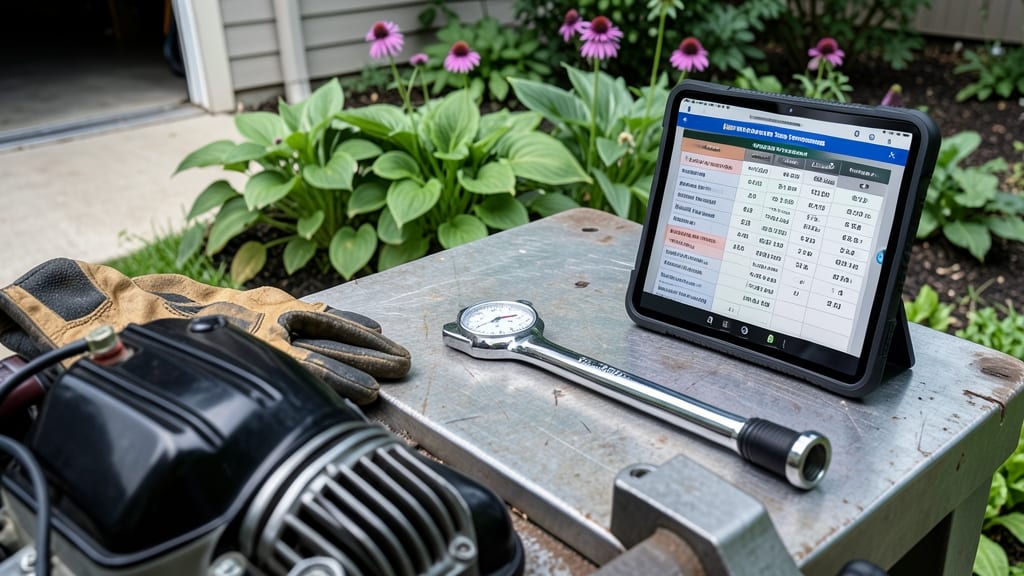
Torque specs for lawn mower blades typically range between 50-80 ft-lbs (35-110 Nm) depending on the engine size and blade type, with most small engines using 60-70 ft-lbs for optimal safety and performance. Always check the manufacturer’s manual for exact PSI limits to prevent damage or void warranties.
Understanding these specs keeps your mower running smoothly and prevents costly repairs. 🔧 Larger engines like 200cc+ often require the higher end of this range, while lightweight blades need less force.
I’ve seen bolts shear when someone guesses the torque—always use a torque wrench for accuracy. The manual’s specs aren’t just suggestions; they’re calculated to protect your engine’s longevity.
Most homeowners with 140cc-160cc engines will find their sweet spot around 60-70 ft-lbs, but heavier-duty blades or commercial mowers might need up to 80 ft-lbs. What’s interesting is how blade material plays a role—steel blades distribute torque differently than composite ones, which can crack under excessive force.
This is why I recommend double-checking your model’s specs before tightening.
💡 In This Article
- How Engine Size and Blade Type Affect Torque Requirements
- Step-by-Step Guide to Tightening Lawn Mower Blades Safely
How engine size and blade type affect torque requirements
Engine displacement directly correlates with torque needs because larger engines generate more rotational force. A 140cc engine typically requires 50-60 ft-lbs of torque, while a 200cc+ engine can handle 70-80 ft-lbs.
This difference stems from the crankshaft's ability to withstand stress—larger engines have heavier flywheels and thicker bolts designed to handle higher forces. For example, a 170cc Honda engine often specifies 65 ft-lbs, while a 212cc Briggs & Stratton might need 75 ft-lbs. 🔥
Blade material adds another layer of complexity. Steel blades, which are denser and heavier, distribute torque more evenly across bolts, reducing the risk of over-tightening. Composite blades, however, are lighter but more brittle—they can crack if torque exceeds 60 ft-lbs, even on a 160cc engine.
The weight difference matters because heavier blades create more inertia during rotation, requiring slightly higher torque to secure them without vibration. I’ve seen composite blades snap when someone uses a 1-inch breaker bar instead of a torque wrench, assuming "tighter is better."
Torque specs also account for bolt material. Most lawn mower blades use grade 8 bolts, which can handle up to 100 ft-lbs before yielding—but that’s their maximum capacity, not their recommended range.
Exceeding specs risks shearing bolts or damaging the crankshaft’s bolt threads, which can lead to catastrophic engine failure.
The 60-70 ft-lbs range is a safety buffer, ensuring bolts stay within their elastic limit (where they deform temporarily but return to shape) rather than their plastic limit (where they permanently bend or break).
Another critical factor is blade design. Multi-bolt blades (common on commercial mowers) require a torque sequence—tightening bolts in a crisscross pattern to distribute stress evenly. Skipping this step can cause uneven pressure, leading to blade wobble or bolt failure.
For instance, a 4-bolt blade on a 200cc engine might need 70 ft-lbs per bolt, but the sequence ensures the blade sits flush against the flywheel. 💫
Real-world implications show why these specs exist. I’ve worked with a 190cc Troy-Bilt that used 68 ft-lbs for its steel blade. A customer tightened it to 85 ft-lbs "just to be sure," and the next time he started the mower, the blade flew off, damaging the deck.
The bolt didn’t snap—it stripped the threads in the crankshaft, requiring a $400 repair. This isn’t just about following numbers; it’s about understanding how torque interacts with every component.
For DIYers, the takeaway is simple: torque specs aren’t arbitrary. They’re engineered to balance performance, safety, and longevity. A 160cc engine with a steel blade might need 60 ft-lbs, while the same engine with a composite blade could max out at 55 ft-lbs.
Always prioritize the manual’s specs over guesswork—your wallet (and lawn) will thank you. ✨