
Mower
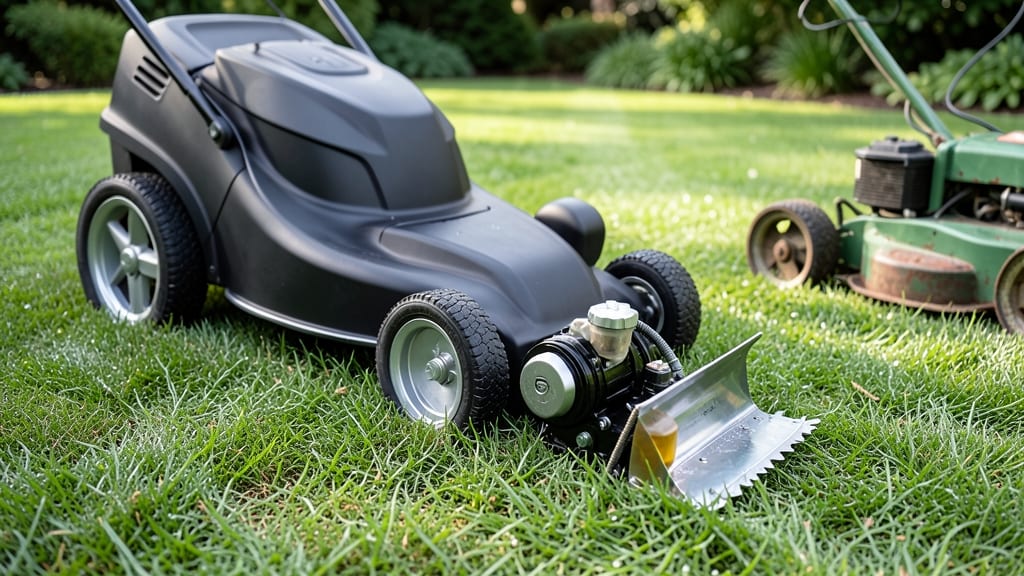
A hydrostatic lawn mower is a type of riding mower that uses fluid-driven power transmission to adjust engine speed automatically, creating smooth cuts and precise height adjustments without needing a traditional gear-driven transmission. Unlike reel mowers, it provides self-propulsion and superior handling on uneven surfaces.
A hydrostatic lawn mower stands out because its fluid-based system replaces gears with hydraulic pressure, allowing the engine to adjust speed instantly as you steer. 🔥 This means you get seamless acceleration and deceleration—no jerky starts or abrupt stops—while maintaining consistent cutting power across different grass types.
The system also eliminates the need for manual transmission shifts, making it ideal for larger yards or hilly landscapes where precision matters.
What really sets hydrostatic mowers apart is their ability to maintain power on inclines. Traditional reel mowers struggle with uneven terrain, but hydrostatic models use their fluid drive to distribute torque evenly, ensuring clean cuts whether you're mowing flat lawns or rolling hills.
This makes them a favorite among homeowners with varied landscapes, though they do require more maintenance than simpler belt-driven models.
💡 In This Article
- How Hydrostatic Lawn Mowers Work: Fluid Dynamics Explained
- Hydrostatic vs. Reel Mowers: Performance and Use Cases
How hydrostatic lawn mowers work: fluid dynamics explained
The heart of a hydrostatic lawn mower is its fluid-coupled drive system, which replaces traditional gears with a sealed hydraulic circuit. This system uses a gerotor pump—a pair of intermeshing gears with slightly different diameters—that circulates hydraulic fluid under pressure.
As the engine turns the pump, fluid is forced through a torque converter, which adjusts flow based on resistance from the wheels or cutting deck. 🔥 This creates a direct relationship between engine speed and wheel rotation without mechanical linkages.
What makes this system so smooth is its ability to adjust torque instantly. When you press forward on the controls, the torque converter increases fluid flow, accelerating the wheels while maintaining cutting power.
On inclines, the system automatically redistributes pressure to prevent wheel spin, delivering consistent performance—something belt-driven mowers can't match. For comparison, a typical belt-driven mower relies on fixed pulley ratios, meaning you lose power when slowing down or gain jerky starts when accelerating. Hydrostatic systems eliminate this trade-off entirely.
The fluid itself is typically a specialized hydraulic oil with additives to prevent foaming and maintain viscosity across temperature ranges. Most systems operate at pressures between 1,500-2,500 PSI, with fluid temperatures reaching 180-220°F during operation.
This heat is managed by a built-in cooler, often integrated into the mower's frame. The sealed nature of the system also means fewer moving parts than gear-driven alternatives, reducing wear and extending the mower's lifespan.
One key advantage is the infinite speed range. Unlike manual or automatic transmissions, hydrostatic drives allow the operator to adjust speed continuously—from a crawl for precision trimming to full throttle for open areas. This flexibility is particularly useful when navigating around obstacles like trees or flower beds.
The system also provides automatic load sensing: if the cutting deck encounters thick grass or debris, the torque converter compensates by increasing fluid pressure to maintain cutting power without stalling.
For maintenance, the fluid needs changing every 100-200 hours of use, depending on the model. Unlike reel mowers that require blade sharpening every few hours of use, hydrostatic systems primarily need fluid checks and occasional pump inspections.
The trade-off? These mowers typically cost 30-50% more upfront than belt-driven models, though the long-term savings in maintenance often justify the investment for larger properties.
What most users don't realize is how the system handles uneven terrain. Traditional mowers with fixed transmissions lose power on hills or when turning sharply, but hydrostatic models maintain consistent performance.
The fluid drive absorbs shocks from bumps and automatically adjusts wheel speed to prevent scalping (uneven cutting) on slopes. This makes them ideal for properties with 5-15% grades, where other mowers would struggle.
The science behind this involves Pascal's Law—fluid pressure applied to one point in a closed system is transmitted equally in all directions.
In practical terms, this means when you turn the steering wheel, the system instantly redirects fluid flow to the appropriate wheels, creating a zero-turn radius in some models. The result is maneuverability that puts most manual mowers to shame. 💫