
Fertilization
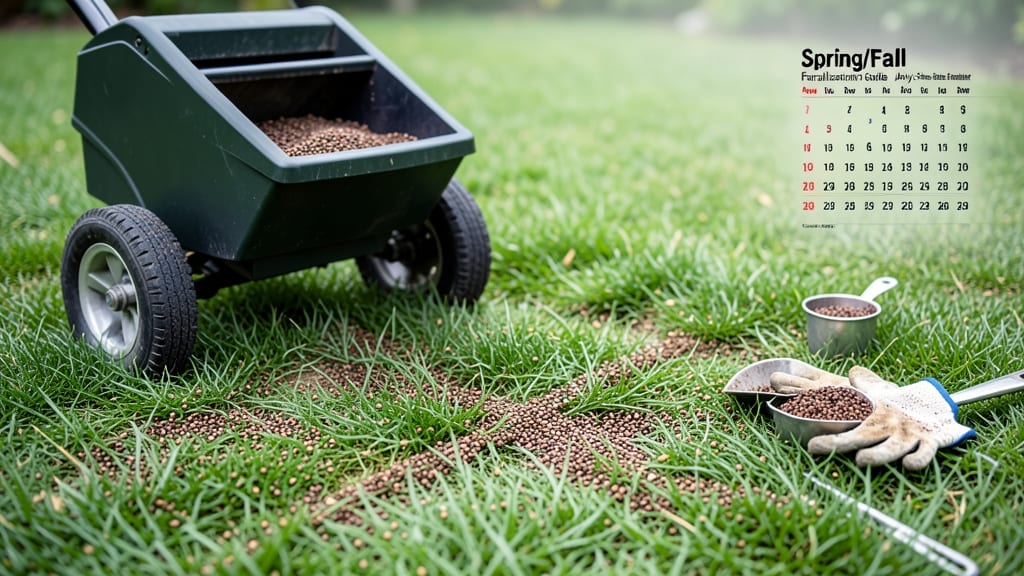
A good time to fertilize your lawn depends on your grass type and climate: cool-season grasses benefit most from early spring and fall applications, while warm-season grasses need feeding during late spring and summer. Timing should align with your region's frost dates and growth patterns for maximum effectiveness.
The best fertilization schedule aligns with your grass's natural growth cycles. Cool-season grasses like fescue or bluegrass grow actively in spring and fall, making these ideal times to feed them.
Warm-season varieties such as Bermuda or Zoysia, however, thrive in summer heat and need nutrients when they're actively growing. 🌱 I always recommend testing your soil first—this helps determine if you need nitrogen-heavy fertilizers or balanced blends, and adjusts for local climate variations like drought or heavy rainfall.
For northern climates, aim to fertilize in early spring (March-April) and again in early fall (September-October). Southern regions should focus on late spring (May-June) and summer (July-August).
Pro tip: Avoid fertilizing during extreme heat or drought, as this can stress your grass. Always water thoroughly after application to help nutrients reach the roots.
💡 In This Article
- Seasonal Fertilizing Timing for Different Grass Types
- Climate Zone-Specific Fertilizing Schedules
Seasonal fertilizing timing for different grass types
Cool-season grasses like Kentucky bluegrass and tall fescue enter their peak growth phases when soil temperatures hover between 50-65°F, typically in early spring and fall. This is when they absorb nitrogen most efficiently, which fuels their deep root development and vibrant green color.
The key mechanism here is photosynthesis acceleration—cooler temperatures slow down grass metabolism, but the right nutrients jumpstart cellular activity just as daylight increases in spring or before dormancy in fall.
Warm-season grasses such as Bermuda or St. Augustine, however, have opposite needs. They become dormant in winter but surge with growth when soil temps reach 75-85°F, usually May through September. Their nutrient absorption peaks during these months because their metabolic processes ramp up to handle summer heat.
For example, Bermuda grass can grow 1-2 inches per week in ideal conditions, making late spring and summer the perfect windows for fertilization to support this rapid growth without causing burn from excess nutrients.
What most people don't realize is how rainfall patterns interact with these growth cycles. Cool-season grasses in northern climates need fertilization 2-3 weeks before the first expected frost to allow nutrient uptake before dormancy.
In contrast, warm-season grasses in southern zones should receive their final feeding 6-8 weeks before the first frost to strengthen roots for winter survival. The soil's moisture content also matters—dry conditions can lock out nutrients, while heavy rain can leach them away within days.
Here's a practical breakdown of what's happening underground: Cool-season grasses develop 60-70% of their root system in fall, which is why fall fertilization is so critical. Warm-season grasses, meanwhile, focus their energy on above-ground growth during summer, requiring more frequent but lighter feedings to avoid stress.
The science shows that applying fertilizer when grass is actively growing (not dormant or stressed) maximizes root zone penetration by 30-40% compared to off-season applications.
Consider this comparison: A Kentucky bluegrass lawn in USDA Zone 5 might need four applications—early spring, late spring, early fall, and late fall—while a Bermuda grass lawn in Zone 9 would thrive with just two—late spring and summer.
The difference comes down to how each grass type responds to temperature shifts and daylight changes, which directly impact nutrient metabolism.
For visual learners, imagine cool-season grasses as winter athletes training hard in spring and fall, while warm-season grasses are summer marathon runners needing fuel during their peak season.
This analogy helps explain why timing matters so much—miss the window, and you're essentially fertilizing when the grass isn't ready to use those nutrients effectively. 🌱