
Fertilization
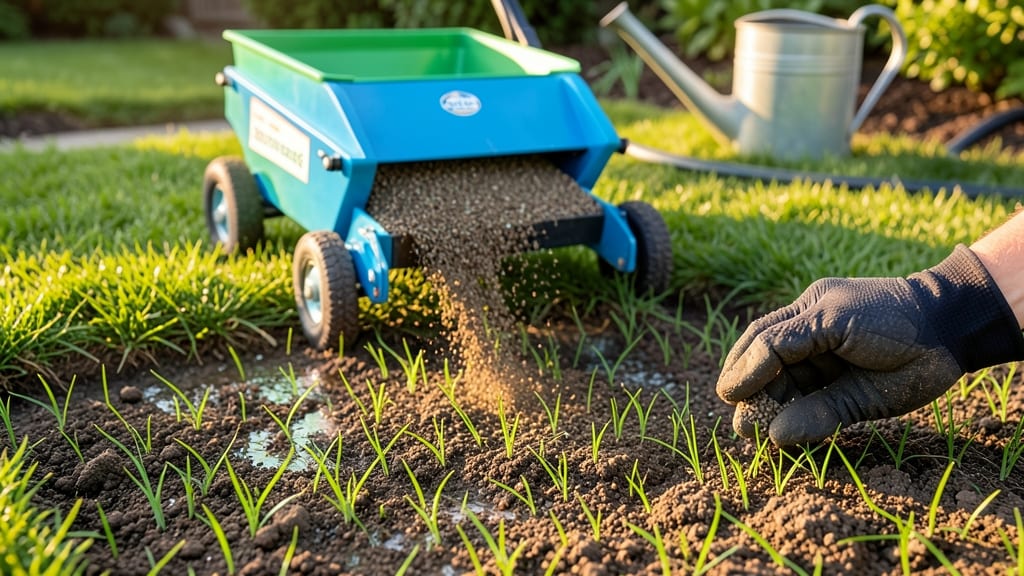
Fertilizing your lawn after seeding should wait 6 to 8 weeks—this is the sweet spot for strong root growth before adding nutrients.
New grass seed needs patience to establish roots, and rushing fertilization can actually stunt growth. Think of it like giving a baby plant a full meal before it’s ready—it’s more likely to choke than thrive. The key is letting those roots sink deep before introducing extra nutrients.
Why does timing matter so much? Because early fertilization can burn tender seedlings or attract fungal diseases. Instead, focus on keeping the soil consistently moist and avoiding heavy foot traffic. Once your lawn reaches about 3 to 4 inches of healthy growth, it’s ready for its first feeding.
In this guide, I’ll walk you through the signs your lawn is ready, the best fertilizer types to use, and how to apply them without disturbing those delicate new roots. Let’s get that grass growing strong!
Why waiting 6 to 8 weeks after seeding is critical for root development
When you plant new grass seed, the first few weeks are all about root establishment—not top growth. Your seedlings are busy developing a strong root system that can absorb water and nutrients efficiently.
Rushing to fertilize too soon disrupts this delicate balance, often leading to seed burn or fungal infections that weaken your lawn before it even has a chance to thrive.
The 6 to 8 week window after seeding is a critical period where your grass roots are actively growing deeper into the soil. During this time, the roots need to reach 2 to 3 inches deep to anchor the plant and access moisture during dry spells.
Fertilizing too early can overwhelm the young roots with excess salts and nutrients, causing more harm than good.
Think of it like building a house—you wouldn’t start decorating the living room before the foundation is solid. Similarly, skipping fertilization during the early stages allows your grass to focus on root development rather than rapid leafy growth.
This patience pays off with a drought-resistant lawn that stays green even during hot summers.
Soil microbes also play a vital role in this process. Beneficial bacteria and fungi break down organic matter, making nutrients available to your grass roots. If you apply fertilizer too soon, you can disrupt this microbial ecosystem, leading to poor nutrient uptake and stunted growth.
The 6 to 8 week mark is when these microbes are fully active, creating the perfect environment for your grass to flourish.
Here’s what happens scientifically when you fertilize too early: High concentrations of nitrogen and phosphorus can cause osmotic stress in seedlings, forcing them to expend energy on detoxifying the soil rather than growing roots.
This stress makes your lawn vulnerable to disease and slow to recover from environmental challenges like heat or drought.
Different grass types have varying germination timelines, but most cool-season grasses (like Kentucky bluegrass or fescue) take 14 to 21 days to sprout, while warm-season grasses (like Bermuda grass) can take 7 to 14 days.
However, root development continues long after germination. Waiting until your grass has 3 to 4 inches of blade height and 70% coverage ensures the roots are ready for fertilization.
If you’re eager to see results, resist the urge to fertilize early. Instead, focus on consistent watering and light mulching (like straw) to protect seedlings from heat stress and soil erosion.
A thin layer of mulch also helps retain moisture, giving your roots the steady hydration they need without overwhelming them with extra nutrients.
Once your lawn reaches the 6 to 8 week mark, you’ll notice thicker blades, fewer bare spots, and deeper green color—all signs that the roots are ready for fertilization.
At this stage, a slow-release fertilizer with a balanced NPK ratio (like 16-4-8) will provide the gradual nutrient boost your grass needs without risking burn or overgrowth.
Pro tip: If you’re unsure whether your lawn is ready, perform the "finger test"—gently pull up a small section of grass. If the roots are 2 to 3 inches long and white or light tan, it’s time to fertilize.
If they’re short and dark, wait a little longer. Patience here means the difference between a weak, patchy lawn and a vibrant, resilient turf that stands up to foot traffic and weather.
Remember, every lawn is unique. Factors like soil type, climate, and grass variety can slightly adjust the timeline, but the 6 to 8 week rule is a safe guideline for most home gardeners.
By trusting the process, you’re setting your lawn up for long-term success—one root at a time. 🌱
Signs your lawn is ready for fertilization after seeding (and what to avoid)
After seeding your lawn, the first few weeks are all about helping those delicate sprouts establish roots. You might be tempted to fertilize early, but waiting 6 to 8 weeks is key—this gives your grass time to develop a strong root system without competition from excessive nutrients.
My rule of thumb? Don't fertilize until you see uniform growth and the grass reaches about 3 to 4 inches tall, with 70% coverage across the area.
One of the biggest mistakes I see is using high-nitrogen fertilizers too soon. While nitrogen promotes top growth, it can burn tender seedlings or encourage weak, shallow roots.
Instead, focus on consistent watering and light feeding with phosphorus-rich fertilizers to support root development. Even organic options like compost tea can be safer early on.
⚠️ callout-warning ⚠️
- Overwatering after fertilizing can leach nutrients away and suffocate roots.
- Using granular fertilizers too early—they can clump around seeds and prevent germination.
- Skipping soil testing—pH imbalances (below 6.0 or above 7.5) can block nutrient absorption.
- Applying fertilizer in heatwaves (above 85°F) stresses seedlings and increases burn risk.
Pro Tip: Test soil moisture by pressing a finger 1 inch deep—if it's dry, water first. If damp, wait 24 hours before fertilizing.
To test if your lawn is ready, perform a simple tug test. Gently pull up a small section of grass—if the roots hold together and measure at least 2 to 3 inches deep, your lawn is likely ready for fertilization.
Another telltale sign? No bare spots and a vibrant, even color. If you still see patchiness or slow growth, hold off for another 2 weeks.
When you're ready to fertilize, choose a low-nitrogen, high-phosphorus formula (like a 5-10-5 ratio) to encourage deeper roots. Apply it in the early morning when temperatures are cooler, and water lightly afterward to help nutrients absorb.
Avoid fertilizing within 48 hours of rain, as it can wash away before the grass has a chance to use it.
Remember, fall seeding has a different timeline than spring. If you seeded in late summer or early fall, aim to fertilize by mid-October—this gives grass time to strengthen before winter dormancy.
For spring seedings, fertilize in late May or early June, once the soil warms to at least 60°F.
Patience pays off! A well-timed fertilization will reward you with a thicker, greener lawn that resists weeds and drought. My lawn went from patchy to lush after my first careful fertilization—just follow these signs, and you'll see the difference too. 🌱