
Lawn
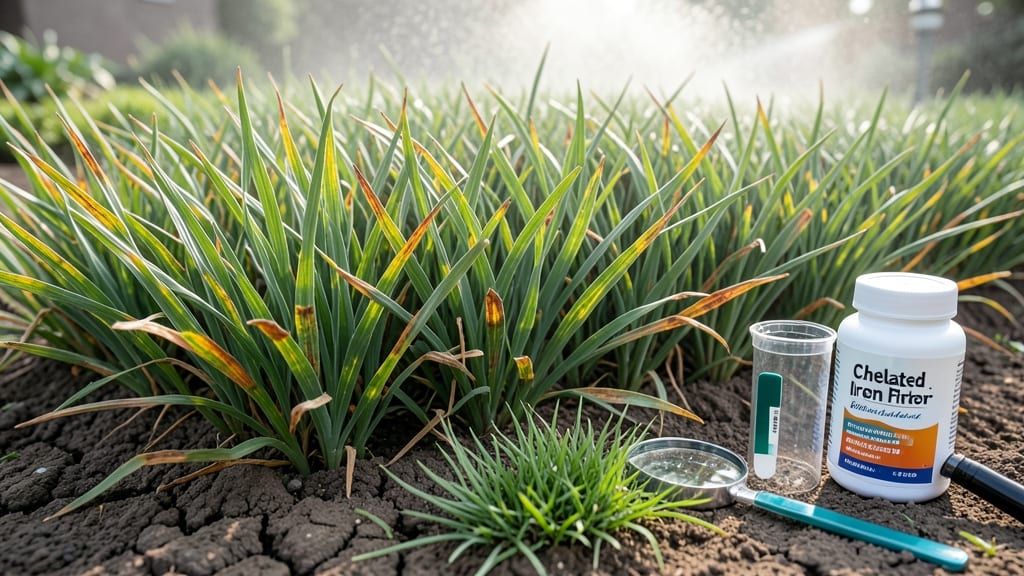
Your lawn’s rusty brown patches aren’t rust—they’re iron overload. 🌱 Too much iron in lawn soil turns grass into a metallic mess, and the fix starts with understanding why it happens in the first place.
Over-fertilizing with iron supplements or living in naturally acidic soil (pH below 6.0) are the usual culprits, but the symptoms—yellowing, stunted growth, and that weird metallic sheen—are what give it away.
The good news? You can reset your soil’s balance in 3 days without harsh chemicals. Start with a simple pH test (kits cost under $10) to confirm iron buildup, then adjust with pelletized lime—it’s the safest way to raise pH and dilute excess iron naturally.
Avoid iron-based fertilizers for at least 6 weeks while your grass recovers, and water deeply to help flush out the imbalance.
Within a week, you’ll see new growth pushing through with that vibrant green you crave. The key is patience—iron doesn’t disappear overnight, but lime and proper watering give your soil time to reset. Think of it like detoxing: your lawn’s health comes back stronger once the metal overload clears.
Prevent future issues by testing soil twice a year (spring and fall) and sticking to low-iron fertilizers if your pH stays on the acidic side. Most lawns bounce back fully in 4-6 weeks with this approach—no need for drastic measures. Your grass will thank you.
Root Causes Of Excess Iron Buildup
Excess iron in your lawn isn’t just a random fluke—it’s usually the result of specific soil conditions, gardening habits, or environmental factors. Understanding these causes is the first step to correcting the imbalance naturally.
Let’s break down the most common reasons why your soil might be overloaded with iron, so you can target the right fixes.
---
Iron overload often starts with too much of a good thing—literally. Many lawn fertilizers, especially those formulated for iron-deficient grasses (like bentgrass or fescue), contain high concentrations of iron sulfate or chelated iron.
While these products are designed to boost green color quickly, they can accumulate in the soil over time, especially if: - You apply iron supplements more than once per season (some lawns only need iron every 2–3 years). - You use slow-release iron fertilizers without testing soil first. - Your lawn already has adequate iron levels, but you’re still treating it for "yellowing" (which could actually be caused by pH imbalance, manganese deficiency, or even too much phosphorus).
💡 Pro Tip: Always conduct a soil test before fertilizing. If iron levels are already in the "high" range (100–200 ppm), skip iron-based products and focus on pH adjustment instead.
---
Iron thrives in acidic conditions (pH 5.5–6.5), but when soil becomes too acidic (below 5.5), it doesn’t just make iron available—it suppresses other essential nutrients like phosphorus, calcium, and magnesium. This creates a nutrient imbalance, where iron becomes overly dominant while other minerals become scarce.
- Why it happens: Rain, organic matter breakdown, or overuse of sulfur-based fertilizers can lower pH over time. - The domino effect: As pH drops, iron becomes more soluble and moves into plant tissues, while other nutrients bind to soil particles and become unavailable. - Your lawn may look dark green but weak, with stunted growth despite plenty of iron.
🔥 Fix It Fast: Test your soil’s pH and raise it slightly (to 6.0–6.5) with lime (calcium carbonate). This won’t remove excess iron but will balance its availability and free up other nutrients.
---
Iron is highly mobile in water, meaning it dissolves easily and moves through soil with irrigation or rain. If your lawn has compaction, clay soil, or poor drainage, iron can pool in the root zone instead of being flushed out.
- Clay soils hold onto iron like a sponge, preventing it from leaching away naturally. - Overwatering (especially with soft, acidic water) can dissolve iron deposits and push them deeper into the soil profile. - Older lawns with thatched layers trap iron-rich water near the surface, where grass roots absorb it in excess.
⚠️ Warning Sign: If your lawn has rust-colored water in drainage areas after rain, your soil is actively leaching iron—but it’s also retaining too much in other spots.
🌡️ Solution: Improve drainage with gypsum (for clay soils) or sand top-dressing, and aerate to break up compacted layers. This helps flush out excess iron over time.
---
Iron doesn’t just come from fertilizers—it’s naturally stored in soil organic matter (like decomposed leaves, grass clippings, and compost). When this organic material decomposes rapidly (due to high moisture, warmth, or microbial activity), it releases bound iron into the soil solution.
- Fast decomposition (common in tropical climates or fall leaf layers) can spike iron levels overnight. - Over-composting in garden beds near your lawn can leach iron into the root zone. - Using peat moss or pine bark mulch (highly acidic) accelerates iron release.
🎯 Action Step: If you’ve recently added large amounts of organic matter, wait 3–6 months before retesting iron levels. In the meantime, balance with dolomitic lime to stabilize pH.
--- If your lawn shows sudden iron spikes with no changes to fertilizers or soil, water quality could be the culprit.
- Well water with high iron content (common in granite or sandstone regions) can deposit iron in the soil with each irrigation. - Acidic rain (especially in industrial or high-traffic areas) dissolves iron from soil minerals and makes it more available to plants. - Neighborhood runoff from iron-rich construction sites or road de-icing salts (which lower pH) can introduce excess iron.
🔍 Test This: Run a simple water iron test (available at garden centers). If water is the issue, install a filtration system or use rainwater for irrigation instead.
--- Some grasses naturally require more iron than others, leading to higher soil demand over time. If you’ve recently reseeded or overseeded with these varieties, your soil may be playing catch-up:
| Grass Type | Iron Needs | Why? | |----------------------|----------------|----------| | Bentgrass | Very High | Naturally dark green; prone to chlorosis if iron is low. | | Fescue (Fine) | High | Thrives in cooler climates with acidic soils. | | Ryegrass | Moderate-High | Fast-growing; depletes iron quickly. | | Bluegrass | Moderate | Prefers slightly acidic soil but tolerates a wider range. |
👨🍳 Solution: If you’re growing high-iron grasses, reduce supplemental iron and instead boost organic matter (compost, worm castings) to buffer fluctuations.
--- Beneficial soil microbes (like iron-reducing bacteria) can increase iron availability—but sometimes, they go overboard, especially in: - Wet, anaerobic soils (where microbes convert iron to soluble forms). - Freshly tilled or disturbed soil (which wakes up dormant microbes). - Soils with high sulfur content (sulfur-loving microbes release iron as a byproduct).
✨ Natural Fix: Encourage balanced microbial activity with mycorrhizal fungi or biochar, which help regulate iron uptake without excess buildup.
Quick fixes for iron overload
Iron overload in your lawn isn’t just an aesthetic issue—it can stunt growth, discolor grass, and even harm beneficial soil microbes. The good news? You can restore balance naturally in just 3 days with targeted fixes.
Below, we’ll map the most common causes of excess iron to practical, step-by-step solutions, plus prevention tips to keep your lawn thriving long-term.
---
If you’ve been using iron supplements, chelated iron fertilizers, or mulch high in iron (like composted leaves or certain manures), your soil may be saturated. The fix? Flush it out and dilute it fast.
#### 🍳 Step 1: Test Your Soil (Day 1) Before acting, confirm the issue with a soil test kit (available at garden centers for ~$20).
Look for: - pH levels below 6.0 (acidic soil holds more iron, making it available to plants). - Iron (Fe) levels above 100 ppm (ideal range: 20–100 ppm for lawns).
Pro Tip: 💡 If testing isn’t an option, yellowing grass with brownish veins is a classic iron overload sign.
#### 👨🍳 Step 2: Flush the Soil (Days 1–2) 1. Water deeply for 15–20 minutes, twice daily for 2 days. This leaches excess iron into lower soil layers. 2. Use rainwater or distilled water if possible—tap water often adds more minerals.
#### 🥘 Step 3: Add Lime to Neutralize (Day 3) - Sprinkle pelletized lime (1 lb per 100 sq ft) over the lawn. - Lightly rake it in or water it down to raise the pH to 6.5–7.0, which locks away excess iron. - Avoid quicklime (powdered lime)—it can burn grass!
---
Iron builds up in waterlogged or densely packed soil where oxygen can’t reach roots. Break the cycle with these aeration + drainage hacks.
#### 🔪 Step 1: Aerate Aggressively (Day 1) - Rent a core aerator (or use a garden fork to poke holes every 3–4 inches). - Focus on high-traffic areas where soil is most compacted.
#### ⏰ Step 2: Improve Drainage (Days 1–3) - Sand topdressing: Mix equal parts sand and compost, then spread ¼-inch thick over the lawn. Rake lightly. - Slope adjustment: If water pools, gradually reshape low spots with a shovel to redirect flow.
Pro Tip: 🌡️ Test drainage by digging a 6-inch hole, filling it with water, and timing how long it takes to drain. More than 6 hours? You’ve got poor drainage.
---
Decomposing organic material (like oak leaves, coffee grounds, or aged manure) releases iron as it breaks down. Cut off the source and balance the soil.
#### 🗑️ Step 1: Remove Surface Debris (Day 1) - Rake up all leaf litter, mulch, or manure from the lawn. - Compost it away from the lawn to prevent reinfestation.
#### 🌿 Step 2: Replace with Low-Iron Amendments (Day 2) - Spread a thin layer of peat moss or coconut coir (both are low in iron) to improve structure. - Top with a light layer of sand (if drainage is still poor).
#### 🎯 Step 3: Switch to Iron-Free Fertilizers (Ongoing) - Use organic fertilizers labeled "low in micronutrients" (e.g., fish emulsion, worm castings). - Avoid blood meal, iron sulfate, or chelated iron supplements for at least 3 months.
---
Once your lawn is back in check, keep iron in its place with these habits:
✅ Test soil annually—adjust pH before fertilizing. ✅ Mulch wisely: Stick to straw, pine needles, or shredded paper (low-iron options). ✅ Water wisely: Deep, infrequent watering > shallow daily sprinkles (prevents iron buildup). ✅ Diversify plants: Mix in clover or fescue—they tolerate iron better than bluegrass. ✅ Aerate twice a year (spring + fall) to prevent compaction.
--- Final Note: 🌱 Patience is key! You may see new green growth in 3–7 days, but full recovery takes 4–6 weeks. Stick with the plan, and your lawn will thank you with lush, even color—no more rusty patches!
Frequently asked questions
How do I know if my lawn has too much iron?
Look for rusty brown or yellow patches with a metallic sheen, especially in areas where water pools. Grass may appear dark green but weak with stunted growth. Test your soil pH—if it's below 6.0 and iron levels exceed 100 ppm, you likely have an overload.
Can I just stop watering to fix iron buildup?
No, that won't help! Iron is water-soluble, so overwatering actually makes the problem worse by dissolving and spreading it deeper. Instead, water deeply but infrequently (2–3 times per week) to help flush excess iron naturally. Pair this with lime application to raise pH and lock away the iron.
Will lime really fix iron overload in just 3 days?
Lime won't remove iron instantly, but it balances pH (6.5–7.0) to reduce iron availability within 3 days. You'll see new green growth in 1–2 weeks as the soil resets. For faster results, combine lime with deep aeration to improve drainage and flush out excess iron over time.
What fertilizers should I avoid if my lawn has iron issues?
Skip any products containing iron sulfate, chelated iron, or blood meal—these are common iron sources. Opt for low-iron organic fertilizers like fish emulsion or worm castings, and always check labels for micronutrient content.
Can excess iron harm my lawn permanently?
Not if you act quickly! While severe iron buildup can stunt growth and discolor grass, the damage is usually reversible with proper pH adjustment and drainage improvements. Chronic neglect may require soil replacement in worst-case scenarios, but most lawns recover fully in 4–6 weeks with the right care.