
Lawn
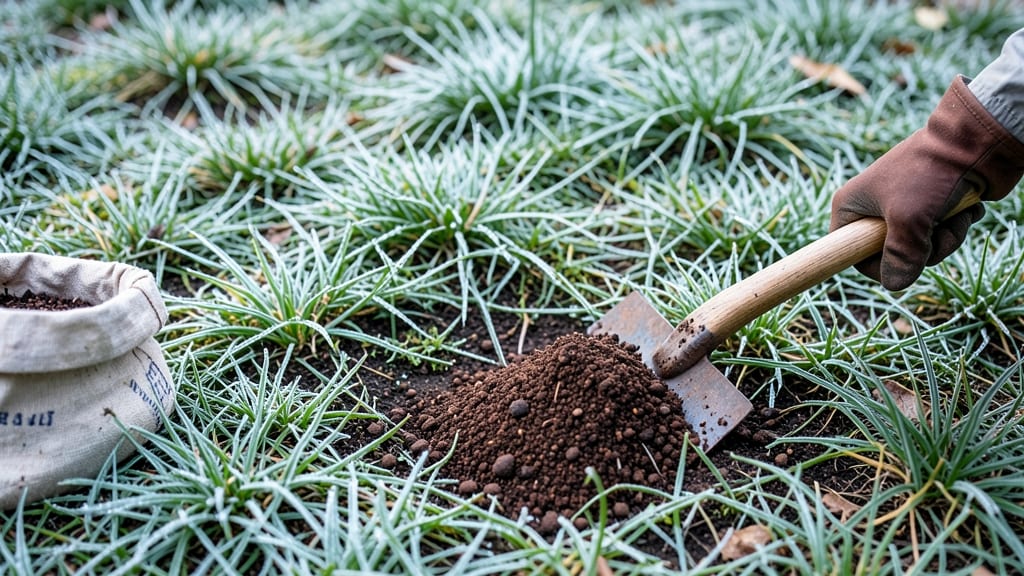
Applying coffee grounds on lawn in winter can enrich your grass with slow-release nitrogen, but overuse may harm soil balance and attract pests. Use them sparingly in thin layers after composting for the best results.
Winter lawn care often gets overlooked, but coffee grounds can be a game-changer when used correctly. 🌱 The nitrogen in grounds feeds grass roots over time, but cold weather slows decomposition, so composting first ensures nutrients release properly.
I've found that a ¼-inch layer spread lightly works best—any thicker and you risk compacting soil or creating moisture issues that invite slugs.
What's key is timing: never apply when the ground is frozen, as nutrients won't penetrate. Instead, work them into your soil in early winter when temperatures stay above 40°F, giving them time to break down before spring.
Pairing them with composted leaves or grass clippings creates a balanced fertilizer blend that avoids pH imbalances.
💡 In This Article
- How Coffee Grounds Affect Soil and Grass in Cold Weather
- Best Practices for Winter Coffee Ground Lawn Fertilization
How coffee grounds affect soil and grass in cold weather
Coffee grounds work as a fertilizer because they're rich in nitrogen—about 2% by weight—which grass craves for lush growth. In winter, the cold slows microbial activity that breaks down organic matter, so nitrogen release happens at a glacial pace compared to summer.
This means grounds applied in winter won't provide immediate benefits but instead create a slow, steady nutrient reserve for spring. The key is that cold temperatures preserve the grounds' structure longer, preventing rapid decomposition that could deplete oxygen in the soil.
What most people don't realize is that coffee grounds also contain tannins, which can lower soil pH over time if used excessively. While grass typically prefers slightly acidic soil (pH 6.0-7.0), dropping below 5.5 stresses roots and makes nutrients like phosphorus and potassium less available.
The tannins also create a slightly bitter environment that can repel some beneficial microbes while attracting others—like slugs—that thrive in moist, acidic conditions. This is why you'll often see slug trails after coffee ground applications if the layer is too thick.
Here's what's actually happening in your soil: The nitrogen in grounds converts to ammonium (NH₄⁺) through microbial action, which plants can absorb directly. However, in cold weather, this process stalls until temperatures rise above 50°F.
The organic matter also improves soil structure by increasing water retention—critical in winter when evaporation is minimal. But if you apply too much (more than ½ pound per 100 square feet), you risk creating an anaerobic zone where roots suffocate from lack of oxygen.
The science gets interesting with microbial competition. Cold-adapted fungi and bacteria dominate winter soils, and while they can break down coffee grounds, their activity is 30-50% slower than in summer.
This means grounds applied in late fall will decompose more evenly through winter, whereas spring applications would decompose too quickly, potentially burning tender grass shoots. The ideal scenario is a ¼-inch layer worked into the top 2 inches of soil where microbial activity is most concentrated.
Consider this comparison: In summer, coffee grounds decompose in 4-6 weeks, releasing nitrogen rapidly. In winter, that same amount might take 3-4 months to break down—meaning the nitrogen becomes available just as grass starts actively growing in spring.
This delayed release is actually beneficial for cool-season grasses like fescue or ryegrass, which need a steady nutrient supply as they emerge from dormancy.
One nuance worth noting is the carbon-to-nitrogen (C:N) ratio. Fresh coffee grounds have a C:N ratio of about 20:1, which is too high for direct soil application—it ties up nitrogen as microbes decompose the carbon.
Composting first reduces this ratio to 10:1 or lower, making the nitrogen more immediately available to grass. This is why pre-composting grounds for 2-3 months before winter application yields better results.