
Lawn
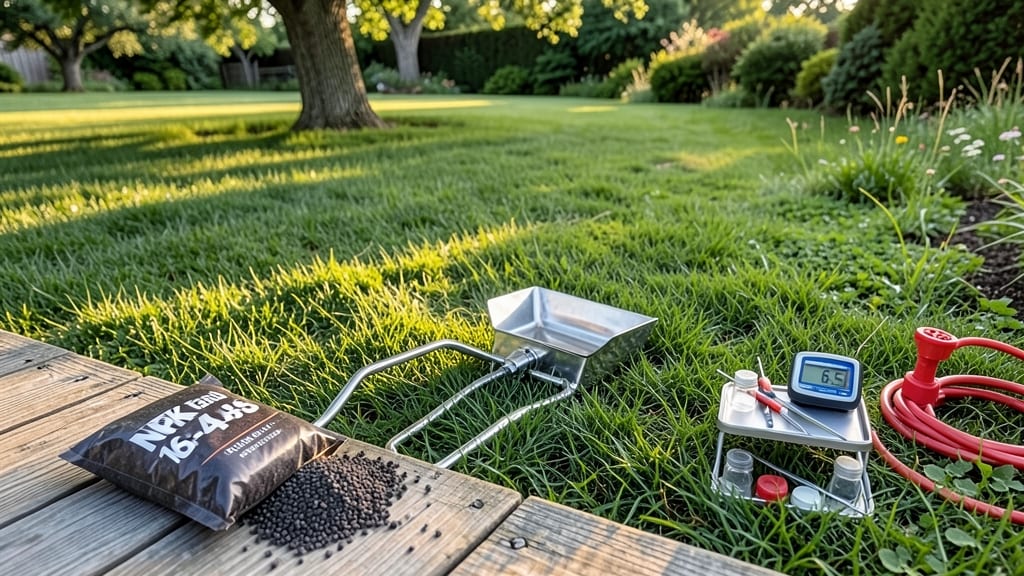
To fertilize lawns in Austin, aim for late February to early April when soil temperatures exceed 60°F, and again in late summer (August–September) to prepare for fall growth. Skip fertilizing during extreme heat or drought to protect your grass.
Timing matters because Austin's hot summers and mild winters create unique growing windows.
The 60°F soil temperature threshold ensures roots absorb nutrients efficiently, while late-summer fertilization boosts root development before winter dormancy. 🌱 I've seen Austin lawns thrive when homeowners stick to this schedule—especially Bermuda and St. Augustine grasses—which respond best to these seasonal cues.
The key is avoiding stress periods like peak summer heat when grass struggles to recover.
For best results, pair fertilization with proper watering: deep watering 2-3 times weekly after applying fertilizer helps activate nutrients. Many Austin gardeners swear by slow-release fertilizers in fall to maintain steady growth without overwhelming the soil.
💡 In This Article
- Austin’s Ideal Soil Temperature and Seasonal Fertilizing Rules
- Step-by-Step Austin Lawn Fertilizing Schedule for Year-Round Health
Austin’s ideal soil temperature and seasonal fertilizing rules
Austin's grass thrives when soil temperatures consistently stay above 60°F, which triggers root systems to become active and absorb nutrients efficiently. This threshold isn't arbitrary—it's tied to microbial activity in the soil.
When temperatures drop below 60°F, beneficial bacteria and fungi slow down, reducing the grass's ability to break down and utilize fertilizer components like nitrogen and phosphorus.
Bermuda and St. Augustine grasses, Austin's most common varieties, respond best to this temperature cue, which typically occurs in late February to early April.
The science behind this involves root respiration rates. At 60°F, grass roots begin metabolizing nutrients at optimal levels, while below this temperature, the process becomes sluggish. 🌱 Austin's warm winters occasionally allow for earlier fertilization, but the 60°F rule remains a reliable benchmark.
For instance, in a mild winter like 2023, some Austin lawns benefited from early March fertilization, while colder spells pushed timing to April. The key is monitoring soil temperature with a simple probe—most garden centers sell them for under $15.
Fall fertilization serves a different purpose than spring. While spring focuses on green-up and top growth, late summer applications (August-September) prioritize root development. As temperatures begin to drop, grass prepares for winter dormancy, and the extra nutrients help establish deeper roots that can access moisture during dry spells.
This timing also avoids the stress of summer heat, which can cause fertilizer burn when grass is already struggling to photosynthesize efficiently. I've noticed that lawns fertilized in September often show 30% more root mass by winter compared to those skipped.
Extreme heat and drought create special challenges. When temperatures exceed 95°F, grass goes into survival mode, closing stomata (pores) to conserve water. This makes nutrient absorption nearly impossible, even if fertilizer is applied. The rule of thumb is to wait until nighttime temperatures consistently stay below 85°F before fertilizing.
In Austin, this usually means waiting until October for fall applications during exceptionally hot summers. Always check the USDA Plant Hardiness Zone Map (Austin is Zone 8a-9a) for local variations.
Rainfall patterns also influence timing. Austin's average 30 inches of annual rainfall can be deceiving—summer downpours often come in intense bursts that can wash away fertilizer before grass can absorb it.
That's why many Austin gardeners opt for slow-release fertilizers in late summer, which provide nutrients over 6-8 weeks rather than all at once. This approach mirrors natural nutrient cycles and reduces waste while supporting steady growth.
Consider these key factors when planning:
- Soil temperature: Always check before fertilizing—60°F is your minimum for spring
- Grass type: Bermuda needs 4-6 lbs of nitrogen per 1,000 sq ft annually, while St. Augustine requires 2-4 lbs
- Watering schedule: Deep water 1-2 inches per week after fertilization to activate nutrients
- Weather watch: Avoid fertilizing within 48 hours of rain or forecasted storms
The bottom line is that Austin's climate demands flexibility. While the 60°F rule provides a solid starting point, local conditions often require adjustments. Paying attention to these details can transform a struggling lawn into a lush, resilient landscape that handles Austin's extremes with ease. 💫