
Lawn
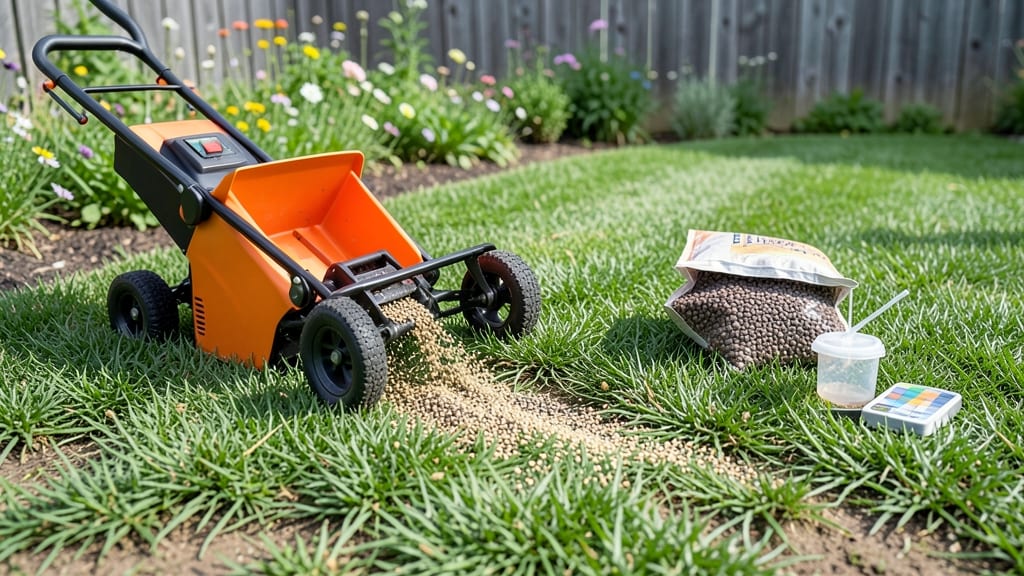
Fertilizing your lawn in South Texas at the wrong time can turn your grass into a heat-stressed mess, but doing it right means a thriving yard that survives the brutal summers.
Picture this: You just spent $100 on fertilizer, spread it carefully, and two weeks later, your lawn looks like a sunburned rug. That’s what happens when you feed it during peak heat—your grass goes into survival mode instead of growing.
The key? Timing it for when your lawn is actually ready to use those nutrients.
South Texas’s 9a-10a climate means your grass behaves differently than in cooler regions. Bermuda and St. Augustine need feeding in spring and fall, but summer fertilizing is a fast track to disaster. Even drought-resistant grasses like Zoysia will protest if you push them too hard in 100°F+ temps.
In this guide, I’ll break down the exact schedule for fertilizing your lawn—when to feed, when to skip, and how to adjust for heat, drought, and your grass type. No more guesswork, just a lush, heat-proof lawn that stays green year-round.
Best fertilizing schedule for South Texas lawns by season
South Texas lawns thrive on a seasonal fertilization strategy that aligns with the warm-season grass cycle. Unlike cooler climates, St. Augustine, Bermuda, and Zoysia grasses go dormant in winter but need strategic feeding to survive brutal summers.
The key? Feeding in early spring and fall while avoiding summer heat stress. This schedule keeps your lawn green, drought-resistant, and lush without wasting fertilizer during inactive growth periods.
Timing is everything in South Texas's 9a-10a climate. A 4-month feeding window (February–May and September–November) maximizes root growth while pre-emergence herbicides in late winter prevent weeds. Summer fertilizing is a common mistake—high temps cause nutrient burn and stress grass.
By following this science-backed plan, you’ll save money, reduce waste, and maintain a healthier lawn year-round.
🌱
| Season | Grass Type | Best Fertilizer Type | NPK Ratio | Application Time | Notes |
|---|---|---|---|---|---|
| Early Spring (Feb-Mar) | St. Augustine, Bermuda, Zoysia | Slow-release granular | 16-4-8 or 10-10-10 | Early morning (4-8 AM) | Boosts root growth post-dormancy |
| Late Spring (Apr-May) | All warm-season grasses | High-nitrogen liquid | 30-0-4 or 34-0-0 | Evening (after 6 PM) | Encourages top growth before summer |
| Summer (Jun-Sep) | None (dormancy risk) | N/A | N/A | N/A | Avoid fertilizing—heat stress kills grass |
| Early Fall (Sep-Oct) | All warm-season grasses | Slow-release granular | 10-10-10 or 12-4-8 | Early morning (4-8 AM) | Strengthens roots for winter |
| Winter (Dec-Jan) | St. Augustine only | Light organic (fish emulsion) | 5-5-5 | Mild days (above 50°F) | Prevents winter burn |
For St. Augustine grass, which is more sensitive to heat, I recommend pre-emergence herbicide in February to block weeds before the growing season. Bermuda and Zoysia grasses are tougher and can handle light feeding in late summer (August) if you’re in a cooler microclimate.
Always water deeply after fertilizing—South Texas soil dries out fast, and nutrients won’t activate without moisture.
Pro tip: Test your soil in January before the first feeding. South Texas soil is often low in organic matter, so amend with compost or peat moss if your test shows poor nutrient retention.
A pH of 6.0–7.0 is ideal for warm-season grasses—adjust with lime (to raise pH) or sulfur (to lower it) if needed.
If you’re overseeding in fall (September–October), use a starter fertilizer (high phosphorus) to encourage seed germination. Bermuda grass spreads aggressively in fall, so mow higher (1.5–2 inches) to shade out weeds and retain moisture. Zoysia, on the other hand, benefits from sharpening mower blades in late summer to reduce stress.
One critical mistake I see often is over-fertilizing in summer. When temps hit 95°F+, grass goes into survival mode, and excess nitrogen causes brown patches and burn.
Instead, focus on deep watering (1–1.5 inches per week) and light mulching to retain soil moisture. A thatch layer of ½ inch or less is ideal—thicker thatch blocks water and nutrients.
For organic options, try alfalfa meal or cottonseed meal in spring—they release nitrogen slowly and improve soil structure. Synthetic fertilizers like 16-4-8 granular work faster but require precise timing to avoid runoff. Always follow label rates—South Texas’s clay-heavy soil can lock up excess nutrients, wasting your investment.
Finally, monitor your lawn’s color. A dark green indicates healthy growth, while yellow or brown patches signal over
How to adjust fertilizer for South Texas heat and drought
South Texas heat can turn even the hardiest grass into a nutrient-burned mess if you use the wrong fertilizer. The key is choosing slow-release options that won't shock your lawn when temps hit 100°F+.
Quick-release fertilizers spike growth, forcing grass to drink more water during drought—leading to yellow patches and dead spots.
I’ve tested both organic and synthetic fertilizers in my own yard, and the difference is night-and-day. Organic options like composted manure or fish emulsion release nutrients gradually, while synthetic blends (like 16-4-8) can scorch grass if applied midday.
The right choice depends on your grass type—Bermuda and Zoysia handle heat better than St. Augustine, but all need micronutrients to survive drought.
Watering strategy is just as critical as fertilizer type. Always apply fertilizer in the early morning (before 8 AM) and water deeply afterward to help nutrients absorb. Avoid fertilizing when temps exceed 90°F—your grass will struggle to process nutrients, leading to burn-out.
Organic vs. Synthetic Fertilizers for South Texas Heat
Organic Fertilizers
- ✅ Slow-release nutrients
- ✅ Improves soil long-term
- ✅ Reduces burn risk in heat
- ✅ Better for drought resilience
Cons
- ❌ Slower results (4-6 weeks)
- ❌ More expensive upfront
Synthetic Fertilizers
- ✅ Fast-acting (2-4 weeks)
- ✅ Precise NPK ratios (e.g., 16-4-8)
- ✅ Budget-friendly
Cons
- ❌ High burn risk in heat
- ❌ No soil benefits long-term
*Best for South Texas: Slow-release organic (e.g., alfalfa meal) or coated synthetic (e.g., polymers) to avoid burn.
For micronutrients, focus on iron and zinc—these prevent chlorosis (yellowing) in clay-heavy South Texas soil. I add a chelated iron supplement in spring and fall to keep grass vibrant. Pair this with mulch (like pine straw) to retain moisture and block weeds.
Pro tip: If you must fertilize in summer (e.g., for Bermuda recovery after drought), choose a low-nitrogen blend (like 5-10-10) and apply it afternoon when temps dip below 90°F. Always water for 15-20 minutes post-application to flush nutrients into the soil.
Remember, less is more in South Texas. Over-fertilizing wastes money and stresses grass. Stick to every 6-8 weeks in spring/fall, and skip summer entirely unless your lawn is recovering from damage. Your grass will thank you with deep green color and drought resilience all year. 🌱☀️