
Fertilization
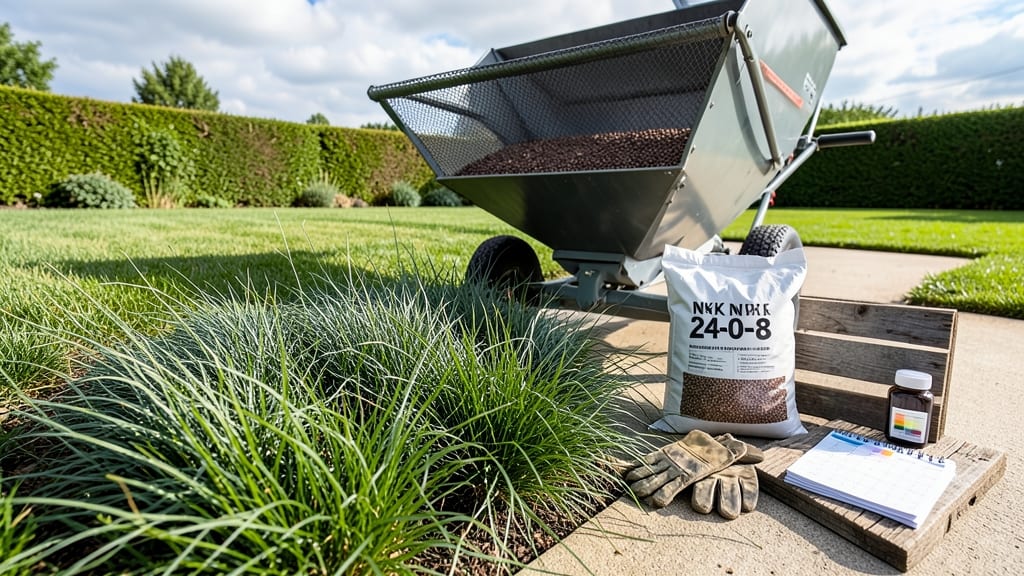
Fertilizing your Tennessee lawn at the right times—early spring and late summer—sets the stage for a thick, vibrant carpet 🌱 that outlasts weeds and heat.
Here’s the catch: Tennessee’s humid summers and mild winters mean your lawn’s needs shift dramatically between seasons. Skip the spring feed, and you’ll watch weeds take over by June. Time it wrong in fall, and your grass won’t store enough nutrients to survive winter.
The difference between a lazy green and a showstopper lawn often comes down to these two windows.
Cool-season grasses like fescue and bluegrass thrive with early spring feeding (March-April), while warm-season types like Bermuda and zoysia need a boost in late summer (August-September). I’ll break down the exact schedule, including how to adjust for Tennessee’s clay-heavy soils and when to skip fertilizer entirely.
Ready to turn your lawn into the envy of the neighborhood? You’ll learn how to read your grass’s hunger signals, pick the right fertilizer, and water like a pro—no guesswork, just results.
Tennessee’s best fertilization timeline: spring vs. fall for cool-season vs. warm-season grasses
Tennessee’s cool-season grasses like fescue and bluegrass thrive in spring and fall, while warm-season grasses such as Bermuda and zoysia need feeding during summer’s heat. Timing matters because fertilizing when grass is actively growing maximizes nutrient absorption and root strength.
Miss the window, and you’ll end up with weak growth or even weed invasions. Let’s break down the exact schedule for each grass type.
For cool-season grasses, the best time to fertilize is in early spring (March-April) and early fall (August-September). This aligns with their natural growth cycles—spring for recovery after winter dormancy and fall to build root reserves for winter.
In contrast, warm-season grasses should get their main feeding in late spring (May-June) and summer (July-August) when temperatures rise above 65°F.
Here’s the key difference: cool-season grasses grow best when soil temperatures are 50-75°F, while warm-season grasses prefer 75-90°F. Fertilizing outside these ranges wastes nutrients because the grass isn’t actively growing to absorb them.
For example, applying nitrogen to Bermuda grass in winter won’t help—it’s dormant and won’t use the fertilizer until spring arrives.
🌱
Let’s dive deeper into why spring fertilization is critical for cool-season grasses. After winter’s chill, these grasses wake up hungry. Applying a high-nitrogen fertilizer (30-0-4) in March helps them rebuild leaf blades and roots before summer’s heat sets in.
For warm-season grasses, late spring feeding (May-June) kickstarts their growth as soil warms. Think of it like giving your lawn a jumpstart for the growing season.
Fall fertilization is equally important but often overlooked. For cool-season grasses, feeding in September builds root depth, helping them survive winter’s freeze-thaw cycles. Warm-season grasses, like zoysia, benefit from a light feeding in August to maintain color and strength before dormancy.
This is when grass stores nutrients for next year’s growth—skipping it means weaker recovery in spring.
Temperature triggers are your best guide. Use a soil thermometer to check depths of 4 inches (for roots) and 2 inches (for surface growth). For cool-season grasses, fertilize when soil temps hit 55°F in spring or 65°F in fall.
Warm-season grasses need soil temps above 70°F before feeding. Pro tip: In Tennessee’s Zone 6a-8a, these temps typically align with the months mentioned, but always verify with your local extension office for microclimate adjustments.
Drought resistance is another reason timing matters. Grass fertilized at the right time develops deeper roots, making it more resilient to Tennessee’s summer heat waves and occasional dry spells.
For example, Bermuda grass fertilized in June will have stronger roots to handle July’s 90°F+ days without wilting. Meanwhile, fescue fertilized in September will bounce back faster from winter stress.
💧
If you’re unsure whether your lawn is cool-season or warm-season, check the grass blades: cool-season grasses stay green in winter, while warm-season grasses turn brown. Mixes often require a split feeding schedule, like fertilizing cool-season grasses in spring and warm-season grasses in summer.
For mixed lawns, use a slow-release fertilizer in early spring to cover both cycles without overfeeding either type.
Finally, avoid fertilizing when rain is forecasted within 24-48 hours. This prevents nutrient runoff and waste. Water lightly after applying fertilizer to help it soak into the soil, but don’t overdo it—1/4 inch is enough.
For Tennessee’s clay-heavy soils, consider a soil test every 2-3 years to adjust fertilizer ratios. Balanced nutrients mean healthier grass and fewer weeds.
✂️
3 Critical signs your Tennessee lawn needs fertilizer (and when to act)
Your Tennessee lawn works hard all year—fighting heat, humidity, and even clay-heavy soils that drain nutrients faster than you think. But how do you know when it’s time to feed that green?
Don’t wait for bare spots to spread. Instead, watch for these three red flags that scream, "I need fertilizer NOW!"
The first warning sign is yellow patches that refuse to green up, even after mowing or watering. This isn’t just summer stress—it’s your lawn begging for nitrogen. In Tennessee’s USDA Zones 6a-8a, these patches often appear in late spring or early fall, the prime windows for fertilization.
Ignore them, and weeds like crabgrass will move in faster than a Tennessee thunderstorm.
Next, check for slow recovery after foot traffic or drought. If your lawn takes weeks to bounce back—especially in August’s brutal heat—your grass roots are starving.
This is your cue to test your soil (pH 6.0–7.0 is ideal for most Tennessee lawns) and apply a slow-release fertilizer with high nitrogen (like 30-0-4). The goal? Boost root growth before winter dormancy kicks in.
Finally, thin spots that won’t fill in—even with overseeding—are a clear sign your lawn’s nutrient reserves are exhausted. These spots often appear in cool-season grasses (like fescue or bluegrass) after a harsh winter.
The fix? Fertilize in early spring (March–April) or early fall (August–September), when grass is actively growing but pests like chinch bugs are less aggressive.
- 🌱 Yellow Patches: Apply high-nitrogen fertilizer in March–April or August–September to revive color before weeds take over.
- 💧 Slow Recovery: Test soil pH (aim for 6.0–7.0) and use slow-release fertilizer to strengthen roots before winter.
- 🌿 Thin Spots: Overseed in early fall and fertilize with potassium-rich blend (24-0-10) to encourage dense growth.
⚠️ Pro Tip: Tennessee’s clay soils compact easily—
Here’s the kicker: Tennessee’s clay-heavy soils make it harder for fertilizers to penetrate. Before you apply anything, aerate your lawn in late spring to break up compaction.
This lets nutrients seep deeper, where roots can actually use them. Pair aeration with a light top-dressing of compost to improve soil structure over time.
Don’t forget about pests like grubs or chinch bugs—they steal nutrients faster than a squirrel steals acorns. If you spot irregular brown patches (not just yellow), treat for pests first, then fertilize.
The best defense is a two-step approach: pesticide in summer (if needed) + fertilizer in fall to rebuild strength.
Ready to act? Grab your fertilizer spreader, check the weather (apply when rain is forecast in 24–48 hours), and give your lawn the boost it deserves. With these signs in mind, you’ll spot nutrient deficiencies early—and keep your Tennessee green year-round, not just in the postcards. 🌱