
Fertilization
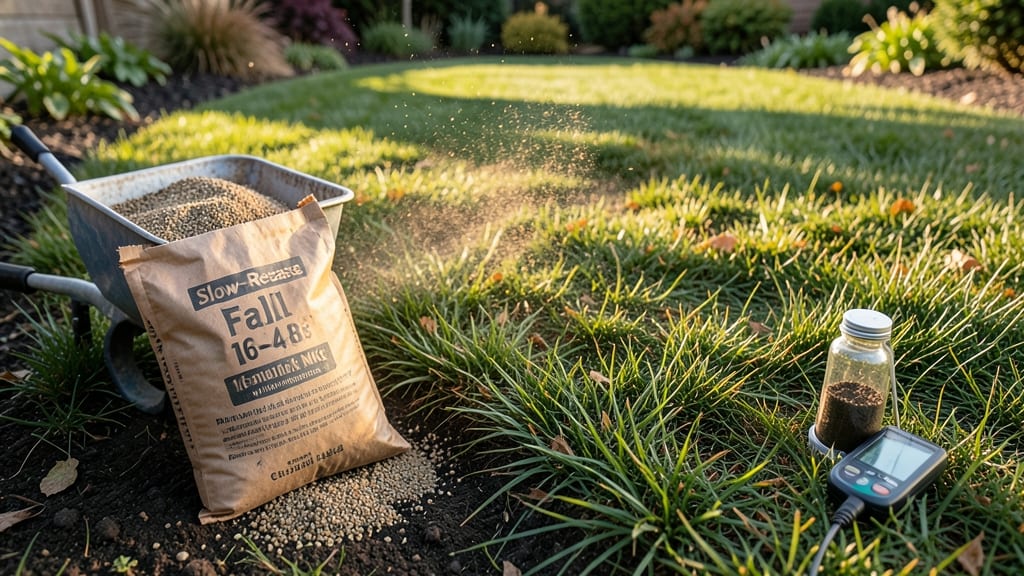
Fertilizing lawns in fall is the best time to strengthen roots before winter, but the wrong timing can leave you with weak grass and wasted money.
Picture this: you’ve just spent $50 on fertilizer, spread it with care, and then—two weeks later—your grass turns yellow. That’s what happens when you fertilize too early or too late.
The key is knowing your USDA zone, grass type, and the exact window between late August and October that gives roots the boost they need without burning them.
Cool-season grasses like Kentucky bluegrass and fescue thrive with fall feeding, while warm-season types like Bermuda grass barely need it at all. I’ll show you how to match your lawn’s needs to the calendar, plus the one trick that prevents winter kill and keeps your grass greener longer.
By the end, you’ll know exactly when to fertilize—down to the week—and how to avoid the five biggest mistakes that turn fall feeding into a gamble. Let’s get started.

Best fall fertilization timing by climate Zone: cool-season vs. warm-season lawns
Timing your fall lawn fertilization isn’t one-size-fits-all—it depends on whether you have cool-season or warm-season grass, plus your local USDA climate zone.
In the Northern U.S. (Zones 3-6), cool-season grasses like Kentucky bluegrass and fescue thrive when fertilized 6-8 weeks before first frost, typically late September to mid-October.
Meanwhile, Southern lawns (Zones 7-10) with warm-season grasses like Bermuda or Zoysia need a late summer/early fall boost to transition smoothly into dormancy. Skipping this window means weaker roots and patchy growth next spring.
Your grass type and local average temperatures are the real game-changers. For example, in Zone 5, I fertilize my tall fescue by October 1st—when daytime temps hit 60°F but nights dip below 50°F.
In Zone 8, I switch to a low-nitrogen blend by mid-September to avoid encouraging late-season growth that winter can’t support. The key is matching fertilizer timing to your grass’s natural growth cycle, not just the calendar.
Here’s the critical rule: Cool-season grasses need 60-70 days of warm weather after fertilization to build roots before winter. Warm-season grasses, however, should get their last feeding 4-6 weeks before frost to harden off properly.
Over-fertilizing too late can leave grass vulnerable to fungal diseases or winter burn. Let’s break down the exact windows by region to avoid costly mistakes.
If you’re in Zone 5 or colder, mark your calendar for October 1st—that’s my personal deadline for cool-season grasses. I’ve learned the hard way that fertilizing after mid-October risks winter burn when temps drop suddenly.
For warm-season lawns in Zone 9, I switch to a low-nitrogen, high-potassium blend by late August to toughen up the grass before cooler weather arrives. The goal is to strengthen roots without encouraging late-season growth that winter can’t sustain.
One trick I swear by? Soil temperature tests. Use a soil thermometer to confirm temps are below 60°F at night before fertilizing cool-season grass. If temps stay above 65°F, your grass will keep growing—leaving it vulnerable to disease or winter kill.
In my Zone 6 garden, I’ve seen brown patch fungus flare up when I fertilized too late in October. Always prioritize root development over quick green-up.
For Southern lawns, the window is tighter. In Zone 8, I stop fertilizing by October 15th—even if the grass looks green. Warm-season grasses like Bermuda go dormant when temps drop below 50°F, and feeding after that just wastes money.
Instead, I focus on overseeding with ryegrass in late October to keep the lawn lush through winter. This two-step approach—late-summer feed + fall overse
How to choose the right fall fertilizer for root strength and winter survival
Fall fertilization is your lawn’s last chance to build resilience before winter dormancy. The right fall fertilizer strengthens roots, boosts potassium levels, and prevents winter kill—while the wrong choice can burn grass or encourage late-season growth that freezes.
Let’s break down how to pick the perfect blend for your lawn’s needs.
Start by understanding NPK ratios—the numbers on fertilizer bags that indicate nitrogen (N), phosphorus (P), and potassium (K) percentages. For fall, prioritize low nitrogen (to avoid tender new growth) and high potassium (to harden cell walls against frost).
A 10-0-10 or 12-0-12 blend is ideal, but always check for micronutrients like iron and manganese, which support root vitality.
Next, decide between slow-release and quick-release fertilizers. Slow-release granules (like polymer-coated urea) feed roots steadily over 6-8 weeks, ideal for late September applications. Quick-release liquids (e.g., potassium sulfate) act faster—perfect for a November boost in mild climates where grass stays active.
Pro tip: Look for labels with "winterizer" or "fall blend" to skip the guesswork.
Don’t overlook micronutrients like iron, manganese, and zinc. These trace elements enhance chlorophyll production and root enzyme activity, helping grass recover faster in spring. A fertilizer with 0.5% iron or a separate iron supplement can revive lawns with yellowing patches.
For sandy soils, choose a blend with chelated micronutrients to prevent leaching.
Read labels like a pro: The first number (nitrogen) should be ≤10% in fall blends to avoid late-season growth. The second number (phosphorus) can be zero—grass doesn’t need it in fall.
The third (potassium) should be 10% or higher to fortify cell walls. Avoid fertilizers with weed preventers (like prodiamine) unless you’re seeding—these can inhibit new grass growth.
Apply your chosen fertilizer in the evening after mowing (set blades to 3-4 inches for winter resilience). Water lightly to activate granules, then give a deep soaking the next morning. In dry climates, split the dose into two applications 2 weeks apart to prevent runoff.
Remember: Less is more—over-fertilizing in fall can lead to winter burn or nutrient runoff into waterways.