
Lawn
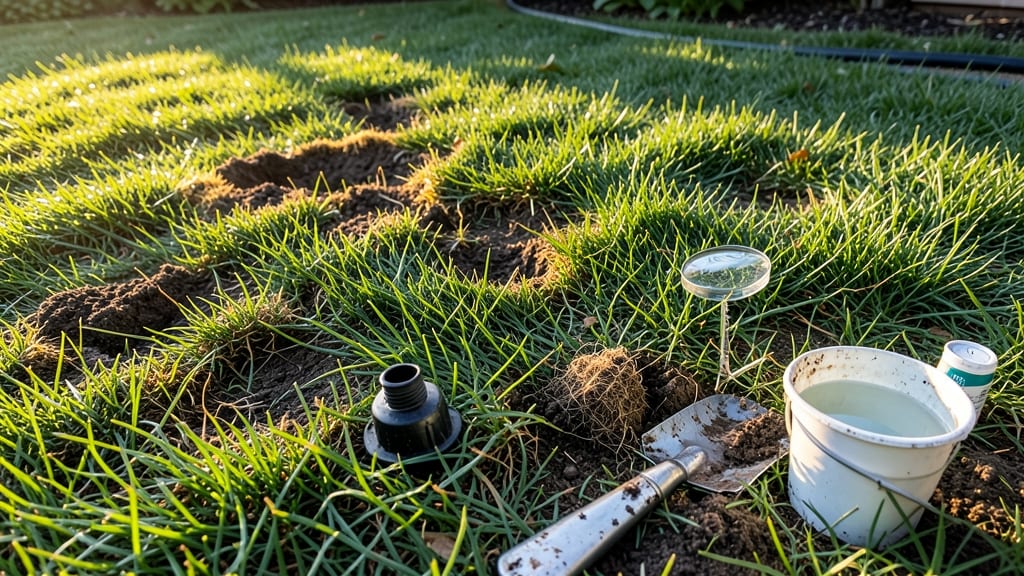
Brown dead spots in your lawn aren’t just unsightly—they’re a cry for help from your grass. 🌱 I’ve battled these patches for years, and I’ve learned the real culprits are often fungal diseases (like brown patch), grubs munching underground, or soil that’s too compacted to breathe.
The good news? Copper spray and aeration can turn those dead zones into lush green again—without harsh chemicals. The first step is identifying what’s wrong: Are the spots soft and spongy (grubs)? Or do they spread in circular patterns (fungus)? Most problems start with poor watering or thatch buildup.
I’ll show you how to diagnose it fast, so you’re not guessing with expensive treatments. A simple soil test or closer look at the roots can save you time and money.
Once you know the cause, the fix is straightforward: Aerate to loosen compacted soil, apply a copper fungicide spray (it’s organic and effective), and adjust your watering schedule. Within 2-3 weeks, you’ll see new growth pushing through those brown circles. The key is consistency—don’t skip the follow-up treatments.
This works for cool-season grasses (like Kentucky bluegrass) and warm-season types (like Bermuda), though the timing varies by climate. Whether your lawn is a small patch or a full yard, these steps will get it back to looking like the green carpet you planted.
Let’s get those spots fading for good!
Root Causes Of Lawn Discoloration
Brown dead spots in your lawn aren’t just an eyesore—they’re often a cry for help from your grass. Understanding the why behind these patches is the first step to restoring a lush, green yard.
Let’s break down the most common culprits, backed by science, so you can diagnose the issue accurately and take targeted action.
Fungi thrive in moist, warm conditions and are the #1 cause of brown dead spots. These microscopic organisms feed on organic matter in the soil, breaking down grass roots and leaving behind circular or irregular patches of dead grass. Common fungal offenders include:
- **Brown Patch (Rhizoctonia solani): Thrives in high humidity and warm nights (70–90°F).
It creates large, water-soaked patches that turn brown and crispy at the edges. - Dollar Spot (Sclerotinia homoeocarpa): Leaves small, straw-colored spots (about the size of a silver dollar) with a dark border.
It attacks during cool, wet weather. - Necrotic Ring Spot (Leptosphaeria korrae): Creates concentric rings of dead grass, often appearing in spring or fall.
Why it happens: Fungi spread via spores in the air, water, or even on lawn equipment. Overwatering, poor drainage, or compacted soil creates the perfect breeding ground. If your lawn stays damp for long periods—especially at night—fungi will take hold.
Too much water (or water that doesn’t drain) suffocates grass roots, cutting off oxygen and inviting fungal growth. Overwatering is a common mistake—grass needs 1–1.5 inches of water per week, including rainfall. If your soil stays soggy, roots rot, and brown patches form.
Why it happens:
- Compacted soil: Heavy foot traffic, machinery, or clay soil prevents water from draining. Roots suffocate, and fungi move in.
- Irrigation issues: Sprinklers that water too long or too frequently (e.g., daily light showers) encourage shallow root growth and fungal spores.
- Low-lying areas: Water pools in depressions, creating anaerobic (oxygen-free) zones where grass can’t survive.
Red flags:
- Patches appear after heavy rain or overwatering.
- Soil feels muddy or smells sour when squeezed.
When summer hits, intense heat and drought can burn grass faster than it can recover. Brown spots may appear as a gradual fade or crispy, brittle patches. Different grass types react differently—cool-season grasses (like Kentucky bluegrass) struggle more in extreme heat than warm-season varieties (like Bermuda grass).
Why it happens:
- Water loss exceeds uptake: Grass blades dry out, and roots can’t pull enough moisture from deep soil.
- Soil moisture imbalance: Sandy soils drain too quickly, while clay soils hold water but suffocate roots.
- Thatch buildup: A thick thatch layer (over ½ inch) blocks water and air from reaching roots, accelerating stress.
How to spot it:
- Spots appear uniformly in sunny areas.
- Grass feels dry and brittle to the touch.
- Soil cracks or pulls away from the surface.
Larvae of beetles (like Japanese beetles or June bugs) and other pests munch on grass roots, leaving behind brown, spongy patches that pull up easily. These pests are often active in late summer to fall, but their damage becomes visible in spring.
Why it happens:
- Grub feeding: Larvae chew on roots, weakening the grass’s ability to absorb water and nutrients.
- Birds and animals: They dig up patches to eat grubs, exposing dead roots.
- Thin, patchy lawns: Pests target stressed grass first.
Signs to watch for:
- Brown patches pull up like a rug when tugged.
- Increased mole or bird activity in your yard.
- White, C-shaped grubs in the soil (check by digging a small square).
Grass needs a balanced diet of nitrogen, phosphorus, and potassium to stay green. If your soil lacks these nutrients—or has pH imbalances—your lawn will show it in brown, weak patches.
Why it happens:
- Low nitrogen: Causes yellowing or browning, especially in cool-season grasses.
- High soil pH (alkaline): Locks out essential nutrients like iron and manganese, leading to chlorosis (yellowing between veins) and eventual browning.
- Soil compaction: Reduces root access to nutrients and water.
- That layer: Thick thatch blocks nutrients from reaching roots.
Diagnostic clues:
- Spots appear uniformly across the lawn (not just in one area).
- Soil test reveals high pH (above 7.0) or low organic matter.
- Grass grows slowly or looks "stunted."
Even well-meaning lawn care can backfire. Over-fertilizing, scalping (mowing too short), or using harsh chemicals can stress grass and create brown spots.
Why it happens:
- Over-fertilizing: Burns grass roots, especially if fertilizer isn’t watered in properly.
- Incorrect mowing height: Cutting grass too short weakens roots and invites weeds/pests.
- Herbicide drift or overuse: Non-selective herbicides kill grass in treated areas.
- That layer from improper detaching: Leaves or clippings smother grass, blocking sunlight and air.
Common triggers:
- Spots appear right after fertilizing or mowing.
- Grass looks crispy or bleached** in mowed areas.
Quick Fixes for Reviving Your Lawn
Now that you know the root cause of those pesky brown dead spots, let’s tackle them head-on with targeted solutions. Whether it’s fungal infections, compacted soil, or pest damage, each issue needs a slightly different approach—but don’t worry, these fixes are practical and easy to follow.
We’ll break it down by cause, so you can skip straight to what’s plaguing your grass.
Fungal brown spots (like dollar spot or brown patch) thrive in damp, shaded conditions. The key is to cut off the moisture supply, improve airflow, and apply fungicides strategically.
🔥 Step 1: Reduce Moisture & Improve Drainage
Fungi love wet grass, so start by watering less frequently but deeply—aim for 1–1.5 inches per week (including rain).
If your lawn stays soggy, consider: - Adjusting sprinklers to avoid oversaturation. - Aerating compacted soil (more on this below) to help water drain faster. - Raking up thick thatch (that spongy layer between soil and grass) to prevent moisture buildup.
🍳 Step 2: Apply a Fungicide (Copper Spray Works!)
Copper-based fungicides are organic, effective, and safe for most lawns. Here’s how to use them: 1. Choose the right product: Look for copper sulfate pentahydrate or copper fungicide sprays (like Bonide Copper Fungicide).
- Best time to spray: Early morning or late afternoon when temperatures are below 85°F (fungi are less active in heat).
- Follow label instructions: Typically, 1–2 applications, 7–10 days apart, should do the trick.
- Water lightly after spraying to help the copper absorb into the grass blades.
> 💡 Pro Tip: If you’re dealing with dollar spot, combine copper spray with reducing nighttime watering—fungi love the damp, dark conditions after sunset.
👨🍳 Step 3: Boost Grass Health
A strong lawn resists fungi better. Fertilize with a low-nitrogen, high-phosphorus formula (like a 5-10-10) to encourage deep root growth. Avoid over-fertilizing—too much nitrogen makes grass soft and fungus-prone.
If your lawn feels like a brick when you walk on it, aeration is your best friend. Compacted soil suffocates grass roots, leading to thin, brown patches.
🔪 Step 1: Aerate Your Lawn
Rent a core aerator (or hire a lawn service) to pull out small soil plugs, creating holes for air, water, and nutrients.
- Best time: Late spring or early fall (when grass is actively growing).
- Frequency: Once a year for most lawns; twice if you have heavy foot traffic.
- Follow up: Lightly rake to break up plugs, then top-dress with compost (¼ inch) to improve soil structure.
⏰ Step 2: Overseed & Fertilize
After aerating, overspread with high-quality grass seed (match it to your existing grass type).
- Water lightly 2x/day for 2–3 weeks to keep seeds moist.
- Apply a starter fertilizer (high in phosphorus) to help roots establish.
> 🌡️ Pro Tip: If your soil is clay-heavy, mix in sand or compost during aeration to improve drainage.
Brown spots from grubs, chinch bugs, or nematodes require a different approach—identify the pest first before treating.
🔍 Step 1: Diagnose the Problem
- Grubs? Dig up a small patch—if you see white, C-shaped larvae, you’ve got grubs.
- Chinch bugs? Look for small, black bugs under leaf blades (common in dry, sunny spots).
- Nematodes? Brown patches that don’t improve with water may signal microscopic worms.
🎯 Step 2: Treat Accordingly
| Pest | Solution | Prevention |
|---|---|---|
| Grubs | Apply beneficial nematodes or grub-specific insecticide (like bifenthrin). | Aerate + overseed to weaken grubs. |
| Chinch Bugs | Use neem oil or pyrethrin-based spray (follow label rates). | Reduce drought stress in lawn. |
| Nematodes | Solarize soil (cover with clear plastic for 4–6 weeks in summer heat). | Plant nematode-resistant grass (like tall fescue). |
> ✨ Pro Tip: For chinch bugs, water the lawn deeply and infrequently—they thrive in drought-stressed grass.
Once your lawn is healthy, maintain these habits to prevent future dead spots: ✅ Mow high (3–4 inches) to shade out weeds and retain moisture. ✅ Water early morning (before 10 AM) to reduce fungal growth. ✅ Test your soil every 2–3 years to adjust pH and nutrients. ✅ Dethatch annually if your lawn has a thick thatch layer. ✅ Aerate in fall if you have heavy soil or high foot traffic.
With the right approach, your lawn can bounce back faster than you think—just match the fix to the problem, and stay consistent. 🌿✨
Frequently asked questions
Why do my brown spots appear in circular patterns?
Circular brown patches usually indicate fungal diseases like brown patch or dollar spot. These fungi spread outward from a central infection point, creating those classic ring patterns. Check for damp conditions—fungi thrive when grass stays wet for long periods, especially at night.
Can I just overseed dead spots instead of fixing the cause?
Overseeding can temporarily improve appearance, but without addressing the root issue (fungus, grubs, or compaction), new grass will likely die too. Start with aeration or fungicide treatment first—then overseed for permanent results. Think of it like treating a wound before bandaging!
How long does it take to see improvement after treating fungus?
With proper copper fungicide treatment and adjusted watering, you should see new green growth within 2-3 weeks. For severe cases, it may take up to 6 weeks for full recovery. Monitor moisture levels—keep lawns dry during daytime hours to prevent reinfection.
Will my dog's urine cause permanent brown spots?
Dog urine can burn grass temporarily, but it rarely causes permanent damage unless the area stays compacted or nutrient-depleted. To prevent it: Train your dog to use specific areas, water those spots immediately after accidents, and overseed thin patches in spring/fall.
Can I use vinegar as a natural fungicide?
White vinegar (1 part vinegar to 1 part water) can help with mild fungal issues, but it's not as effective as copper fungicides for established lawn diseases. The acetic acid may kill beneficial soil microbes too. For better results, use a dedicated organic fungicide and focus on improving drainage first.