
Lawn
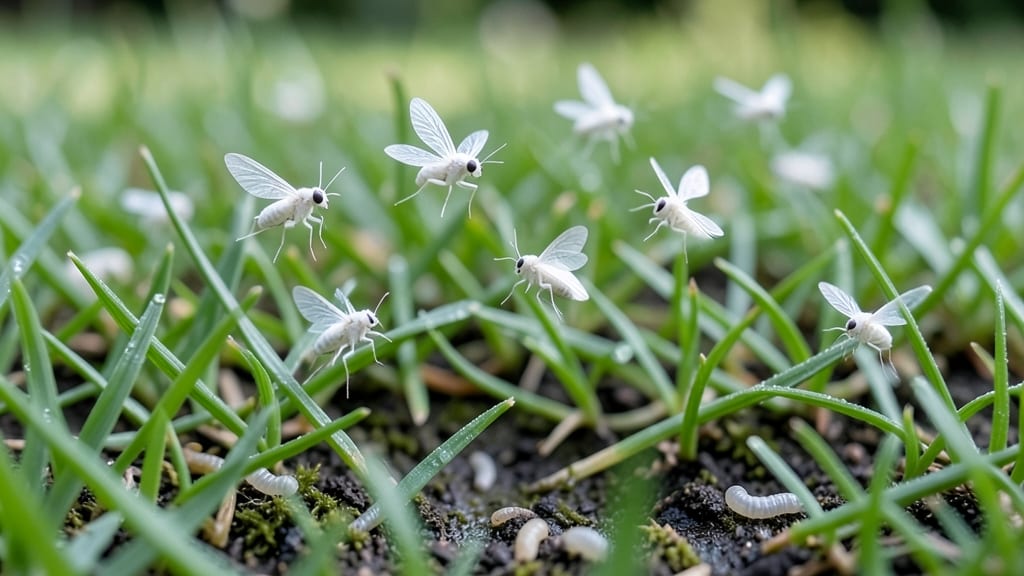
White flying bugs in your lawn aren't just annoying—they're a sign your grass ecosystem is out of balance. 🌱 I've battled these tiny winged pests in my own yard, and the key to stopping them fast isn't harsh chemicals but understanding what's attracting them in the first place.
The most common culprits are fungus gnats and whiteflies, drawn to moist, organic-rich soil or overwatered lawns. You'll spot them hovering near grass blades or taking flight when you walk through damp areas—often after rain or overzealous watering. The good news?
A simple yellow sticky trap can catch hundreds in just 24 hours, giving you immediate relief while you address the root cause. What you'll end up with is a lawn that stops attracting these pests naturally.
The secret lies in adjusting your watering schedule, improving drainage, and sometimes even adding beneficial nematodes to the soil. These solutions work without harming your grass or the environment. Works for any lawn type, from sunny backyards to shaded patches.
Here's how to set up the trap and fix the problem for good!
What Attracts These Tiny Invaders
If your lawn has suddenly become a hotspot for white flying bugs—likely aphids, whiteflies, or fungus gnats—the issue isn’t just random bad luck. These pests are drawn to specific conditions that turn your grass into an all-you-can-eat buffet.
Understanding why they show up means you can fix the root problem and keep them from coming back.
White flying bugs, especially fungus gnats and aphids, thrive in moist environments. Here’s why:
- Fungal food source: Excess water creates the perfect breeding ground for Botrytis and other soil fungi, which fungus gnats love to feed on. Their larvae munch on fungal hyphae, and adult gnats lay eggs in damp soil.
- Root stress: Overwatering suffocates grass roots, weakening them and making plants more susceptible to aphid infestations. Aphids target stressed plants because their sap is easier to access.
- Standing water: Puddles or poorly draining soil trap moisture at the surface, signaling to gnats and whiteflies that it’s a prime nesting spot.
Actionable fix: Let the top 1–2 inches of soil dry out between waterings. Use a moisture meter or the "squeeze test" (grab a handful—if it’s damp, wait). Improve drainage with sand or compost.
Aphids and whiteflies are opportunistic pests—they zero in on plants that are already struggling. Here’s what makes your lawn vulnerable:
- Nutrient deficiencies: Yellowing grass (from lack of nitrogen, iron, or zinc) signals to pests that the plant is an easy meal. Aphids inject toxins into leaves, further weakening them.
- Thatch buildup: A thick thatch layer (over ½ inch) traps moisture and debris, creating hiding spots for gnat larvae and aphid colonies.
- Disease or pest damage: If your lawn has had past issues (like grubs or fungal infections), it’s more attractive to secondary invaders like whiteflies.
Actionable fix: Test your soil’s pH and nutrient levels (ideal lawn pH: 6.0–7.0). Apply a balanced fertilizer (16-4-8) in early spring and dethatch if needed. Mow high (3–4 inches) to strengthen roots.
Some white flying bugs, like aphids, are drawn to the sugary honeydew they produce—and other pests love it too! Here’s the science:
- Honeydew magnet: Aphids excrete honeydew (a sugary waste product), which attracts ants, wasps, and even more aphids. This creates a vicious cycle where infestations spiral.
- Sticky residue: Honeydew hardens into sooty mold on leaves, blocking sunlight and further stressing your grass.
- Plant signals: Some plants (like clover or broadleaf weeds) emit volatile compounds that aphids detect from up to a mile away.
Actionable fix: Blast aphids off leaves with a strong spray of water (💦) to disrupt their colonies. Use yellow sticky traps to monitor and reduce adult populations. Remove weeds to break the pest chain.
Temperature and humidity play a huge role in white flying bug lifecycles. Here’s how:
- Rapid reproduction: Fungus gnats and whiteflies develop faster in warm (70–85°F) and humid conditions. A single female can lay hundreds of eggs in weeks.
- Dormant season escape: Cool winters slow them down, but as soil warms in spring, eggs hatch en masse.
- Humidity = moisture retention: High humidity keeps soil damp longer, extending the breeding window for gnats.
Actionable fix: In peak season (late spring–summer), water early in the morning to let foliage dry quickly. Use a fan on high to disrupt flying adults near traps or infested areas.
Neglecting basic lawn care creates the perfect storm for white flying bugs. Common mistakes include:
- Skipping aeration: Compacted soil prevents water and nutrients from reaching roots, making grass weak and attractive to pests.
- Using synthetic chemicals: Overuse of pesticides can kill beneficial insects (like ladybugs) that eat aphids, leaving your lawn defenseless.
- Leaving clippings piles: Grass clippings decompose into a moist, nutrient-rich mulch—ideal for gnat larvae to thrive in.
Actionable fix: Aerate your lawn in fall or spring to improve soil health. Introduce natural predators (like lacewings or nematodes) to control pests biologically. Rake up clippings after mowing to reduce hiding spots.
Quick Fixes for Flying White Pests
If you’ve spotted white flying bugs hovering over your lawn, don’t panic—there are fast, effective solutions to tackle them naturally. Below, we break down the most common causes and the step-by-step fixes to eliminate them for good. Plus, we’ll share prevention tips to keep your lawn bug-free long-term.
Before treating, confirm whether you’re dealing with:
- Fungus gnats (tiny, white, mosquito-like flies)
- Whiteflies (small, moth-like insects, often on plants)
- Moths or butterflies (larger, fluttering visitors)
💡 Pro Tip: Shine a flashlight at night—fungus gnats are most active then, while whiteflies cluster on undersides of leaves during the day.
1.
Diatomaceous Earth (DE) Barrier ✅ Why it works: DE is a non-toxic powder that dehydrates and kills fungus gnats on contact. 🔹 How to apply: - Sprinkle food-grade DE lightly over damp soil (moisture helps it stick). - Focus on high-traffic areas where gnats thrive (near sprinkler heads, potted plants). - Reapply after rain or watering (it washes away).
⏰ Time to see results: 24–48 hours (gnats die within hours of contact).
2.
Yellow Sticky Traps (Instant Catch-All) ✅ Why it works: Fungus gnats are attracted to yellow—these traps lure and trap them fast. 🔹 How to set up: - Place yellow sticky cards near infested areas (especially under eaves or near moisture). - Check traps daily and replace when full. - Best for quick population control while treating the root cause.
🎯 Bonus: Hang traps 1–2 feet above ground for maximum effectiveness.
3.
Hydrogen Peroxide Soil Treatment (Kills Larvae) ✅ Why it works: A 3% hydrogen peroxide solution suffocates larvae in the soil. 🔹 How to use: - Mix 1 part 3% hydrogen peroxide with 3 parts water. - Lightly spray the soil (avoid oversaturating—roots need oxygen). - Repeat every 3–5 days until gnats disappear.
⚠️ Warning: Test on a small patch first—some plants may react to peroxide.
4.
Beneficial Nematodes (Long-Term Biological Control) ✅ Why it works: Microscopic nematodes hunt and kill fungus gnat larvae naturally. 🔹 How to apply: - Purchase Steinernema feltiae (a gnat-specific strain). - Apply evening or early morning (they’re sensitive to sunlight). - Water lightly after application to help them move into the soil.
✨ 80–90% reduction in larvae within 7–10 days.
1.
Neem Oil Spray (Safe & Effective) ✅ Why it works: Neem oil disrupts whitefly life cycles and repels moths. 🔹 DIY Recipe: - Mix 1 tbsp neem oil + 1 tsp mild soap + 1 quart water. - Spray undersides of leaves (where whiteflies hide) and lawn edges. - Reapply every 5–7 days until infestation clears.
🌡️ Best applied in the evening to avoid harming bees.
2.
Soap Spray (Instant Knockdown) ✅ Why it works: Insecticidal soap dissolves whitefly wax layers, killing them on contact. 🔹 Quick Mix: - 1 tsp castile soap + 1 quart water. - Spray directly on bugs (focus on new growth). - Works within minutes but may need daily repeats for heavy infestations.
3.
Bait Traps for Moths (Prevent Egg Laying) ✅ Why it works: Moths are drawn to fermenting fruit or sugar bait. 🔹 DIY Trap: - Fill a small jar with apple cider vinegar + a drop of dish soap. - Cover with plastic wrap, poke small holes, and hang near the lawn. - Empty every 2–3 days to reset.
| Problem | Solution | Frequency |
|---|---|---|
| Overwatering | Water deeply 2–3x/week (not daily). | Adjust sprinklers. |
| Thatch Buildup | Dethatch lawn in spring/fall. | Every 1–2 years. |
| Organic Debris | Remove leaves, mulch, grass clippings from soil. | Weekly. |
| Weak Grass | Aerate + overseed in early fall. | Annually. |
| Standing Water | Fix drainage issues (slopes, gutters). | Check after rain. |
💡 Pro Tip: Encourage natural predators like ladybugs, lacewings, and birds by planting marigolds, dill, or fennel nearby.
| Method | Time to See Effect | Long-Term Success? |
|---|---|---|
| Diatomaceous Earth | 24–48 hours | ⭐⭐⭐ (Needs reapplication) |
| Yellow Sticky Traps | Immediate (trapping) | ⭐⭐ (Short-term) |
| Hydrogen Peroxide | 3–5 days | ⭐⭐⭐ (Kills larvae) |
| Beneficial Nematodes | 7–10 days | ⭐⭐⭐⭐ (Best long-term) |
| Neem Oil | 5–7 days | ⭐⭐⭐ (Prevents regrowth) |
Final Thought: Most white flying bugs are easy to control with one or two methods. Start with DE + sticky traps for gnats, or neem oil + soap spray for whiteflies. Prevention (like reducing moisture and thatch) will keep them from coming back! 🚀
Frequently asked questions
Why do white flying bugs suddenly appear after rain?
Rain creates the perfect breeding environment for fungus gnats and whiteflies. The excess moisture triggers fungal growth in your soil, which gnat larvae feed on, while whiteflies thrive in damp, humid conditions. Their populations explode within 24-48 hours of heavy rain, which is why you'll see them swarming immediately afterward.
Are these white flying bugs harmful to my lawn or pets?
While they're mostly a nuisance, fungus gnats and whiteflies can damage your lawn by feeding on fungal growth and weakening grass roots. For pets, they're generally harmless—they won't bite or sting. However, their larvae can create unsightly patches in your grass if left unchecked for weeks.
How can I tell if I have fungus gnats vs. whiteflies?
Fungus gnats are tiny (1/8 inch) and resemble tiny white mosquitoes, while whiteflies are slightly larger (1/16 inch) and more moth-like. Check their activity patterns: fungus gnats fly at night and hover near soil, while whiteflies cluster on undersides of leaves during daylight hours.
Will my neighbor's lawn treatments affect my white flying bug problem?
Chemical treatments can spread through wind or water runoff, potentially killing beneficial insects that prey on your pests. If your neighbor uses pesticides, it might temporarily reduce your bug population, but it can also disrupt natural predators that help control them long-term. Always coordinate treatments with neighbors when possible.
How long does it take for natural remedies to completely eliminate the problem?
With consistent application, most natural methods show significant results in 7-14 days. Diatomaceous earth and yellow sticky traps work fastest (24-48 hours), while beneficial nematodes provide the most lasting control (up to 3 months). The key is combining treatments—like using DE for adults and nematodes for larvae—while fixing moisture issues.