
Lawn
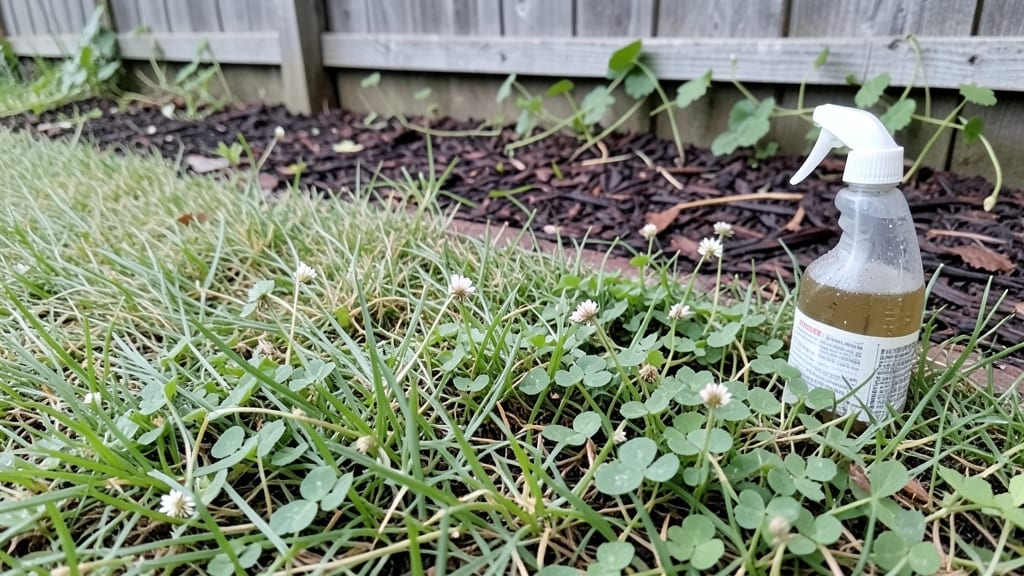
Moisture disrupts herbicides in two key ways: first, it washes away the chemical before it can fully adhere to weed leaves, and second, it dilutes the concentration so the active ingredients become less potent. 🔥 I’ve seen cases where applying weed killer after rain led to patchy results or even killed desirable grass—always check the weather forecast and wait for at least 24 hours after rainfall before treating.
The ideal time is early morning when dew has evaporated but temperatures are still mild.
Even if your grass looks dry, morning dew can still interfere with absorption. For best results, use a spreader or sprayer designed for granular or liquid herbicides, and avoid windy days to prevent drift onto unintended plants.
Always read the product label for specific instructions, as some herbicides have unique requirements.
💡 In This Article
- How Moisture Weakens Weed Killer Performance
- Best Practices for Applying Weed Killer Safely
How moisture weakens weed killer performance
When you apply herbicide to damp grass, the active ingredients—like glyphosate or 2,4-D—immediately encounter a chemical challenge. Water molecules create a barrier that prevents the herbicide from properly adhering to weed foliage.
Think of it like trying to stick a sticker on a wet surface: the moisture interferes with the adhesive's ability to bond. This causes the herbicide to bead up and roll off leaves, reducing coverage by up to 70% compared to dry conditions.
The dilution effect is even more critical. Most herbicides work at specific concentrations to kill weeds without harming desirable plants.
When applied to wet grass, rainwater or dew can dilute the active ingredients by 30-50%, turning a potent 41% glyphosate solution into something closer to 25-30%—often too weak to be effective. This is why you'll see patchy results or no control at all when treating damp areas.
The chemical simply doesn't have enough "punch" to penetrate the weed's protective waxy cuticle.
Absorption rates also plummet in moist conditions. Herbicides need to be absorbed through the leaf surface and transported into the plant's vascular system to work. Wet conditions slow this process by 40-60%, as water clogs the stomata (tiny pores) where the herbicide would normally enter.
It's like trying to drink through a straw while someone's pouring water into your mouth—nothing gets through efficiently. This delay gives weeds time to recover or develop resistance.
There's another hidden danger: moisture can cause herbicide runoff. When applied to wet grass, the diluted chemicals often wash away before they can take effect, contaminating soil or nearby plants. I've seen cases where this runoff killed beneficial ground covers or even damaged nearby vegetable gardens.
The environmental impact is particularly concerning with systemic herbicides like glyphosate, which can persist in soil for months.
For comparison, studies show that herbicide efficacy drops by 50-75% when applied to damp surfaces versus dry ones. The difference is dramatic—what would be a complete kill zone becomes a barely noticeable effect. Even post-emergent herbicides, which target visible weeds, struggle because the moisture prevents proper leaf contact and uptake.
What most people don't realize is that morning dew can be just as problematic as rain. A light dew layer (just 0.1 mm) is enough to create this moisture barrier. That's why waiting until dew has completely evaporated—typically by 8-10 AM in most climates—is crucial for optimal results.
The ideal window is when grass is dry but temperatures are still moderate (65-85°F).