
Fertilization
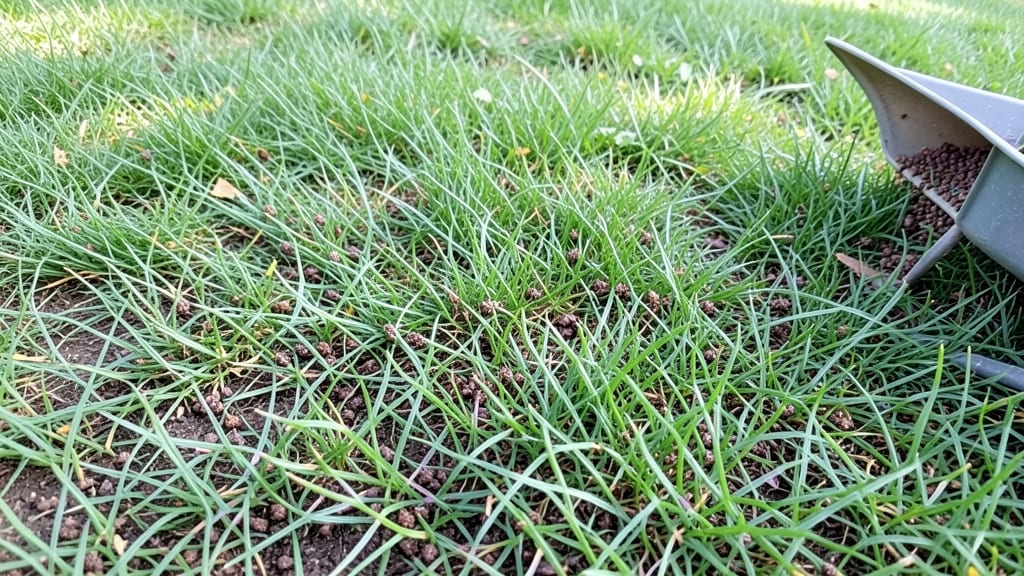
You don’t always need fertilizer to grow grass, but nutrient-rich soil with nitrogen, phosphorus, and potassium accelerates growth and strengthens your lawn’s resistance to disease. Testing your soil first helps you decide whether to use organic amendments or skip fertilizers entirely.
Grass can thrive in soil that already contains essential nutrients, especially if it has plenty of organic matter like compost or well-rotted manure. 🌱 The key is understanding your soil’s current state—healthy topsoil often has enough natural fertility to support grass without extra inputs.
I’ve seen lawns flourish for years with no fertilizer when the soil was properly balanced, proving that nature often provides what grass needs when given the right conditions.
That said, most lawns benefit from some form of nutrient boost over time, whether through compost, bone meal, or even simple grass clippings returned to the soil.
The real game-changer is a soil test, which reveals exactly what your lawn lacks—often it’s not fertilizer at all, but proper pH adjustment or organic matter to improve soil structure. This approach saves money and reduces environmental impact while keeping your grass lush and resilient.
💡 In This Article
- How Soil Nutrients Affect Grass Growth
- When to Skip Fertilizer and Use Alternatives
How soil nutrients affect grass growth
Grass thrives when soil contains the right balance of nutrients, particularly nitrogen (N), phosphorus (P), and potassium (K), which work together like a growth engine.
Nitrogen fuels leaf development, giving grass its vibrant green color and rapid growth—think of it as the "green juice" that keeps blades lush. Without enough nitrogen, grass turns yellow or grows slowly, while too much can lead to weak stems and disease susceptibility.
Phosphorus, often overlooked, is the backbone of root systems, helping grass establish deep roots that access water and nutrients more efficiently. Potassium, meanwhile, acts like a bodyguard, strengthening cell walls to improve drought resistance and disease tolerance.
The magic happens at the microscopic level: roots release enzymes that break down nutrients into forms grass can absorb.
For example, nitrogen in soil exists as nitrate (NO₃⁻) or ammonium (NH₄⁺), and grass roots compete with soil microbes to uptake these forms. Soil pH plays a critical role here—ideal pH for most grasses is 6.0-7.0.
If pH is too low (acidic), nutrients like phosphorus become locked away, while high pH can make iron and manganese unavailable, causing yellowing even when other nutrients are present.
I’ve tested lawns where adding lime to raise pH from 5.0 to 6.5 resulted in visibly greener grass within weeks, proving how pH directly impacts nutrient availability.
Organic matter like compost doesn’t just replace synthetic fertilizers—it improves soil structure and microbial activity. Compost contains 1-3% nitrogen, 0.5-1% phosphorus, and 1-2% potassium by weight, but its real power lies in the 20-30% organic carbon that feeds soil microbes.
These microbes break down organic matter into plant-available nutrients over time, creating a slow-release system that’s far more efficient than quick-fix synthetic fertilizers.
For instance, a 2-inch layer of compost spread over 1,000 square feet can provide enough phosphorus for a year’s growth, while also improving soil water retention by 20-30%.
Here’s what most people miss: grass doesn’t need constant feeding. Cool-season grasses like Kentucky bluegrass grow best with 0.5-1 pound of nitrogen per 1,000 sq ft annually, while warm-season grasses like Bermuda only need 0.25-0.5 pounds.
Over-fertilizing wastes money and harms the environment by causing runoff that pollutes waterways. Instead, focus on building soil health—adding 1-2 inches of compost annually can supply all three primary nutrients while improving soil tilth (texture and structure) for years to come.
Consider this real-world example: A neighbor’s lawn in Zone 5 grew beautifully for five years with no fertilizer after they amended their clay soil with 3 inches of compost and adjusted pH to 6.5.
The grass developed a 3-inch deep root system (measured by digging a small trench) compared to their neighbor’s 1-inch roots who used monthly synthetic fertilizer. The compost-fed lawn also handled a 30-day drought with minimal browning, while the fertilized lawn required extra watering.
This proves that proper soil nutrition isn’t just about feeding grass—it’s about creating an environment where grass can thrive naturally.