
Lawn
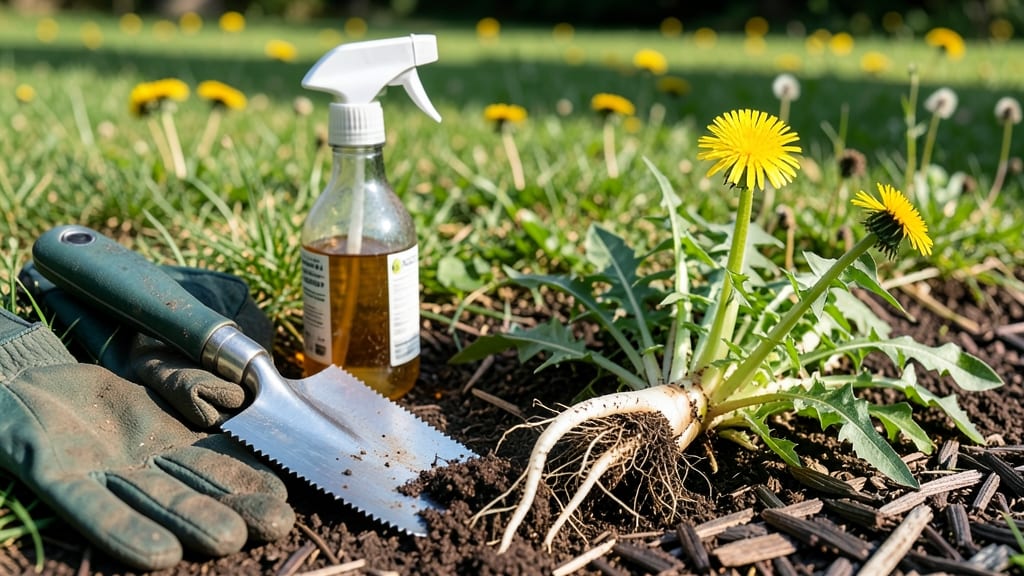
Dandelions are the lawn weeds that refuse to quit—but this pull-and-replace method actually works. 🌱 I’ve spent years battling them, and the secret isn’t brute force; it’s timing, technique, and a little lawn science that turns your yard into a dandelion-free zone for good.
The key is targeting them before they seed (late spring to early summer) and using a weed puller or fork to remove the entire root. Most people just yank the top—leaving behind a stubborn taproot that sprouts back in weeks.
I’ve seen lawns transformed in just 3-4 sessions when done right, with no chemicals needed.
What you’ll end up with is a lawn so dense that dandelions can’t take hold. The grass grows thicker, the soil stays healthier, and you’ll actually enjoy mowing again. No more sneezing through yellow blooms or explaining to neighbors why your yard looks like a meadow.
Works in any climate, from shady patches to sunny backyards. The only tool you’ll need is a good grip and a little patience—trust me, the results are worth it.
The Hidden Reasons Dandelions Take Over
Dandelions might seem like harmless weeds, but they’re actually highly aggressive survivors—thanks to biology, soil conditions, and even your lawn’s weaknesses. Understanding why they thrive in the first place is the first step to stopping them for good. Let’s break down the real culprits behind their persistence.
Dandelions love gaps in your lawn because they’re opportunistic plants. Here’s why they exploit weak grass:
- Poor soil competition: Grass needs dense roots to outcompete weeds. If your lawn is sparse (due to drought, disease, or poor seeding), dandelions fill the void. Their deep taproots (up to 15 inches) access water and nutrients that shallow grass roots miss.
- Thin turf = more sunlight: Dandelions thrive in full sun. When grass thins, they soak up extra light to photosynthesize faster, producing more seeds (up to 2,000 per plant in one season!).
- Compacted soil: Heavy foot traffic or machinery crushes grass roots, leaving bare patches. Dandelions germinate easily in disturbed soil because their seeds don’t need light to sprout—they’ll push through compacted layers.
Actionable fix: Aerate your lawn in fall to relieve compaction, then overseed with dense, shade-tolerant grass varieties (like fine fescue) to block sunlight for weeds.
Dandelions aren’t picky—they’ll grow in almost any soil, but they prefer these conditions:
| Soil Type | Why Dandelions Love It | How to Fix It |
|---|---|---|
| Clay-heavy soil | Poor drainage forces grass roots shallow, while dandelions’ deep taproots drain water efficiently. | Add compost or sand to improve drainage. |
| Alkaline soil (pH > 7.0) | Grass struggles in high pH, but dandelions thrive in slightly alkaline conditions (ideal pH: 6.0–7.5). | Test soil pH and amend with sulfur or peat moss to lower it. |
| Nutrient-poor soil | Dandelions extract nutrients aggressively, outcompeting weak grass. | Apply a balanced fertilizer (10-10-10) in early spring. |
Pro tip: 🌡️ Dandelions also detest acidic soil (pH < 6.0). If your lawn is naturally acidic, don’t fix it—just keep grass healthy to crowd out weeds.
One dandelion plant can seed an entire yard in a season—thanks to these spreaders:
- Wind dispersal: Their parachute-like seed heads (cypselae) can travel up to 5 miles on breezes. Even a single plant in your neighbor’s yard can colonize your lawn.
- Animals (including birds and squirrels): They eat the seeds, then deposit them in fertilizer-rich spots (like under bird feeders or near compost piles).
- Lawn equipment: Mowers, rakes, and aerators unintentionally spread seeds by kicking them into new areas.
Actionable fix:
- 🔪 Mow high (3–4 inches) to weaken dandelion seed heads before they release.
- 🌬️ Remove seed heads manually (wear gloves!) and dispose of them in sealed bags—never compost.
- 🐦 Discourage wildlife by removing bird feeders near your lawn or using seed-proof feeders.
Ironically, common lawn care mistakes create the perfect dandelion paradise:
- Over-fertilizing with nitrogen: Too much nitrogen promotes fast top growth in grass but weakens roots, making turf vulnerable to drought and weeds. Dandelions love this imbalance because they don’t need much fertilizer.
- Selective herbicide use: If you’ve used broadleaf herbicides (like 2,4-D) only on clover or other weeds, dandelions survive unchanged because they’re chemically resistant to many common treatments.
- Skipping pre-emergent herbicides: Dandelions germinate in early spring. If you don’t apply pre-emergent in fall, seeds sprout unchecked.
Actionable fix:
- 📊 Test soil fertility and use slow-release, balanced fertilizer (like 16-4-8) to avoid nitrogen spikes.
- 🔄 Rotate herbicides—if dandelions return after treatment, they’ve built up a tolerance. Try vinegar-based sprays (30% acetic acid) or corn gluten meal (a natural pre-emergent).
- ⏰ Apply pre-emergent in late summer/early fall (before dandelion seeds germinate).
Key takeaway: Dandelions don’t just appear—they exploit weaknesses in your lawn’s health, soil, and maintenance routine. The good news? Fixing these issues (dense grass, proper soil, and smart herbicide use) starves them out before they take over.
Practical Ways to Banish Dandelions
Dandelions might seem harmless, but their tenacity can turn your dreamy lawn into a patchwork of yellow blooms. The good news? With the right approach, you can reclaim your grass—permanently.
Below are targeted solutions based on the root causes of your dandelion problem, from quick fixes to long-term strategies. Let’s tackle this step by step!
---
If your lawn is already overrun, physical removal is the fastest way to start fresh. Dandelions thrive in weak grass, so this step also strengthens your turf.
#### 👨🍳 Step 1: Timing Is Everything - Pull when the soil is moist (after rain or watering) to avoid breaking the root. - Best time of day: Early morning or late afternoon when the ground is cool and damp. - Avoid pulling in extreme heat—roots can snap, leaving pieces behind to regrow.
#### 🔪 Step 2: The Right Tools for the Job - Hand-pulling (for small patches): - Wear gloves to protect your hands from milky sap. - Grab the dandelion just below the soil line and wiggle it free.
If the root breaks, dig deeper to remove the rest. - Dandelion weeder (for stubborn roots): - A claw-style weeder (like the Stihl Ergo or Fiskars models) makes this easier.
Insert the claw around the base, squeeze, and lift. - For large areas: Consider a manual dandelion digger (e.g., Einhell or Spear & Jackson) for efficiency.
#### 🌱 Step 3: Fill the Holes (The Secret to Prevention) - After pulling, pack the soil firmly to eliminate air pockets. - Sow grass seed immediately in the bare spots (use a lawn patch kit like Scotts or Jonathan Green). - Water lightly for 2 weeks to help seeds germinate.
✨ Pro Tip: If you’re dealing with hundreds of dandelions, work in sections—don’t overwhelm yourself!
---
If manual removal feels like a losing battle, selective herbicides can be a game-changer—but use them strategically.
#### 💡 Step 1: Choose the Right Herbicide - Pre-emergent herbicides (for prevention): - Apply before dandelions sprout (early spring or fall). - Look for corn gluten meal (organic) or pre-emergent granules (e.g., Scotts Halts). - Post-emergent herbicides (for existing weeds): - Selective herbicides (like 2,4-D or triclopyr) kill broadleaf weeds but spare grass. - Spot-treat with a hose-end sprayer (e.g., Spectracide Weed & Grass Killer) for precision. - Avoid systemic herbicides (like glyphosate/Roundup) unless you’re re-seeding the area—they’ll kill your grass too.
#### 🎯 Step 2: Apply Correctly - Follow label instructions—overapplying can harm your lawn. - Water lightly after application (unless the label says otherwise) to help absorption. - Reapply every 4-6 weeks during growing seasons (spring/fall) for best results.
💡 Pro Tip: If you have clover or other broadleaf weeds, a 2,4-D-based herbicide works well—but test a small area first!
---
Dandelions move in where grass is weak. Healthy turf is the best defense!
#### 📊 Step 1: Improve Soil Health - Test your soil (use a home kit or send a sample to a local extension office). - Add compost or organic matter to improve drainage and nutrient absorption. - Aerate compacted soil (rent a core aerator or use a spike aerator for small lawns).
#### 💪 Step 2: Overseed and Fertilize - Choose the right grass seed for your climate (e.g., tall fescue, Kentucky bluegrass, or Bermuda). - Fertilize in early fall (when grass roots grow deepest) with a slow-release, high-nitrogen fertilizer. - Mow high (3-4 inches) to shade out weeds and retain moisture.
#### 🥗 Step 3: Water Wisely - Deep, infrequent watering (1-1.5 inches per week) encourages deep roots. - Water in the morning to prevent fungal diseases. - Avoid overwatering—dandelions love soggy soil!
✨ Pro Tip: Corn gluten meal (a natural pre-emergent) can be sprinkled in early spring to prevent weed seeds from germinating.
---
Once you’ve cleared your lawn, don’t let them return with these habits:
- Mow regularly (never let grass grow taller than 4 inches). - Dethatch annually if your lawn has a thick layer of debris. - Hand-pull new dandelions immediately—don’t wait! - Encourage beneficial insects (like ladybugs and ground beetles) that eat weed seeds. - Consider a natural lawn alternative (like clover or moss) if you’re tired of the battle.
--- Final Thought: Dandelions may be stubborn, but with consistent effort, you can outsmart them. Start with manual removal, strengthen your grass, and prevent regrowth—soon, you’ll have a lush, weed-free lawn that’s the envy of the neighborhood! 🌿💚
Frequently asked questions
Why do dandelions keep coming back even after I pull them?
Dandelions have deep taproots (up to 15 inches) that store nutrients. If you don’t remove the entire root, even a tiny piece can regrow into a new plant. Use a dandelion weeder or fork to dig deep and check for broken root fragments. Pulling when soil is moist makes this easier.
Is vinegar safe to use on my lawn for dandelions?
Vinegar (especially 30% acetic acid) can kill dandelions, but it’s not lawn-safe. It will also damage grass and beneficial soil organisms. For spot treatment, use a selective herbicide like 2,4-D or try a vinegar-water mix (1:1 ratio) in a spray bottle for small areas—just avoid overspray.
How often should I apply pre-emergent herbicide to stop dandelions?
Apply pre-emergent in late summer/early fall (before dandelion seeds germinate) and again in early spring if your area has persistent problems. Most products last 3-4 months in the soil. Follow label rates—overapplying can harm grass and harm beneficial insects.
Can I prevent dandelions by just mowing higher?
Mowing at 3-4 inches helps shade out weeds and strengthens grass roots, but it won’t eliminate dandelions entirely. For best results, combine tall mowing with regular overseeding and soil aeration. Dandelions still need to be pulled or treated when they appear.
What’s the fastest way to kill dandelions without chemicals?
The most effective organic method is the boiling water trick: Pour 1 cup of boiling water directly on the dandelion’s crown (wear gloves!). The heat kills the plant instantly. For large patches, use a manual dandelion digger followed by corn gluten meal as a natural pre-emergent.