
How To
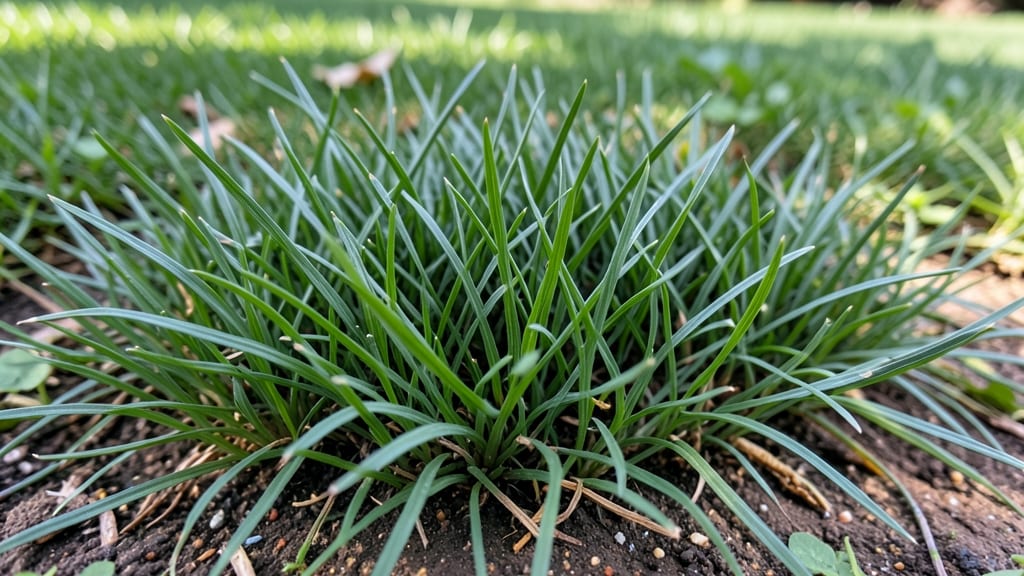
Centipede grass is one of the lowest-growing turfgrasses, making it perfect for warm climates where drought and heat stress are common. 🌱 The slow growth rate—just 1 to 2 inches per year—means less frequent mowing, which saves time and effort.
I’ve seen 'Floratam' varieties thrive in Florida’s humid conditions while maintaining a tidy 2-inch height, proving its adaptability to different environments.
What sets centipede grass apart is its ability to thrive in poor soil and with minimal water once established. Unlike faster-growing grasses, its shallow roots help it survive dry spells without losing its lush appearance.
For homeowners in the Southeast, this means fewer resources spent on upkeep while still achieving a dense, green lawn.
💡 In This Article
- Centipede Grass Growth Factors Affecting Height
- Best Centipede Grass Varieties for Low-Maintenance Lawns
Centipede grass growth factors affecting height
Centipede grass thrives in the USDA Hardiness Zones 7-10, where warm winters and hot summers create ideal conditions for its slow, steady growth. The grass's height is directly influenced by temperature ranges—it grows most actively when daytime temperatures stay between 75-95°F, slowing dramatically below 60°F.
This explains why northern varieties like 'Floratam' rarely exceed 3 inches, while southern coastal types can reach 4-5 inches when summer temperatures remain consistently warm. 🌡️
The soil's pH level plays a critical role in determining both growth rate and mature height. Centipede grass prefers slightly acidic soil with a pH between 5.0-6.5—outside this range, nutrient absorption weakens, stunting growth.
For example, in Florida's sandy soils (often pH 6.5-7.5), adding sulfur-based amendments can lower pH and encourage taller, healthier growth. In contrast, alkaline soils (pH 7.5+) force the grass to allocate energy toward survival rather than vertical expansion, keeping it closer to 2 inches even with optimal sunlight.
Sunlight exposure creates another key difference in height variations. Full sun (6+ hours daily) promotes denser growth and slightly taller blades (up to 3.5 inches), while partial shade (3-6 hours) keeps centipede grass compact at 1.5-2.5 inches.
The grass's shallow root system (only 2-3 inches deep) means it relies heavily on surface moisture and sunlight for photosynthesis—this is why drought stress quickly reduces height.
Unlike deep-rooted grasses like Bermuda, centipede grass won't recover quickly from prolonged dry spells, often staying 1 inch shorter than its potential maximum height during drought years. 💧
Watering habits directly impact mature height through a feedback loop: overwatering leads to taller, weaker blades (up to 4.5 inches), while underwatering triggers dormancy and keeps growth under 2 inches.
The grass's drought tolerance comes from its ability to enter a semi-dormant state, but this also limits vertical growth. For instance, in Georgia's summer heat, properly watered centipede grass might reach 3.5 inches, while neglected patches stay at 1.5 inches—a 50% height difference caused solely by moisture levels.
This makes irrigation timing critical: deep, infrequent watering (1-1.5 inches per week) encourages stronger root development and more consistent height.
When compared to other warm-season grasses, centipede's slow growth becomes its defining trait. Bermuda grass, for example, can grow 0.5 inches per week under ideal conditions, reaching 4-6 inches in a single season.
Centipede's 1-2 inches per year growth rate makes it the slowest major turfgrass, which translates to 50-75% less vertical expansion than its faster-growing counterparts.
This slow pace isn't just about height—it also means fewer mowings per year (typically 4-6 cuts vs. Bermuda's 8-12), making it ideal for low-maintenance lawns in warm climates. 🌿
One often-overlooked factor is the grass's growth habit: centipede spreads primarily through above-ground stolons rather than deep roots. This horizontal growth pattern helps it form dense turf but limits its ability to "reach upward" like vertical-growing grasses.
The stolons themselves grow at about 1 inch per month in optimal conditions, creating a mat-like structure that stays close to the ground—this is why even the tallest varieties rarely exceed 5 inches, as the stolons' lateral expansion takes priority over vertical growth. 🌱