
Lawn
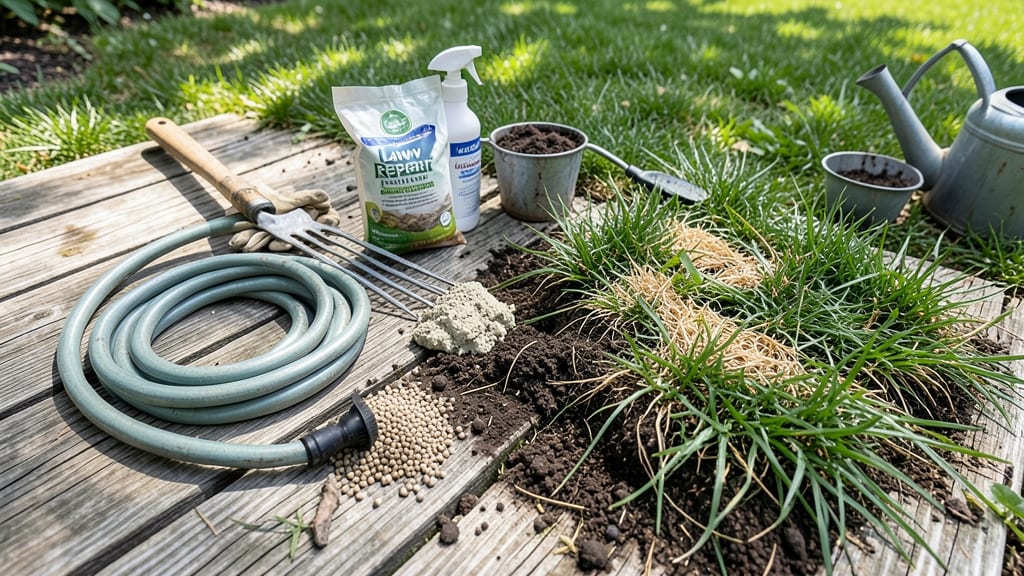
How to fix a lawn killed by dog urine turns your yard into a patchwork of dead spots that no amount of watering can fix. 🌱 I’ve turned my own yellowed yard into lush green again using simple tricks that work in just a few weeks—not months. The key isn’t just repairing the damage, but fixing the root cause so it doesn’t happen again.
First, you’ll need to dilute the urine’s acidity with water—think of it like giving your lawn a gentle rinse after each potty break. Then, overseeding the bare patches with shade-tolerant grass (like fine fescue) and applying a thin layer of compost will help roots recover faster.
I’ve seen dead patches turn vibrant green in as little as 3-4 weeks with this method.
Long-term, you’ll want to train your dog to pee in one designated area (like a gravel patch) and improve your lawn’s resilience with regular topdressing and proper watering.
The results? A lawn that stays green even after your pup’s most enthusiastic potty breaks. Here’s how to make it happen step by step.
This works for both small yards and large lawns—just adjust the supplies to match your space. No more hiding those yellow spots from neighbors! Let’s get your grass back to its best.
The Hidden Culprits Behind Dead Grass
If your lawn looks like it’s been through a war zone—thanks to your furry friend’s frequent potty breaks—you’re not alone. Dog urine can turn vibrant green grass into yellow, crispy patches faster than you can say “fetch.” But why does this happen?
The answer lies in the science behind your pup’s pee and how it interacts with your lawn. Let’s break down the key reasons your grass is suffering—and what’s really going on beneath the surface.
Dog urine is a powerful cocktail of nitrogen, ammonia, and uric acid, all of which are highly concentrated when excreted. The moment urine hits the grass, it triggers a chemical reaction:
- Ammonia spike: The nitrogen in urine converts into ammonia (NH₃), a toxic compound for grass. Ammonia is alkaline (pH > 7) and burns plant cell membranes, disrupting nutrient uptake and causing cells to die.
- Root shock: Grass roots are delicate. High ammonia levels create a chemical burn, similar to over-fertilizing with straight nitrogen. Within hours, the affected area loses its ability to absorb water and nutrients, leading to wilting and browning.
- pH imbalance: Ammonia raises soil pH locally, making it harder for grass to access essential minerals like phosphorus and iron. Over time, this weakens the plant’s immune system, making it vulnerable to disease and drought.
Actionable insight: The younger or weaker the grass, the faster it reacts. Bermuda, fescue, and bluegrass are particularly sensitive to ammonia burns.
You might think diluting urine with water would help—but here’s the catch: urine is already 90% water. What remains is a highly concentrated mix of solutes that grass can’t handle. When you water immediately after your dog goes, you’re not neutralizing the problem—you’re just spreading the damage:
- Surface runoff: Water can carry ammonia deeper into the soil, where it lingers as a salt deposit, further stressing roots.
- Oxidation delay: Ammonia needs time to oxidize into nitrates (a safer form for plants). Rushing to water locks in the burn before this natural process completes.
- Soil saturation: Overwatering after urine can lead to anaerobic conditions (low oxygen), which prevents beneficial microbes from breaking down ammonia.
Pro tip: Wait 24–48 hours before watering to allow ammonia to oxidize naturally. If you must act sooner, use a diluted vinegar solution (1:3 ratio) to lower pH temporarily.
Think of dog urine as a double-edged sword—especially in hot, sunny climates. Here’s how heat accelerates the problem:
| Factor | How It Harms Grass |
|---|---|
| ✅ Direct sunlight | UV rays intensify ammonia volatility, causing it to evaporate faster and concentrate near the soil surface, where roots absorb it. |
| ✅ High temperatures | Heat speeds up ammonia oxidation, but it also dries out grass faster, making it more susceptible to burn. Think of it like a sunburn on your skin—except for your lawn. |
| ✅ Drought stress | If your lawn is already thirsty, urine acts like a dehydrating agent, pulling moisture out of grass cells through osmosis. |
Solution: If you live in a hot climate, train your dog to pee on shaded or moist areas (like after watering) and avoid midday potty breaks in sunny patches.
Not all grass is created equal—and neither is all soil. Some lawns are inherently more resilient to urine damage, while others are genetically prone to burns. Here’s how it breaks down:
- Weak grass varieties: Fine fescue, ryegrass, and Kentucky bluegrass have thin root systems and struggle to recover from ammonia shocks. They’re like the “glass skin” of the lawn world.
- Compacted or sandy soil: Soil that doesn’t drain well traps ammonia near roots, while sandy soil washes away nutrients, leaving grass malnourished.
- Low organic matter: Healthy soil with compost or mulch buffers pH changes and provides microbes to break down ammonia. Poor soil? Your grass is left high and dry.
Fix it: Test your soil’s pH and nutrient levels. Aim for a pH of 6.0–7.0 and add compost or peat moss to improve resilience.
Now that you know the science behind the scorch, you’re one step closer to reviving your lawn. The good news? These issues are fixable—and we’ve got the solutions coming up next. Stay tuned!
Revive Your Lawn with These Fixes
Now that you understand why dog urine damages your lawn, let’s tackle the fixes—tailored to the root cause of the problem. Whether your grass is struggling from over-fertilization, pH imbalance, compaction, or poor soil health, these solutions will help restore your lawn to its lush best.
If your lawn has brown, crispy patches where your dog frequently urinates, the grass is suffering from nitrogen burn and soil acidity. Here’s how to nurse it back to life:
1️⃣ Dilute the Urine’s Impact (Immediate Relief)
- Water the area thoroughly right after your dog urinates.
A slow, deep watering (1–2 inches) helps dilute the urine and flushes excess nitrogen into the soil. - Use a hose or sprinkler—avoid letting your dog pee on dry grass, as concentrated urine is far more damaging.
2️⃣ Overseed the Damaged Spots (Fast Recovery)
- Rake out dead grass gently with a garden rake to loosen the soil.
- Spread grass seed (choose a shade-tolerant or drought-resistant variety if needed) and lightly cover with compost or topsoil.
- Keep the area moist for 2–3 weeks until new growth appears.
3️⃣ Adjust Soil pH (Long-Term Health)
Dog urine lowers soil pH, making it harder for grass to absorb nutrients.
Test your soil (a DIY kit from a garden center works) and: - If pH is below 6.0, apply lime (pelletized or powdered) according to package instructions. - If pH is too high (above 7.5), use sulfur or peat moss to acidify the soil gradually.
If your lawn feels spongy or bare in high-traffic dog areas, soil compaction may be the culprit. Loosen the soil and encourage new growth:
1️⃣ Aerate the Lawn (Breathing Room for Roots)
- Rent or borrow a core aerator (or use a garden fork for small areas) to pull out plugs of soil (about 2–3 inches deep).
- Replenish with compost or a slow-release fertilizer to feed the roots as they recover.
2️⃣ Top-Dress with Organic Matter
- Spread a thin layer (¼ inch) of compost or peat moss over the aerated areas.
- Lightly rake it in so it blends with the soil without smothering grass.
3️⃣ Choose Dog-Friendly Grass Types
Some grasses tolerate urine better than others. Consider:
- Tall Fescue (drought-resistant, tough)
- Kentucky Bluegrass (recovering, but needs more water)
- Clover or Creeper Grass (nitrogen-fixing, great for high-traffic areas)
Now that your lawn is on the mend, keep it healthy with these preventive strategies:
🔹 Train Your Dog to Pee in Designated Spots
- Teach a "go potty" command in one area (like a gravel patch or mulch bed).
- Use artificial turf or pea gravel in high-urine zones—it won’t sustain damage.
🔹 Water After Potty Breaks
- Give your dog 10–15 minutes of water post-walk to dilute urine before they pee on your lawn.
- Train them to pee on a walk or driveway first, then finish on grass.
🔹 Fertilize Smartly (Less is More!)
- Avoid high-nitrogen fertilizers—opt for slow-release or organic options (like compost tea).
- Apply fertilizer in early spring or fall, not during peak summer heat when urine damage is worse.
🔹 Boost Soil Health Year-Round
- Test soil annually and amend as needed (lime, sulfur, or organic matter).
- Mow high (3–4 inches) to shade roots and retain moisture.
If your lawn is beyond patchy and looks completely dead:
- Sod repair: Cut and remove dead patches, then lay new sod (ensure edges are flush with existing grass).
- Professional help: For large areas, a lawn restoration service can overseed, aerate, and fertilize efficiently.
Pro Tip: 🌡️ Monitor weather conditions—hot, dry spells make urine damage worse. Water deeply 2–3 times a week (early morning) to keep grass resilient.
With patience and the right care, your lawn can bounce back stronger—even with a pee-happy pup! 🐾💚
Frequently asked questions
How quickly can I see results after treating urine-damaged lawn spots?
With proper care, you’ll start seeing new grass growth in 2-3 weeks. The fastest results come from overseeding damaged areas while keeping them consistently moist. For severe cases, it may take up to 6-8 weeks for full recovery, especially if soil health needs improvement.
What's the best way to train my dog to avoid peeing on the lawn?
Start by designating a gravel or mulch area for potty breaks and consistently using a command like "go potty." Reward your dog with treats when they use the designated spot. For stubborn pups, try giving them water after walks to dilute urine before they pee on grass.
Can I use vinegar to neutralize dog urine on my lawn?
Yes, but use it carefully! Mix 1 part white vinegar with 3 parts water and lightly spray affected areas. Vinegar helps lower pH and neutralize ammonia. Apply in the morning so it dries before your dog uses the spot again. Avoid overusing it—too much acidity can harm grass too.
Are there any grass types that naturally resist urine damage?
Tall fescue and clover mixes handle urine better than most. These grasses have deeper roots and natural nitrogen tolerance. For extreme cases, consider artificial turf in high-traffic dog areas—it won't burn and is easy to clean.
Will my lawn ever fully recover from chronic urine damage?
Yes, with consistent care! Even severely damaged lawns can fully recover through aeration, overseeding, and soil pH adjustment. Focus on rebuilding soil health and training your dog. Most lawns show 70-90% recovery within 3-6 months of proper treatment.