
Watering
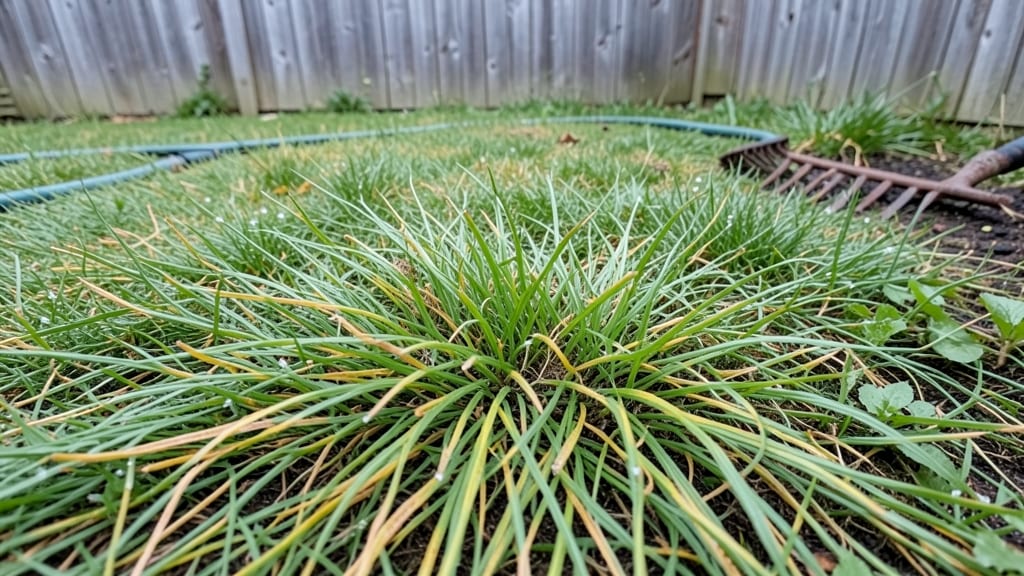
Fixing overwatered grass starts with recognizing the signs—spongy turf, yellowing patches, and that unpleasant musty smell. 🌱 I’ve seen lawns go from lush green to sad and soggy in just a few days, and the good news is, you can bring them back with the right approach.
The key lies in stopping the damage first, then giving your grass room to breathe and recover.
Most people make it worse by watering again or adding fertilizer, thinking it’ll help. Here’s the truth: overwatered grass needs less water, not more, and a break from heavy soil. We’re talking about adjusting your sprinkler schedule, improving drainage, and maybe even aerating compacted areas. It’s not complicated—just counterintuitive.
Within a week, you’ll notice the grass pulling itself together—firming up, turning a healthier shade of green, and even standing up straighter. The real secret? Patience and consistency. Skip the quick fixes and focus on long-term habits that keep your lawn thriving, not just surviving.
This works for any yard, whether you’re dealing with a small patch or an entire backyard. Let’s get your grass back on track—without the guesswork.
Root Causes Of Soggy Soil
Overwatered grass isn’t just about too much water—it’s about how, when, and why that water gets trapped in your lawn. Understanding these root causes helps you adjust your watering habits before damage sets in. Here’s why your grass might be drowning in its own moisture:
🌧️ Poor drainage systems
Your lawn’s soil isn’t a sponge—it’s a dynamic ecosystem with drainage pathways. When these pathways get clogged or overwhelmed, water pools instead of percolating down. Here’s what’s usually to blame:
- Compacted Soil 🪨 Heavy foot traffic, machinery, or even natural settling can compress soil particles, reducing pore space. Test it: Press your thumb into the soil—if it springs back slowly (or not at all), drainage is suffering. Compacted soil repels water like a raincoat, creating a hardpan layer that traps moisture at the surface.
- Clay-Heavy Soil 🏗️ Clay soils have tiny particles that pack tightly together, leaving little room for water to escape. Signs: Puddles linger for hours, and the soil feels sticky when moist. Clay also expands when wet and shrinks when dry, creating cracks that look like drainage—but they’re often too small to help.
- Low-Grade or Missing Drainage Flat lawns or those built on former wetlands lack natural slopes to guide water away. Without a slight incline (even 1–2%), water pools in depressions like a bathtub. Pro tip: 💡 A soil test ($20–$50) can reveal drainage issues before you overwater.
⏳ Irrigation mismanagement
Even the best soil can’t handle too much, too often. Automated systems (like sprinklers) are notorious for overdoing it when misconfigured. Here’s how:
- Overlapping Sprinkler Zones 💦 If sprinkler heads overlap, the same area gets double (or triple!) the water, turning your lawn into a swamp. Fix: Walk your yard with a bucket test—place empty buckets under each sprinkler head and run the system for 15 minutes. If a bucket fills with >1 inch of water, adjust the heads or timer.
- Frequent Light Waterings ⏰ Short, daily sprinklings (e.g., 5 minutes every morning) mimic rain but don’t let water penetrate deeply. Grass roots stay shallow, and excess moisture sits on the surface, inviting fungus (like brown patch) and insects (like grubs). Rule of thumb: Water deeply 1–2 times per week (1–1.5 inches total) instead of daily sips.
- Ignoring Weather Forecasts ☔ Running sprinklers during rain or high humidity drowns roots faster. Smart controllers (like Rachio) adjust automatically, but manual systems often keep spraying regardless. Action step: Check the National Weather Service or local alerts before watering—skip it if rain is predicted within 24 hours.
🌱 Grass type & growth stage
Not all grass is created equal—and some varieties thrive in moisture while others drown. Here’s how your grass type or life stage might be contributing:
- Cool-Season Grasses Gone Wild ❄️ Grasses like Kentucky bluegrass and fescue grow aggressively in cool, wet conditions, encouraging dense root systems—but also higher water needs. If you’re watering based on warm-season habits (like Bermuda grass), you’re likely overdoing it.
- Newly Sodded or Seeded Lawns 🌱 Fresh sod or seed needs consistent moisture to establish roots, but many homeowners panic-water after installation. Reality check: Overwatering here smothers seeds (cutting off oxygen) and drowns roots before they anchor. Solution: Water lightly 2x daily (morning + evening) for the first week, then taper off.
- Thatch Buildup 🪵 Thatch—a layer of dead grass, roots, and debris—can insulate soil, trapping moisture and blocking airflow. How to spot it: Pull up a small section of grass; if the thatch layer is >0.5 inches thick, it’s time to dethatch (with a rake or vertical mower).
🌡️ Environmental factors
Mother Nature plays a huge role—some conditions make overwatering inevitable if you don’t adapt. Here’s what’s working against you:
- High Humidity or Rainfall 🌧️ Air already saturated with moisture means less evaporation from soil. A lawn in Florida vs. Arizona needs half the water—same goes for summer vs. spring. Tool to use: A soil moisture sensor ($15–$30) tells you exactly when to water, not just when the timer says so.
- Shady or Low-Lying Areas 🌳 Shade reduces evaporation, and low spots collect runoff from higher areas. Solution: Water these zones separately (with a hose or soaker hose) and less frequently than sunny patches.
- Mulch or Ground Covers 🍃 Thick mulch or dense ground covers (like clover) retain moisture like a sponge. If your lawn borders a garden bed with mulch, water only the grass—not the entire area—to avoid cross-contamination.
🔍 Quick Diagnosis: To pinpoint your specific issue, grab a trowel and dig a 6-inch hole in a soggy spot. Check: ✅ Soil color (dark = wet; light = dry) ✅ Smell (musty = fungus; fresh = healthy) ✅ Root depth (shallow = overwatered; deep = balanced)
Most overwatering problems stem from one (or more) of these factors. The good news? Fixing them is easier than you think—and your lawn will thank you with deeper roots and fewer pests. 🚿💦→🌱💪
How to solve it
If your grass has been drowning in too much water, don’t panic—there’s hope! The key is to act fast and address the root of the problem (literally and figuratively). Below are practical solutions tailored to the most common causes of overwatering, along with tips to keep your lawn healthy long-term.
💦 Too Much Water at Once? Drain and Dry
If your lawn is visibly waterlogged—think muddy puddles, spongy ground, or grass that springs back when stepped on—your first move is to drain the excess water and let the soil dry out.
🔥 Step 1: Stop Watering Immediately
- Turn off sprinklers, hoses, or irrigation systems right away. Overwatering in stages only worsens root rot and fungal growth.
- Pro tip: If rain is forecasted, consider covering the area with a tarp to prevent additional water absorption.
🍳 Step 2: Improve Drainage Fast
- For flat lawns: Use a garden rake or aerator to create shallow grooves (about 1 inch deep) to help water flow away from roots.
- For low spots: Fill depressions with a mix of sand and topsoil (50/50 ratio) to elevate the area slightly.
- For clay-heavy soil: Mix in compost or coarse sand to break up compaction and improve drainage.
👨🍳 Step 3: Speed Up Evaporation
- Mow higher (set your lawnmower to 3–4 inches) to shade the soil and reduce moisture loss through evaporation.
- Use a fan on a sunny day to blow air over the lawn and dry it out faster (great for small patches).
- Avoid walking on wet grass—this compacts soil further and slows drainage.
⏰ How Long to Wait?
- Most lawns recover in 3–7 days if the soil is well-draining. If puddles persist after a week, you may need to call a landscaping pro to assess deeper drainage issues.
🌱 Yellow or Mushy Grass? Fix Root Stress
If your grass is turning yellow, mushy, or pulling up easily, it’s suffering from root suffocation or fungal infections like Fusarium or Pythium. Here’s how to revive it:
🔪 Step 1: Remove Affected Areas
- Dig out severely damaged grass (1–2 inches deep) and discard it in a sealed bag—do not compost infected plant material.
- Pro tip: Sterilize your tools with a 10% bleach solution (1 part bleach to 9 parts water) to prevent spreading spores.
🌡️ Step 2: Treat Fungal Issues
- Apply a fungicide: Use a copper-based or phosphite fungicide (follow label instructions). Reapply every 7–14 days if needed.
- Natural remedy: Mix 1 quart of milk with 1 gallon of water and spray on affected areas (milk’s proteins help prevent fungal growth).
🎯 Step 3: Revive the Roots
- Aerate the lawn to let oxygen reach the roots. Rent a core aerator or hire a pro for large areas.
- Top-dress with compost (¼ inch thick) to improve soil structure and microbial activity.
- Water deeply but infrequently: Once the soil is dry, water 1–1.5 inches per week (including rain) to encourage deep root growth.
🌡️ Prevention Tips: Keep Your Lawn Happy
Once your lawn is back on track, prevent future overwatering with these habits:
💡 Watering Smarter
- Check soil moisture before watering: Stick a screwdriver into the ground—if it goes in easily, your lawn doesn’t need water.
- Water early in the morning (4–8 AM) to reduce evaporation and fungal risks.
- Use a rain gauge or smart sprinkler timer to track water usage accurately.
🌱 Soil Care
- Test your soil every 2–3 years to check pH and nutrient levels (ideal lawn pH: 6.0–7.0).
- Add organic matter (compost, peat moss) to improve drainage in clay-heavy soils.
🎯 Lawn Maintenance
- Mow regularly but never remove more than ⅓ of the grass blade at once.
- Leave grass clippings as natural fertilizer (they return moisture to the soil).
- Aerate annually (spring or fall) to prevent soil compaction.
Remember: Overwatered grass can bounce back with patience and the right care. Start with drainage, treat any fungal issues, and adjust your watering habits to keep your lawn lush without the soggy side effects. 🌿
Frequently asked questions
How can I tell if my grass is overwatered vs. just wet?
Look for these signs: grass blades turn yellow or grayish, the lawn feels spongy when you walk on it, or you notice a musty smell. Overwatered grass also often has shallow roots and may pull up easily. If puddles linger for more than 24 hours after rain or watering, that's another red flag.
Can I still save my lawn if it's been overwatered for weeks?
Yes, but act fast! Stop watering immediately and let the soil dry out completely. Aerate compacted areas, treat any fungal issues with fungicide, and adjust to deep, infrequent watering (1-1.5 inches per week). With proper care, most lawns show improvement within 2-4 weeks. For severe cases, consider overseeding damaged patches.
Will aerating my lawn help with overwatering problems?
Aeration creates channels in compacted soil that improve drainage and allow oxygen to reach roots. For best results, aerate in spring or fall when grass is actively growing. Rent a core aerator or hire a professional for large areas. Follow up by top-dressing with compost to further enhance soil structure.
Is it better to water in the morning or evening for recovery?
Morning (4-8 AM) is ideal for recovery. Watering in the morning allows grass blades to dry quickly, reducing fungal risks and evaporation losses. Evening watering keeps moisture on leaves overnight, increasing disease susceptibility. If you must water in the evening, finish at least 4 hours before sunset.
How often should I water after fixing overwatering damage?
Once recovered, aim for 1-1.5 inches of water per week (including rain). Water deeply 1-2 times per week rather than daily light waterings. Use a rain gauge or tuna can to measure accurately. Check soil moisture by pushing a screwdriver into the ground - if it goes in easily, your lawn doesn't need water.